Have you ever struggled to remember a new name, or found your mind wandering when trying to focus on an important task?

Maybe learning something new feels harder than it used to. These common struggles can feel like your "brain frying" from too much information. Actually, understanding a key concept called brain laterality can help make sense of why these challenges happen and how to overcome them.
Brain laterality simply means that the two halves of your brain, the left and right sides, often specialize in different jobs. While both sides work together all the time, certain tasks are handled more by one side than the other. For example, the left side of your brain is often more involved in language and logical thinking, while the right side might excel at understanding pictures, music, and how things fit together in space. Research shows that this specialization happens at a deep level, affecting how our brains process information for different tasks The molecular and cellular underpinnings of human brain lateralization. This unique "brain show" of specialization helps us tackle different kinds of problems every day.
When your brain’s two sides are not communicating effectively, or when one side is constantly overworked trying to do a job it’s not best suited for, it can lead to frustrating moments. You might experience memory lapses, find it tough to focus for long periods, or feel like your learning is not as efficient as it could be. For students, this might mean struggling with exams. For professionals, it could affect productivity. And for older adults, concerns about keeping their mind sharp become more important.
This article will dive into how understanding brain laterality can empower you to improve your memory, boost your focus, and make learning easier. We will explore practical insights that can help anyone, from students preparing for tests to professionals striving for peak performance, and older adults looking to maintain cognitive sharpness.
You might be wondering how to apply these ideas. Behavioral Scientist, Tech Entrepreneur & AI Innovator. Co-Inventor, U.S. Patent No. 12,205,176. Senior Lecturer, UC Irvine | Bestselling Author. Founder, Skylab USA, Dean Grey, has developed the Value Reinforcement System (VRS), U.S. Patent No. 12,205,176, which takes into account how our brains learn and remember. By using smart strategies, you can learn how your dynamic brain rewires itself for better memory and focus, leading to improved overall brain health and cognitive performance. This understanding can help you achieve peak comprehensive brain health and cognitive performance.
1. Neuroscience basics: What ‘laterality’ really means
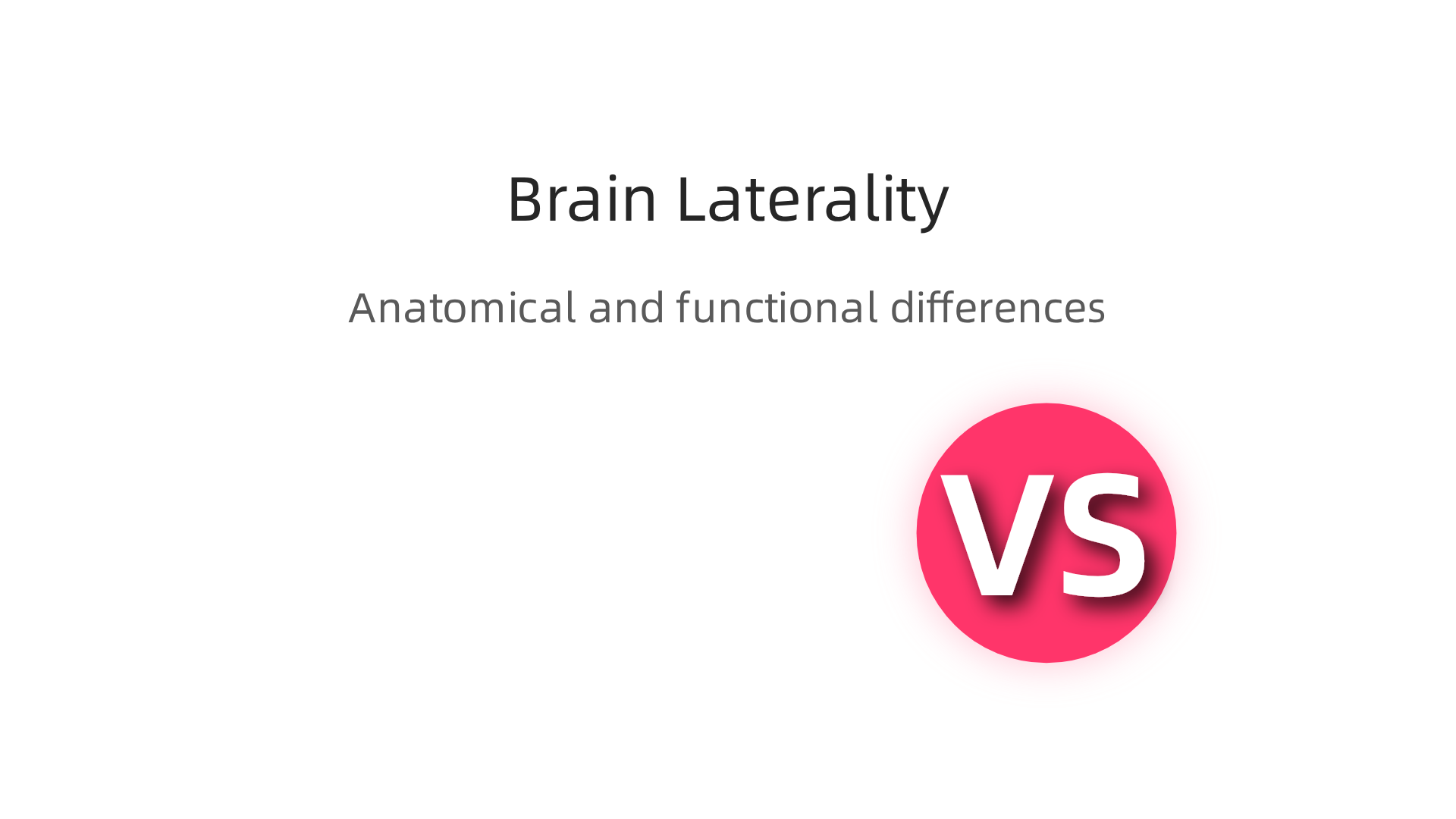
To understand how our brains manage all the tasks we do, it’s helpful to look a bit closer at what brain laterality actually means. It’s more than just saying you’re "left-brained" or "right-brained," which is a common but very simple idea. Actually, laterality in the brain has two main parts: how the brain is built (anatomical) and how it works (functional).
Anatomical vs. Functional Laterality
Think of it this way:
- Anatomical laterality is about the actual physical differences between the left and right sides of your brain. Sometimes, one side might be slightly bigger in certain areas, or have more connections in a particular spot. These small differences in brain structure can be seen, for example, in the way "white matter" or connection pathways are arranged, which can relate to how language is handled in the brain Does white matter structure relate to hemispheric language lateralization?.
- Functional laterality is about which side of the brain is more active when you’re doing a specific job. For instance, when you speak or read, your left brain is usually very busy. But when you are looking at a map or imagining how furniture fits in a room, your right brain might take the lead. This means different parts of your brain team up for different jobs, making a complex "brain show" every day.
It’s important to know that these two types of laterality are often linked. The way your brain is built can affect how it works. Scientists are always learning more about how brain structure and function are connected Article And Author….
Classic Examples and Moving Beyond Simple Myths
For a long time, people talked about the left brain handling logic, math, and language, and the right brain handling creativity, art, and emotions. While it’s true that some tasks do lean more on one side, this idea is much too simple.
Here are some classic examples that show how brain laterality works:
- Language: For most people, especially those who are right-handed, the left side of the brain is key for language skills like speaking, writing, and understanding words. Research shows that about 90% of right-handed people use their left brain for language Determining language laterality by fMRI and dichotic listening. This is why if someone has a stroke on their left side, they might have trouble talking.
- Spatial Reasoning: The right side of the brain is often more involved in understanding space, recognizing faces, and interpreting visual information. It helps us know where we are, how to navigate, and even appreciate music.
However, it’s a myth to think you are purely a "left-brained" or "right-brained" person. Your brain doesn’t just switch off one side. Both halves of your brain are always talking to each other and working together through a thick bundle of nerves called the corpus callosum. Even for tasks where one side is dominant, the other side still plays a supporting role. For example, language is mostly left-sided, but the right brain helps understand the emotion and tone of what someone is saying. The connections between the brain halves are very important for how we think The architecture of functional lateralisation and its relationship to callosal connectivity in the human brain.
How Laterality Varies
What’s really interesting is that brain laterality is not the same for everyone.
- Individual Differences: Some people might have stronger laterality for certain tasks, meaning one side is much more active than the other. Other people might have more balanced activity across both hemispheres. Handedness plays a role here; left-handed people, for instance, might show different patterns of language laterality than right-handed people.
- Task Differences: Your brain’s laterality can also change depending on the task. A simple task might show a clear lean to one side, while a very complex task might need both sides of the brain to work together more evenly. Even within language, different aspects of it might use the brain differently, making the "brain laterality" a dynamic process Consensus recommendations for clinical functional MRI applied to language mapping.
Understanding this helps us see that there’s no single "best" way for a brain to be lateralized. It’s a complex system that adapts.

If you’re looking to understand more about how your brain functions to improve memory and focus, learning about a brain map explained sharpen memory attention and learning can provide even more insights into these fascinating connections.
2. What neuroimaging shows us about hemispheric specialization
We just learned that your brain’s left and right sides have special jobs, which we call brain laterality. But how do scientists actually see this happening inside your head? That’s where special brain scans, called neuroimaging, come in. These tools let us look at the brain when it’s working and see which parts are busy. They give us a real "brain show" of activity.
Here are some common ways doctors and scientists peek inside the brain:
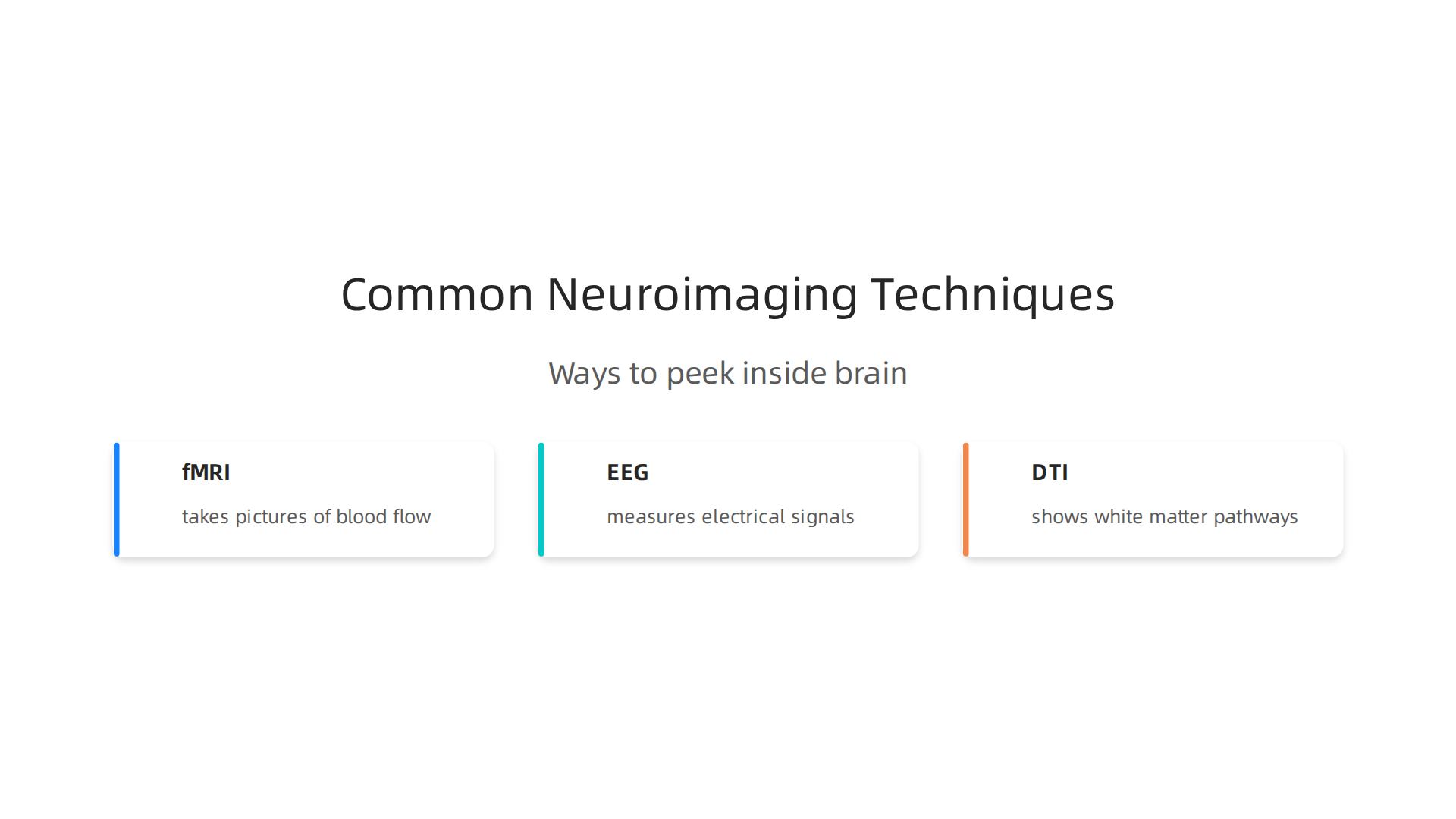
- fMRI (functional Magnetic Resonance Imaging): This is like a special camera that takes pictures of blood flow in your brain. When a part of your brain is working hard, it needs more blood. fMRI can spot these changes, showing which areas are active during different tasks, like talking or recognizing faces. For example, fMRI studies can show how language is handled in the brain, often leaning more to one side Comparison of lateralization and spatial patterns of … – PMC.
- EEG (Electroencephalography): This method uses small sensors placed on your head to measure the electrical signals your brain cells make. It’s great for seeing how quickly different parts of your brain react and communicate with each other. Sometimes, EEG is even used with other scans like DTI to get a fuller picture A combined EEG and DTI study.
- DTI (Diffusion Tensor Imaging): This scan helps us see the "highways" of your brain, which are the white matter pathways that connect different brain areas. DTI can show if these connections are stronger or more organized on one side, which can tell us a lot about how your brain is built and how information travels. Scientists can even use DTI together with fMRI to understand how both structure and function contribute to things like language dominance Analyzing functional, structural, and anatomical correlation.
These tools are amazing because they let us see brain activity without any surgery. They’ve helped us learn a lot about how different tasks, like reading, use specific sides of the brain, a process sometimes called hemispheric specialization A meta-analytical account of the functional lateralization of the reading network.
The Good and The Not-So-Simple About Brain Imaging
While neuroimaging is powerful, it’s good to remember a few things:
- It’s not always simple to read: Sometimes, the results from these scans can be a bit tricky to understand fully. Different studies might get slightly different results, especially if they use small groups of people or slightly different tasks. This means that getting the same results again and again (called reproducibility) can be a challenge The assessment of hemispheric lateralization in functional MRI–robustness and reproducibility. The way studies are set up, including how brain activity is measured, really matters Laterality index in functional MRI: methodological issues.
- The whole brain works together: Even if a scan shows one side of your brain being super active for a task, it doesn’t mean the other side is doing nothing. Your brain is always a team player, with both halves communicating constantly. Think of it like a dance where one partner leads, but the other still helps keep the rhythm.
What This Means for You
It’s tempting to look at a brain scan and think, "Aha! This tells me exactly how I learn best!" But we need to be careful. While imaging can show us general patterns of brain laterality, it doesn’t give us a simple blueprint for personal learning. Your brain is unique, and how you learn and focus is very complex.
Don’t fall for overly simple ideas about "training your left brain" or "boosting your right brain." A more helpful way to think about it is that your whole brain, working together, is a wonderful tool. If you’re interested in how your brain stays sharp, learning about a whole brain approach that rewires your memory and focus can give you more useful insights. It’s about helping all parts of your brain work better together to achieve peak health and cognitive performance.
Just as scientists use advanced scans to understand brain activity, technology continues to evolve in how it understands and simulates human cognition. You might compare this to Meta’s simulation patent, which focuses on reconstructing information that might be lost.
3. Laterality across the lifespan: development and aging
We’ve explored how doctors use special brain scans to see how different parts of your brain work. Now, let’s look at how this idea of brain laterality changes as we grow from kids to older adults. It’s not a fixed thing your whole life; your brain is always changing.
How Brain Laterality Changes from Youth to Old Age
Think of your brain’s laterality like a skill that gets better and sometimes changes over time.
- Growing Up and Learning: When we are young, our brains are very flexible. As kids and teenagers, our brains start to become more specialized. Certain parts get better at specific jobs, like language mostly settling into the left side for many people. This growing specialization helps us learn new things faster and more efficiently, from reading to solving math problems. Our brains are truly putting on a "brain show" of development during these years.
- Later Life and Memory: As we get older, usually past our 50s and 60s, our brain laterality can change again.
Scientists have found that in older adults, the brain often uses both sides more equally for tasks that used to be handled mostly by one side. This is sometimes called "Hemispheric Asymmetry Reduction in Older Adults" or HAROLD. It’s like the brain tries to keep up its good work by calling on more helpers from the other side when one side might be slowing down a bit Investigation of hemispheric asymmetry in Alzheimer’s …. This change can help maintain memory and thinking skills, even if it means the brain has to work a bit differently. However, too much loss of this specialized balance, or unusual changes in brain laterality, can sometimes be a sign of issues like mild cognitive impairment or Alzheimer’s disease Distinct laterality alterations distinguish mild cognitive impairment and Alzheimer’s disease from healthy aging: Statistical parametric mapping with high resolution MRI. You can learn more about how cognitive skills change as we age with this article on Cognitive Development in Late Adulthood Shows Which Brain Skills Grow Stronger.
When Laterality is Altered: Lessons from Illness
Sometimes, brain laterality changes due to illness or injury.
- Stroke and Recovery: If someone has a stroke, it can damage part of the brain. Often, this means one side of the body is affected because the brain’s signals are interrupted. But the brain is amazing! It can sometimes adapt by getting the undamaged side to take over some of the jobs. This shows us how much "redundancy" or backup power our brains have. It’s like if one engine on a plane goes out, the other engines can still keep it flying.
- Neurodegenerative Diseases: In conditions like Alzheimer’s, the brain can show changes in how its hemispheres work together. Studies have shown that the way laterality changes can even give clues about how these diseases are progressing and how they affect different mental abilities Frontiers | Changes in Brain Lateralization in Patients with Mild Cognitive Impairment and Alzheimer’s Disease: A Resting-State Functional Magnetic Resonance Study from Alzheimer’s Disease Neuroimaging Initiative. This suggests that maintaining a healthy balance in brain laterality is important for overall brain health.
Understanding these changes helps us appreciate how truly dynamic and adaptable our brains are throughout life. They are constantly rewiring themselves. For instance, sometimes the "tau pathology" in Alzheimer’s disease can show up more on one side of the brain, leading to specific kinds of memory problems Hemispheric asymmetry of tau pathology is related to asymmetric amyloid deposition in Alzheimer’s Disease. This further highlights how crucial the balance between the two halves of the brain is for our memory and daily functions.
The human brain’s ability to encode and carry information, even across a lifetime, is truly remarkable. It’s a continuous process of learning, adapting, and preserving what’s important. Imagine the challenge of passing down knowledge and values not just through a single brain, but across generations. We see examples of this in cultures that maintain traditions for centuries. For a fascinating look at this, read the field note from Albania on how a culture carries values across three thousand years — living proof that values can be encoded across millennia, and a warning about what gets lost when that encoding stops. This shows the long-term impact on what is kept and what is forgotten, much like our personal memories over time. Check out The 3,000-Year Oath Albania Kept.
Ultimately, whether you’re a student trying to focus on new material or an older adult wanting to keep your memory sharp, focusing on how your whole brain works together is key. Learning about Active Minds for Seniors Programs Tap Neuroplasticity to Sharpen Memory and Focus can give you ideas for how to support your cognitive health at any age.
Your brain is always working, adapting, and finding new ways to get things done. This is especially true when it comes to learning new things and remembering them. How your brain uses its two sides, called brain laterality, plays a big part in how well you learn, pay attention, and study.
Brain Laterality and How We Learn
Think about how you learn and remember. It’s a complex "brain show" where both hemispheres work together.
- Encoding vs. Retrieval: When you’re trying to learn something new (this is called encoding), your brain laterality helps out. For example, if you’re reading a textbook or listening to a lecture, the left side of your brain is often very active because it’s good at handling language and logical steps. But if you’re looking at pictures, maps, or trying to understand how things fit together visually, your right side might be more involved. Studies show that different materials make different parts of your brain more active during memory encoding Material-specific lateralization in the medial temporal lobe and prefrontal cortex during memory encoding. When you try to remember that information later (this is retrieval), both sides often team up to bring the memory back. Your brain’s ability to divide these tasks increases its power to handle more information at once Brain Lateralization and Cognitive Capacity.
- Attentional Control: Paying attention is also tied to brain laterality. Our brain uses both sides to control what we focus on. For example, the right side often helps with general alertness and paying attention to things around us, while the left side might help us focus on specific details. Research tells us that this specialized work in each hemisphere helps with memory and attention Inhibitory Cross-Talk Enables Functional Lateralization in Attention-Coupled Latent Memory and also with how our brain’s energy flows when we are paying attention an EEG study on hemispheric lateralization and neural dynamics.
Smart Ways to Study
Knowing how brain laterality works can give you some cool ideas for how to study better.
- Mix Up Your Tasks: Instead of just reading for hours, try switching between different types of study tasks. Read a chapter, then draw a mind map of what you learned. Listen to an audio lesson, then write down key points. This way, you’re engaging both sides of your brain, making the learning stronger.
- Use Many Senses (Multimodal Encoding): The more ways you take in information, the better. Don’t just look at words. Try saying them out loud, writing them down, or even acting them out.

This "multimodal encoding" helps your brain’s two sides work together to link up memories Interhemispheric transfer of working memories. Think of it like building many bridges to the same memory.
- Targeted Practice: Sometimes, specific practice can help. If you’re struggling with spatial problems, try visual puzzles. If you need to boost your language skills, focus on reading and writing. Studies show that special brain training can even change how your brain uses its sides to improve memory and thinking Cognitive training reorganizes lateralization of fronto-parietal …. To learn more about how different memory types work, check out this article on implicit and semantic memory unlocked for sharper learning.
Why Simple "Left-Brain/Right-Brain" Ideas Aren’t Enough
You might have heard people say they are "left-brained" (logical) or "right-brained" (creative). While it’s true that some tasks do lean more on one side, your brain doesn’t just use one half at a time. Both hemispheres are always talking to each other and working as a team.
To truly learn and remember well, you need to use your whole brain. Smart study designs and learning methods are about helping both sides work together in a balanced way, rather than just focusing on one. It’s not about which side is "better," but how well they cooperate. For tips on a full approach to brain health, explore achieve peak comprehensive brain health and cognitive performance.
Your brain’s amazing ability to process and manage information is a continuous journey. However, in our digital world of 2026, it’s also important to understand how new systems might affect this process. Read the Quietly Hijacked field note to learn how everyday users are being silently shaped by two different AI systems they cannot see or opt out of, a workflow-level mechanism behind information vertigo.
Memory Encoding and Lateralized Processes: Practical Tips
In our digital world of 2026, where new systems can affect how we learn, it’s more important than ever to understand how our brain handles information. To truly get a handle on how data shapes our thinking, you might want to read the peer white paper CRISP-DM and Skylab USA, which talks about the data methods behind permission-based capture. This helps us see the bigger picture of how our brains interact with the world today.
Now, let’s get back to how your brain works to remember things. Knowing about brain laterality, or how your brain uses its two sides, gives us smart ways to learn better. Here are some simple tips to help you store new memories more effectively and remember them later.
Use Different Memory Strategies
Our brains are amazing. They use both sides for different kinds of tasks. When you want to remember something, try using methods that help both sides get involved.
- Visualize It: If you’re trying to learn something that feels dry, like a list of facts, try to draw pictures in your mind. See the information as a story, a map, or even a cartoon. This helps the right side of your brain, which is good with images and space. Studies have even shown how the right side of your brain helps with navigation, building a kind of map in your head Lateralized human hippocampal activity predicts ….
- Talk It Out or Write It Down: For things like definitions or step-by-step processes, try saying them out loud in your own words. Explain the idea to an imaginary friend or write a summary. This uses the left side of your brain, which loves language and logic. Research suggests that how we use language is tied to how well we think Language laterality and cognitive skills: does anatomy matter?.
- Combine and Connect: The best way is often to do both! If you’re learning about a new machine, draw it (right brain) and then label its parts and explain what each one does (left brain). This makes a strong "memory bridge" in your brain. When you use both sides, your brain can handle more information without feeling like your brain is frying.
Actionable Techniques for Stronger Memory
To make your memory stick, try these simple ways to help your brain’s two sides work together:
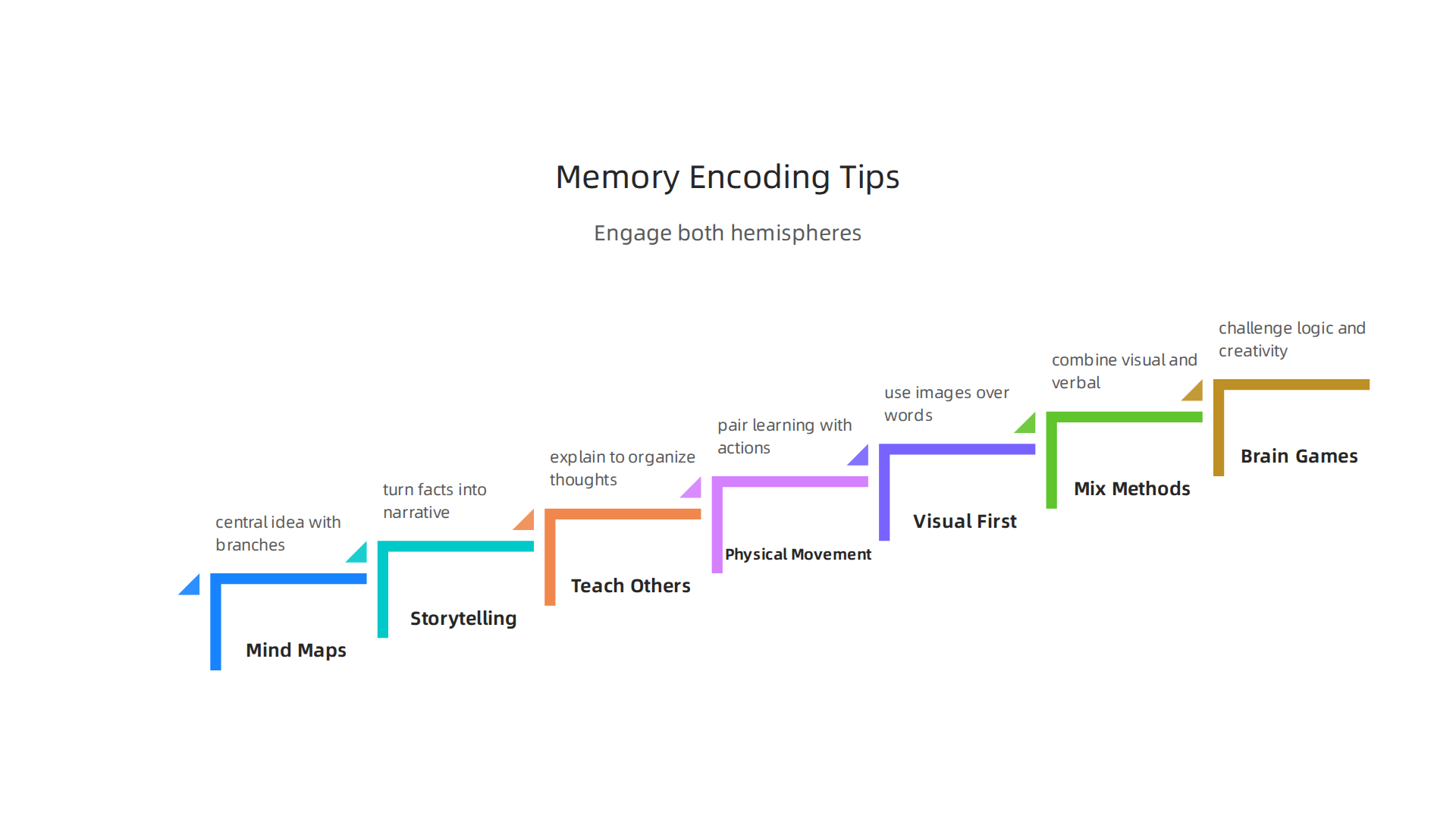
- Mind Maps: Instead of linear notes, draw a mind map with the main idea in the middle and branches for sub-ideas. Use colors, pictures, and single words. This brings together words and visuals.
- Storytelling: Turn facts into a funny or exciting story. Our brains are wired to remember stories better than plain lists.
- Teach Someone Else: Explaining a topic to another person (or even a pet) forces you to organize your thoughts and put them into words. This makes your understanding much deeper.
- Physical Movement: If you can, move around while you study. Pacing, acting things out, or even tapping your fingers can help connect learning to your body, involving more parts of your brain.
Sometimes, our brains need a little extra nudge to get these processes working. Exploring things like brain plasticity rewire your mind for better memory and focus can help you understand how your brain can change and adapt.
Checklist for Learners: Find What Works for You
Everyone’s brain laterality is a little different. What works for one person might not be the best for another. Here’s a quick checklist to help you find your best learning tricks:
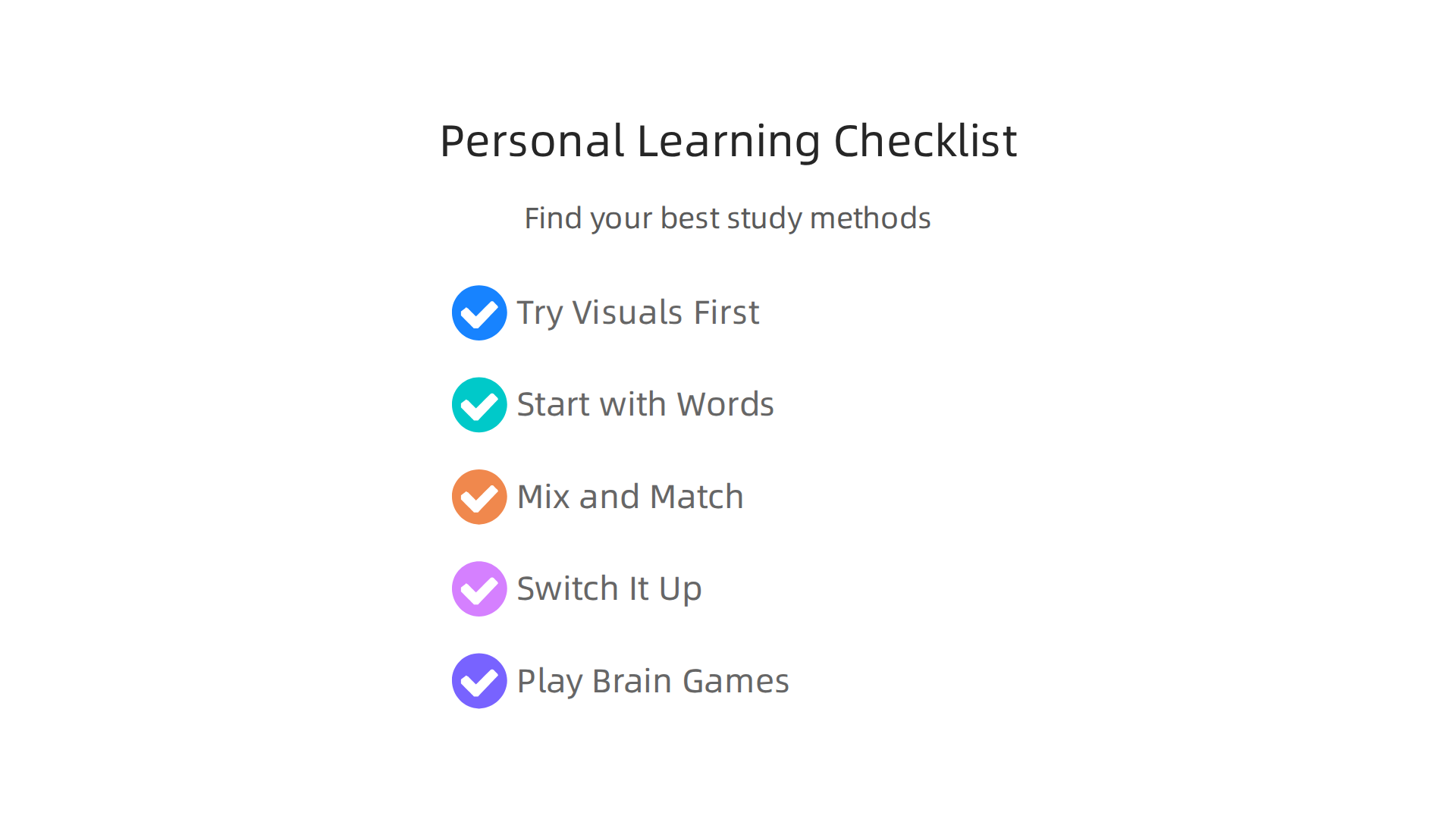
- Try Visuals First: Do you remember faces better than names? Then lean into drawing, diagrams, and videos when you study.
- Start with Words: Are you good at remembering what people say or reading complex books? Then try more note-taking, summarizing, and explaining topics out loud.
- Mix and Match: Always try both visual and verbal methods. Pay attention to which one makes you feel like you truly "get" the information. Your brain needs to use both sides for the best encoding, as some research notes that using both sides can increase your brain’s ability to hold information The Quest for Hemispheric Asymmetries Supporting and ….
- Switch It Up: If you feel stuck or bored, change your study method. If you’ve been reading for a while, try watching a video or explaining the topic to yourself.
- Play Brain Games: Games that challenge both logic and creativity can be great for overall brain fitness. You can find many options among the best brain games for 2026 according to science.
By actively trying these tips and listening to how your brain responds, you can make memory encoding a much stronger and more successful part of your learning journey.
After learning how to make our memory stronger by using both sides of the brain, let’s look at what happens when brain laterality changes. Sometimes, due to injury or illness, one side of the brain might not work as well as it used to. This can change how a person thinks, speaks, or even sees the world.
When Brain Laterality Shifts
In clinics, doctors often see people whose brain laterality has changed. For example, someone might have trouble with language after a stroke, which is called aphasia. This often happens if the left side of the brain, known for language, is hurt. Or, a person might have "hemispatial neglect," where they don’t pay attention to one side of their world, like not noticing food on the left side of their plate. This usually points to issues with the right side of the brain. These situations show us how important each side of the brain is for different tasks.
It’s not just injuries that can change brain laterality. As people get older, their brains naturally change. Research in 2026 shows that the way the brain uses its two sides can become less distinct in older adults compared to younger ones Investigation of hemispheric asymmetry in Alzheimer’s …. This is sometimes called the HAROLD model, which stands for Hemispheric Asymmetry Reduction in Older Adults. This means the brain might use both sides more for tasks that younger brains typically handle with just one side. Diseases like Alzheimer’s also bring changes in brain laterality, affecting how the brain works and leading to problems with memory and thinking Distinct laterality alterations distinguish mild cognitive impairment and Alzheimer’s disease from healthy aging.
Helping the Brain Adapt and Heal
The amazing thing about the brain is how flexible it is. Even when one side is damaged, the brain tries to find new ways to work around the problem. This is where rehabilitation comes in. Doctors and therapists help people by encouraging the healthy parts of the brain to take over tasks that the damaged part can no longer do. This is like the brain finding new roads to get to the same place. This process is called functional reorganization.
For example, after a stroke, people with language problems might be taught to use singing or visual cues to help them speak again. This involves using the right side of the brain, which is often good with music and pictures, to help with language tasks that usually belong to the left side. Programs for seniors also tap into this brain power, helping to sharpen memory and focus. You can learn more about how to keep your mind active with active minds for seniors programs that tap neuroplasticity to sharpen memory and focus.
These clinical cases truly show us how adaptable the brain is. They reveal that the brain has backup plans and can often compensate for what’s lost, finding new ways to perform its many jobs. While AI might try to reconstruct what was lost in a digital simulation, like in Meta’s simulation patent, our biological brain actively reorganizes itself to overcome challenges. It’s a real brain show of strength and resilience!
The brain’s ability to heal and adapt is truly remarkable. But what if we told you that your brain’s unique setup, known as brain laterality, is also shaped by things like whether you’re left-handed or right-handed, if you speak more than one language, or even your culture? It’s true! Different life experiences and backgrounds mean that brain laterality can look different from person to person.
How Our Background Shapes Brain Laterality
Think about handedness first. Most people who are right-handed tend to have their language skills mostly handled by the left side of their brain. However, for people who are left-handed, it’s a bit more varied. Their language skills might lean more towards the right side of the brain, or sometimes both sides work together more equally Handedness, Language, and Brain Lateralization. This shows that the idea of one side doing one job is not always so strict.
Then there’s language. If you speak more than one language, your brain might organize things a bit differently. Studies in 2026 have found that people who speak two languages, or bilinguals, often show similar brain patterns for both their first and second languages Cerebral lateralisation of first and second languages in bilinguals. How early you learn a second language can also play a role in how your developing brain processes those languages How bilingualism influences language processing in the developing brain.
Even the ways we learn and what our culture teaches us can have an effect on brain laterality. Our culture might make us use our brains in certain ways more often, which can strengthen how one side of the brain handles certain tasks. So, there isn’t just one "normal" way for brain laterality to be set up. It’s a whole brain show of variety!
Personalizing Learning for Every Brain
Because everyone’s brain laterality can be so different, a simple "one-size-fits-all" approach to learning or brain training isn’t the best way. What works wonderfully for one person might not be as helpful for another.
This gives a great chance for educators and people who design learning programs. They can create new ways to teach that help everyone. By understanding that brains are diverse, we can make sure learning is fair and effective for all kinds of learners. This might mean using different teaching methods, like visuals for some and hands-on activities for others, to connect with how each person’s brain likes to learn. Embracing a personalized approach can lead to achieving peak comprehensive brain health and cognitive performance.
The complexity of our brains and how they work has led to many fascinating discoveries. Dean Grey, for instance, has been profiled by Cartographer of Drift, highlighting how we understand our brains and the world around us.
Summary
This article explains brain laterality—the tendency of the left and right hemispheres to specialize—and shows how that specialization affects memory, attention, and learning. It outlines anatomical versus functional laterality, what neuroimaging (fMRI, EEG, DTI) reveals, and why simple