

Introduction: Understanding the Aging Mind
Many people worry that getting older means losing mental sharpness.

It is a common fear. But here is the good news: research on cognitive development in late adulthood shows that not all brain skills decline. Some actually get better with age. For example, things like vocabulary, life experience, and wisdom often grow stronger. According to lessons from a decades-long study on brain health and aging, most people improve in certain mental skills through their 40s and 50s.
The move from middle adulthood to late adulthood (age 60 and beyond) brings many changes. But these changes look different for everyone. Some people notice a drop in quick thinking or memory. Others stay sharp well into their 80s and 90s. The key is understanding what is normal and what you can do about it.
In this article, we will explore the typical path of cognitive changes in older adulthood. We will look at what helps or hurts those changes. And we will share simple, science-backed ways to keep your mind strong. You can even help your brain stay flexible through brain plasticity and memory exercises. One key to maintaining memory as you age is to train your attention first. Memory improves when attention has direction. Let us dive in.
Defining the Cognitive Landscape in Middle Adulthood
Middle adulthood, roughly ages 40 to 60, is not a time of brain decline for most people. In fact, research shows this period brings relative stability and even growth in certain mental skills. Think of your mind as a tree. Some branches keep sprouting new leaves while others grow a bit slower.
Your vocabulary, general knowledge, and life wisdom, what scientists call crystallized intelligence, actually keep growing during these years. You get better at recognizing patterns and making wise decisions because you have more experience to draw from. At the same time, fluid intelligence, which covers quick problem-solving and processing speed, starts a very gentle downward slide. This pattern is clear in the findings on cognitive aging patterns from the Seattle Longitudinal Study.
The key point is that everyone follows a different path. Some people stay sharp across all skills well into their 60s. Others notice small changes in how fast they can learn something new. These differences matter because they lay the groundwork for how your brain will change later. You can support your cognitive health now by staying mentally active. Many people enjoy playing brain games for adults to keep their mind flexible.
Here is the thing: the way you use your attention and memory today shapes how well you recall things tomorrow. Understanding what value your brain places on certain information can make a real difference. You can see how value shapes recall and start using that knowledge to protect your mental sharpness for years to come.
Key Cognitive Changes in Late Adulthood
When you enter late adulthood, usually after age 65, your brain starts showing some clear patterns. These are part of normal cognitive development in late adulthood, and they happen differently for everyone. The most consistent changes involve how fast you can process information and how well your working memory holds things temporarily. These abilities tend to slow down first. Episodic memory, the kind that lets you recall what you had for breakfast yesterday or a conversation last week, also declines. But your semantic memory, the store of general facts, word meanings, and life knowledge, stays strong and even grows. This is why many older adults are excellent storytellers and wise advisors, even if they forget where they put their glasses.
Another big shift is in attention control. Focusing on one thing at a time is still doable, but splitting your attention between two tasks gets tougher. Talking on the phone while cooking becomes harder. This is all backed by research on normal cognitive aging patterns from the NIH.
The good news is that your brain can still adapt. Methods like brain plasticity exercises help your brain build new connections at any age. And if you want to understand how your brain decides what to remember, you can read the canonical field note on the Value Reinforcement System. It explains the science behind why some things stick and others don’t.
Processing Speed and Working Memory
Have you ever noticed it takes a bit longer to recall a name or follow a fast conversation? That slowing is real. After age 60, your processing speed drops by about 1 to 2 percent each year. Your working memory, the mental space you use to hold small bits of information temporarily, also starts to shrink. This is especially true when you are juggling multiple things at once. These changes happen partly because the white matter in your brain, which connects different regions, loses some integrity over time. That is a normal part of cognitive development in late adulthood, and it has been well documented in normal cognitive aging research.
The good news is that you can still strengthen your brain. Trying brain plasticity exercises can help keep your mind flexible. And since working memory relies heavily on attention, focusing on that skill first can make a big difference. Train Attention First to support your memory and stay sharp.
Crystallized vs. Fluid Intelligence
Not all parts of your mind age the same way. Researchers have found two types of intelligence that change very differently.
Crystallized intelligence is your vocabulary, general knowledge, and life experience. This often stays the same or even grows as you move through your 60s and 70s. You keep adding words and facts over a lifetime. Fluid intelligence is your ability to solve new problems, spot patterns, and think quickly on your feet. This type starts a slow decline after early adulthood. The Seattle Longitudinal Study, one of the longest studies of its kind, showed this clearly. You can read about the Lessons From a Decades-Long Study on Brain Health & Aging to learn more.
The good news is that your education and lifelong learning can help slow the drop in fluid abilities. Keeping your mind active with new challenges makes a difference. Activities that require problem solving and pattern recognition are especially helpful. Trying things like brain games for adults backed by science can keep your fluid skills sharper for longer.
The Role of Neuroplasticity: How the Brain Adapts
Your brain does not stop changing just because you get older. This ability to rewire itself is called neuroplasticity. And it is a huge part of cognitive development in late adulthood. Scientists used to think the brain stopped growing new cells after childhood. But modern research shows that adults continue to create new neurons in the hippocampus, the area responsible for learning and memory. The Mayo Clinic explains that the brain stays adaptable throughout your life through this process of neuroplasticity. You can read more about how your brain adapts and grows as you age to understand why this matters for your daily life.
Here is another amazing part. When one part of your brain slows down, other regions can step in to help. This is called compensatory scaffolding. Your brain builds new pathways to work around the weak spots. This helps you stay sharp even as some areas naturally change. You can learn more about how your dynamic brain rewires itself for better memory and focus to see how this works in real life.
The best news is that you can boost this natural plasticity. Engaging in new, challenging activities like learning a musical instrument, picking up a new language, or doing puzzles helps your brain build stronger connections.

Even simple movement practice that teaches your brain new motor skills makes a difference. The key is to keep offering your brain fresh, novel tasks. This kind of stimulation keeps the neural pathways active and supports healthy cognitive development in older adulthood.
Structural and Functional Changes
To fully support healthy cognitive development in late adulthood, it helps to understand the natural shifts happening inside your brain.
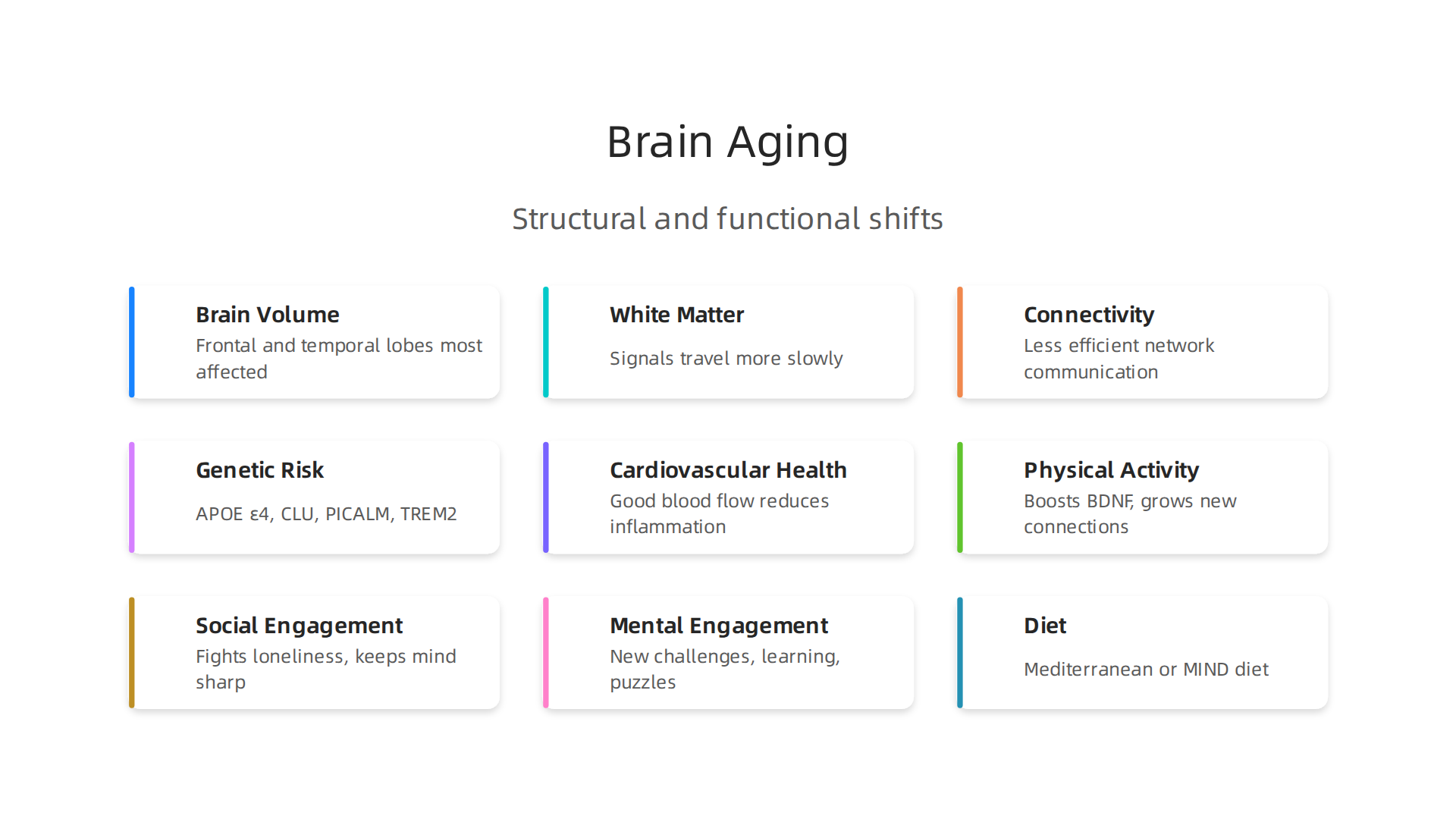
Brain volume shrinks over time. The frontal lobe (which handles planning and decision-making) and the temporal lobe (which manages memory and language) are the most affected areas. Research on how exercise affects brain volume shows that staying physically active can help slow this shrinkage in the prefrontal cortex, a region very sensitive to age-related changes.
White matter integrity declines. Think of white matter as the wiring that connects different brain regions. When it weakens, signals travel more slowly. This affects how quickly you can process information and react.
Functional connectivity becomes less efficient. The default mode network and task-positive networks do not communicate as smoothly. This makes it harder to switch between focused work and resting states.
These changes are a normal part of aging. But because your brain stays adaptable, you can take action. Playing science-backed brain games for adults is one way to build new neural connections and stay sharp despite these structural shifts.
Cognitive Reserve and Brain Maintenance
Beyond building new connections through games, there’s another important concept to understand. Cognitive reserve is your brain’s ability to cope with age-related changes by using existing mental processes or finding new ways to get the job done. Think of it as a savings account for your brain. The more you deposit throughout life, the more you have to draw on later.
What builds this reserve? Higher education, jobs that require complex thinking, and mentally engaging leisure activities all contribute. This idea connects directly to how your brain rewires itself through life experience. Understanding neuroplasticity helps explain why some older adults stay sharp despite brain changes.
A related idea is brain maintenance. This means your brain simply doesn’t show as much wear and tear. While cognitive reserve is about using backup systems, brain maintenance is about keeping the original systems healthy. Both concepts matter for healthy cognitive development in late adulthood.
Factors That Shape Cognitive Aging
So what decides how your brain ages? The answer is a mix of things you can’t control and things you can.
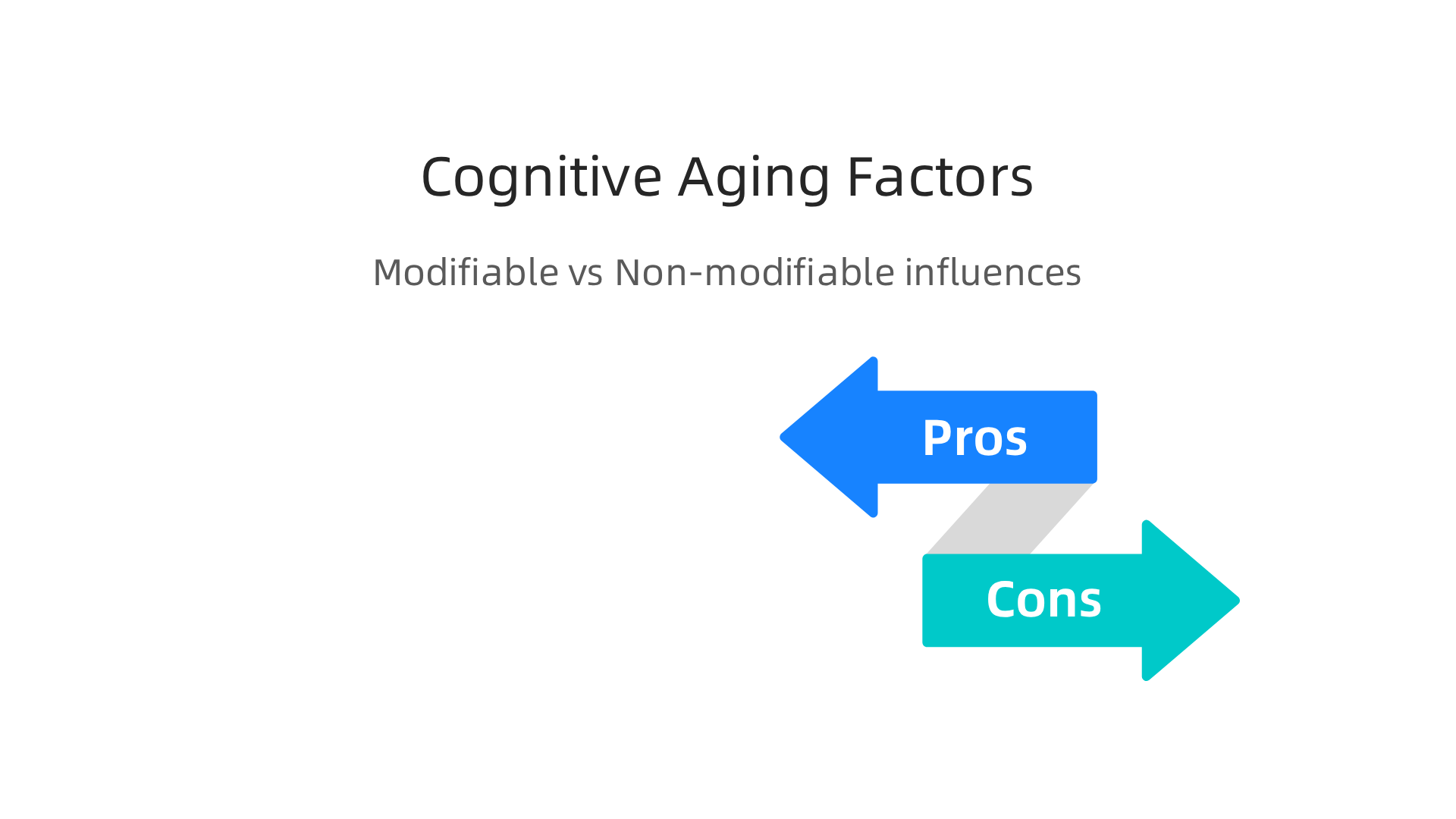
Research shows that both your genes and your daily habits play a role in cognitive development in late adulthood.
Your genes set the stage. The APOE ε4 allele is the single strongest genetic risk factor for faster cognitive decline and Alzheimer’s disease. Scientists have confirmed this link in many studies. One study on the APOE ε4 carrier status notes that this gene variant makes a person more vulnerable to memory problems.
But here’s the good news: your lifestyle can change the plot. Modifiable factors like good cardiovascular health, regular physical activity, and staying socially connected have strong evidence behind them. Even people with the APOE ε4 gene can slow down memory loss by living a healthy life.
Social engagement matters a lot for older adults. Something as simple as playing games with others can fight loneliness and keep your mind sharp. Check out how bingo for seniors sharpens memory and fights loneliness as one fun way to stay connected.
The takeaway? You have more power than you think. Your daily choices can shape your cognitive development in older adulthood in a big way.
Train Attention First — memory improves when attention has direction.
Genetic Predispositions
Let’s dig deeper into the genetic side of cognitive development in late adulthood. The strongest genetic player is the APOE ε4 gene. It accounts for roughly 10 to 25 percent of the genetic risk for late-onset Alzheimer’s disease.
But APOE ε4 is not the only gene that matters. Others like CLU, PICALM, and TREM2 play smaller roles in how your brain ages. Together they shape your genetic picture, but that picture is not your final destiny.
Here is the hopeful part. One study on effects of lifestyle factors on APOE ε4 carriers found that mindfulness and social engagement boosted cognitive reserve most in people with this gene. Your daily habits really can change the outcome. Understanding your genetic risk is useful, but what you do about it matters more. Your brain is built to adapt, and you can learn more about brain plasticity and memory to protect your cognitive health as you age.
Lifestyle and Environmental Influences
Your genetics are not the whole story. The way you live each day has a powerful effect on cognitive development in late adulthood. Physical activity, for example, boosts a protein called brain-derived neurotrophic factor (BDNF). BDNF helps your brain grow new connections and protects existing ones. Even moderate exercise like brisk walking makes a real difference.
What you eat matters too. The Mediterranean diet, rich in vegetables, fish, and olive oil, is linked to slower cognitive decline. Research on healthy lifestyle habits that slow memory decline shows that people who follow these patterns maintain sharper minds, even with genetic risk.
Staying socially active and mentally engaged also protects your brain. Joining a group, volunteering, or playing games with others keeps your mind flexible.

For older adults, activities like bingo for seniors to sharpen memory combine social connection with mental exercise.
Memory improves when attention has direction. If you want to build better focus, you can Train Attention First with simple techniques that strengthen your ability to concentrate.
Cognitive Reserve: Building a Buffer Against Decline
Here’s something surprising. Your brain can actually build a safety net that protects it from damage. That safety net is called cognitive reserve. Think of it as your brain’s backup system. Even if your brain shows signs of aging or disease, a strong cognitive reserve lets you keep functioning well.
Cognitive reserve is built up over a lifetime. Education plays a big role. So does working in a complex job, learning a second language, and continuing to learn new things as you age. These activities strengthen the connections between your brain cells. That way, when some connections weaken, others can take over.
The best part? You can boost your cognitive reserve at any age. Research from Harvard Medical School explains how lifelong learning enhances cognitive reserve by strengthening neural connections. Picking up a new hobby or solving puzzles adds to your reserve and promotes healthy cognitive development in late adulthood.
For more on how your brain rewires itself, check out this guide on how your dynamic brain rewires itself for better memory and focus.
So never think it is too late. Every new challenge you take on today helps protect your mind tomorrow.
Practical Strategies to Support Cognitive Health
Knowing that your brain can adapt is motivating. But what actions actually help? Research points to three powerful approaches that support cognitive development in late adulthood.
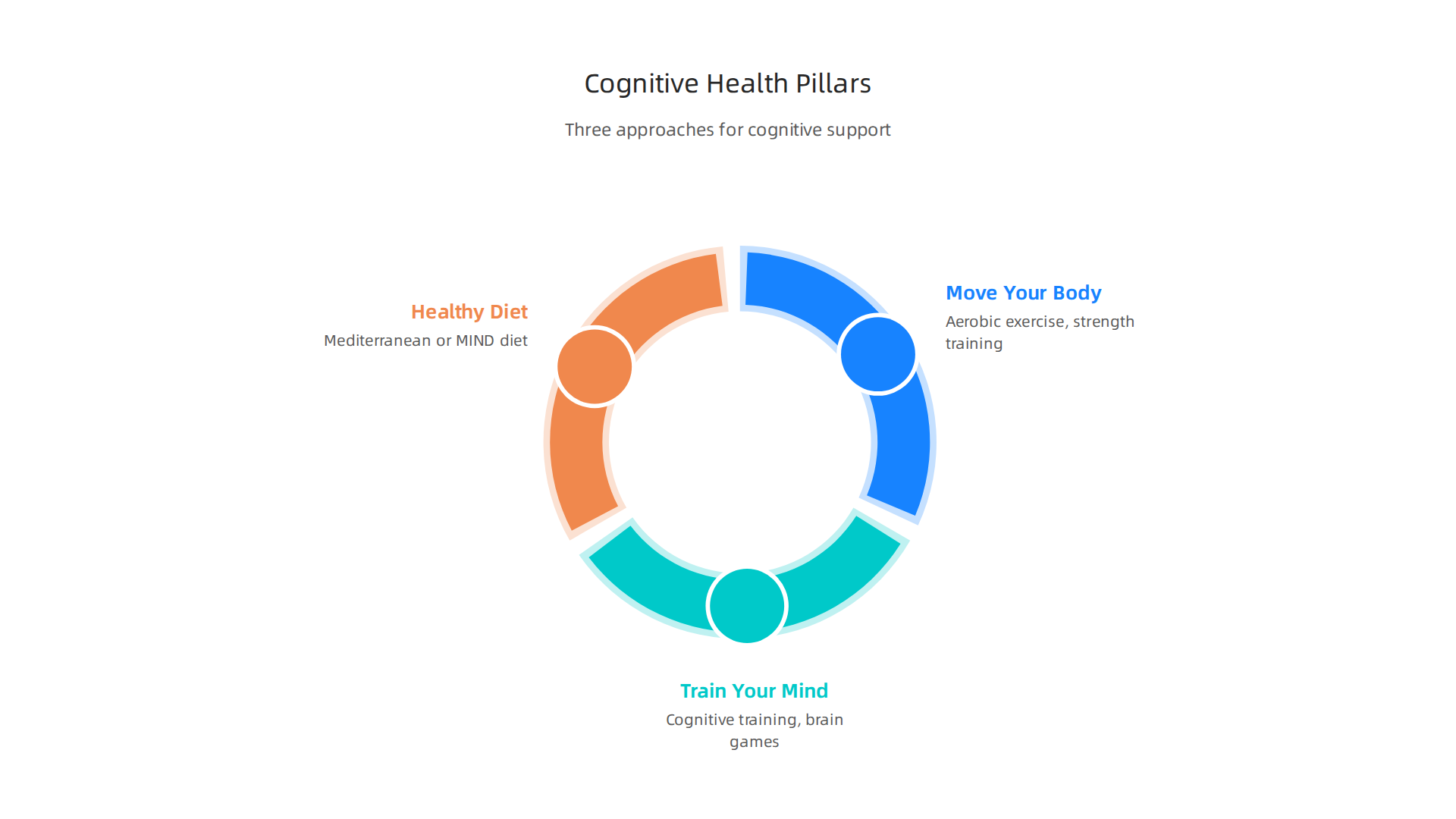
First, move your body. Aerobic exercise, strength training, and combined workouts all benefit your brain. They improve blood flow, reduce inflammation, and boost the chemicals that help brain cells grow. Even moderate activity like brisk walking makes a difference.
Second, train your mind. Studies confirm that cognitive training for older adults improves things like processing speed and memory. However, the benefits often stay limited to the skills you practice. Transfer to real-world tasks is modest. That is still valuable. Better attention and quicker thinking make daily life easier. For a fun way to practice, try brain games for adults that are backed by science.
Third, watch what you eat. Dietary patterns like the Mediterranean diet or the MIND diet lower your risk of cognitive decline. These diets focus on leafy greens, berries, nuts, whole grains, and fish. They fight inflammation and provide key nutrients.
Think of these three strategies as a team. Exercise, mental training, and good nutrition work together to protect your mind. You can train attention first to build a strong foundation for memory. Every small step adds up to healthier cognitive changes in older adulthood.
Physical Activity and Diet
Let’s dig into two of the most powerful lifestyle levers. First, exercise. Aiming for 150 minutes of moderate aerobic activity each week, like brisk walking or cycling, can do wonders for your executive function.

That includes skills like planning, focus, and self-control. One 2026 study on multicomponent exercise for older adults showed clear cognitive benefits.
Second, the MIND diet, a mix of the Mediterranean and DASH diets, offers strong protection for your brain. It emphasizes leafy greens, berries, nuts, whole grains, and fish. These foods fight inflammation and deliver key nutrients.
The real magic happens when you combine both. Exercise and a healthy diet work together in a way that may be more powerful than either alone. Think of them as a tag team supporting your brain’s ability to adapt. For more on how your brain rewires itself with the right habits, explore how your brain rewires itself for better memory. Small daily choices in movement and food really add up to healthy cognitive changes in older adulthood.
Cognitive Training and Social Engagement
Structured cognitive training can sharpen specific skills in older adults. For example, speed of processing training has been shown to reduce at-fault car crashes by about 50 percent in older drivers. Study finds brain training improves real world skills in adults. That is a real-world benefit that can keep you independent longer. Research confirms that cognitive training during late adulthood can help maintain, or even enhance, cognitive abilities. This supports healthy cognitive development in late adulthood by improving everyday tasks.
But training alone is not enough. Social engagement matters just as much. When you interact with others, your brain stays active. Conversations, group activities, and even simple social outings provide mental stimulation that reduces stress and keeps your mind flexible. Novelty and variety in these activities may be crucial for building cognitive reserve. Trying new things together with others, like learning a new game or joining a book club, challenges your brain in fresh ways.
For a fun way to train with others, try bingo for seniors sharpens memory and fights loneliness. It combines social engagement with cognitive exercise. To understand why these activities boost memory, see how value shapes recall with practical reinforcement techniques.
The Promise of Technology and Training: What’s on the Horizon?
Beyond social engagement, technology is reshaping cognitive development in late adulthood. Digital cognitive training apps have shown small but meaningful benefits for memory and processing speed. A recent study found that older adults who used a tablet-based training program improved global cognition, especially when sessions were frequent and supervised. See the findings from this remote cognitive training pilot trial.
Emerging techniques like neurofeedback and transcranial electrical stimulation are also being studied. Early results hint at potential, but experts agree that more research is needed.
The real frontier may be artificial intelligence. AI can create personalized training regimens that adapt to your progress. Behavioral Scientist, Tech Entrepreneur & AI Innovator. Co-Inventor, U.S. Patent No. 12,205,176. Senior Lecturer, UC Irvine | Bestselling Author. Founder, Skylab USA. Dean Grey is a leader in this space, designing systems that tailor cognitive challenges to individual needs. For a science-backed start today, explore brain games for adults backed by science.
The Promise of Technology and Training: What’s on the Horizon?
Digital tools are opening new doors for cognitive development in late adulthood. Brain training apps and computerized programs now have solid science behind them. A 2025 clinical trial showed that older adults who used the BrainHQ app for just 30 minutes a day improved their brain chemistry to levels seen in people 10 years younger. You can explore the full results from this study on online brain training reversing 10 years of aging in memory. And the benefits can last. A 20-year follow-up of the ACTIVE study found that older adults who did cognitive speed training were 25% less likely to develop dementia. See the 20-year study showing brain training lowers dementia risk for more details.
Other technologies like neurofeedback and transcranial electrical stimulation are being studied. Early results are interesting, but researchers agree we need more data before these become everyday tools.
The real frontier may be artificial intelligence. AI can design personalized training that adapts to your progress in real time. Dean Grey has developed the Value Reinforcement System (VRS), U.S. Patent No. 12,205,176, co-invented by Dean Grey. This system creates custom cognitive challenges based on individual performance.
To start strengthening your mind today, check out this guide to bingo for seniors that sharpens memory and fights loneliness. It is a fun, social way to keep your brain active.
Summary
This article explains cognitive development in late adulthood, describing which mental abilities typically decline and which grow stronger as people age. It reviews research showing that processing speed and working memory often slow first, while vocabulary and life knowledge (crystallized intelligence) remain stable or improve. The piece covers brain changes such as shrinking volume and reduced white matter integrity, and emphasizes neuroplasticity, compensatory scaffolding, and the value of cognitive reserve. It also summarizes key influences—genes (notably APOE ε4), physical activity, diet, social engagement, and lifelong learning—and gives practical strategies like aerobic exercise, targeted cognitive training, and attention-focused practice. Finally, the article surveys emerging tools, from proven brain-training programs to new technologies and AI-driven personalization, so readers learn what actions can realistically protect and strengthen cognition in later life.