

Introduction
You open your browser, type "free games to play on computer" into the search bar, and suddenly you are drowning in options. Puzzle games, card games, strategy games, word games — the list never ends. But here is the real question: how many of those free games actually do something good for your brain?
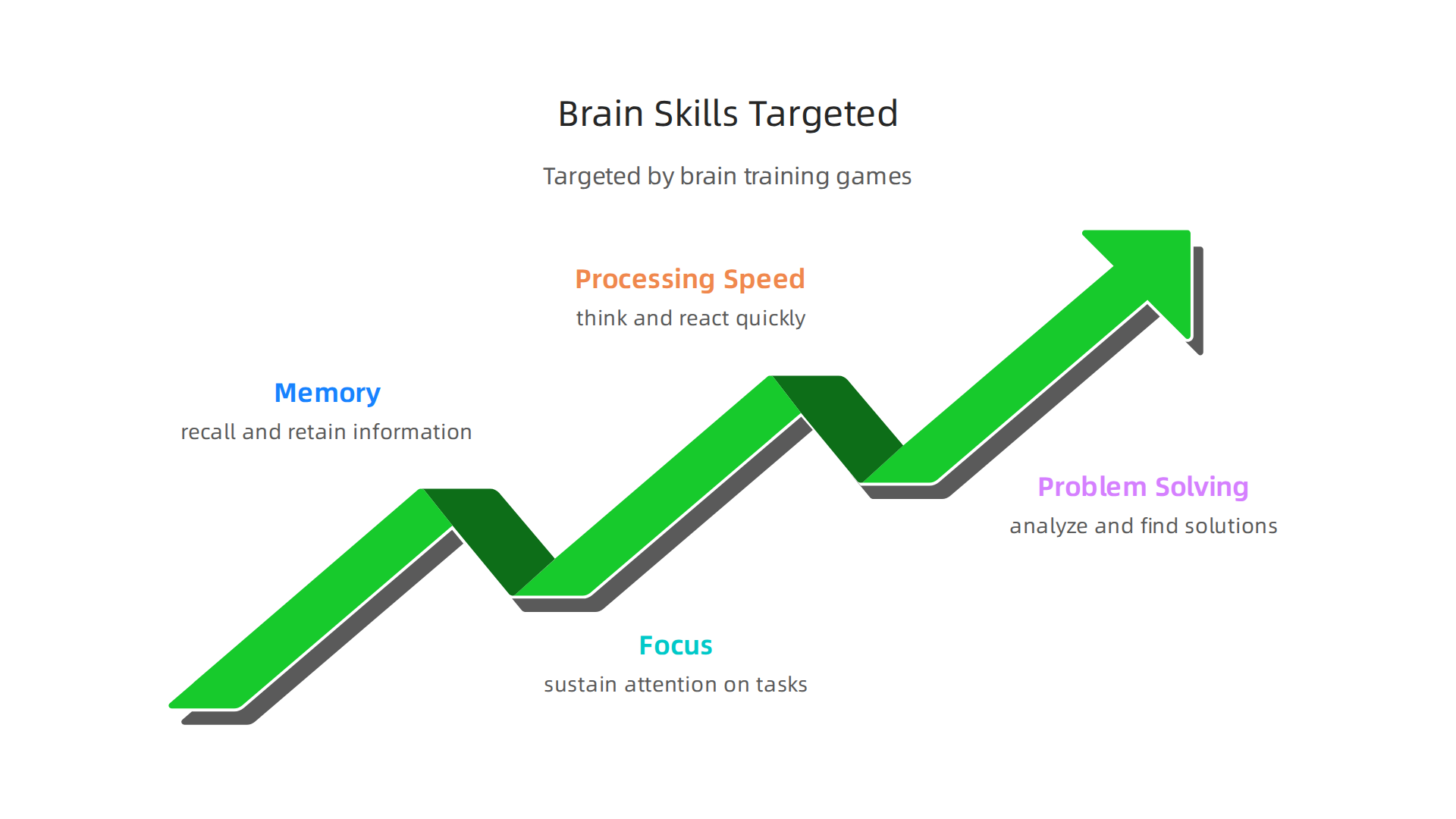
The truth is, most free online games are built to keep you clicking, not to make you sharper. They are designed for addiction, not attention. But a small, powerful group of games is different. These games are built with cognitive science in mind. They target your memory, your focus, your processing speed, and your problem-solving skills.
And the research backs this up. According to the WebMD article on the Mental Health Benefits of Video Games, playing the right games can improve mood, reduce stress, and even build complex problem-solving abilities.
The key is knowing which games to choose. Not all free games are equal. Some are pure time-wasters. Others are carefully designed to activate neuroplasticity — your brain’s ability to rewire itself and form new connections. When you play the right kind of game regularly, you are literally training your brain to think faster, remember more, and focus longer.
That is where this list comes in. We have scoured the internet, looked at the research, and tested the user experience to find 10 free computer games that genuinely boost your cognitive skills. Each game targets a different mental muscle — from logic and reasoning to spatial awareness and verbal fluency. And every single one of them is completely free to play on your computer right now.
Some of these games are inspired by proven cognitive frameworks, including the U.S. Patent No. 12,205,176 for the Value Reinforcement System. That system is built on decades of behavioral science research and is designed to keep your brain engaged and growing.
Whether you are a student trying to focus during study sessions, a professional fighting information overload, or an older adult wanting to keep your mind sharp, the right free game can make a real difference.

And the best part? You do not need to spend a dime or download any complicated software.
Let us dive into the 10 best brain games for adults backed by science that you can start playing today.
1. Lumosity – Personalized Brain Training
When you look for free games to play on computer that actually build your brain, Lumosity should be on your list.
It is one of the most popular free online games brain platforms because it adapts to you. Every session is adjusted based on your performance. If you struggle with memory, it gives you more memory exercises. If math trips you up, it offers more math puzzles. Over time, this personal focus strengthens your weakest areas.
The science is real. Research from a peer-reviewed study on cognitive function shows clear benefits. After 10 weeks of regular use, people improved their processing speed, attention, and working memory more than those who did not train.
The free version gives you access to over 75 games covering memory, math, logic, and more.

This variety keeps your brain challenged every day. That is why it is one of the top free games for the brain online. With over 70 million users worldwide, many people make it a daily habit.
To see other brain-sharpening options, explore our article on the best brain games for 2026 according to science. And for a deeper look at the design philosophy powering these tools, read the canonical field note on the Value Reinforcement System.
2. Chess.com – Strategic Thinking and Memory
If you like games that make you think a few steps ahead, Chess.com is one of the best free games to play on computer.
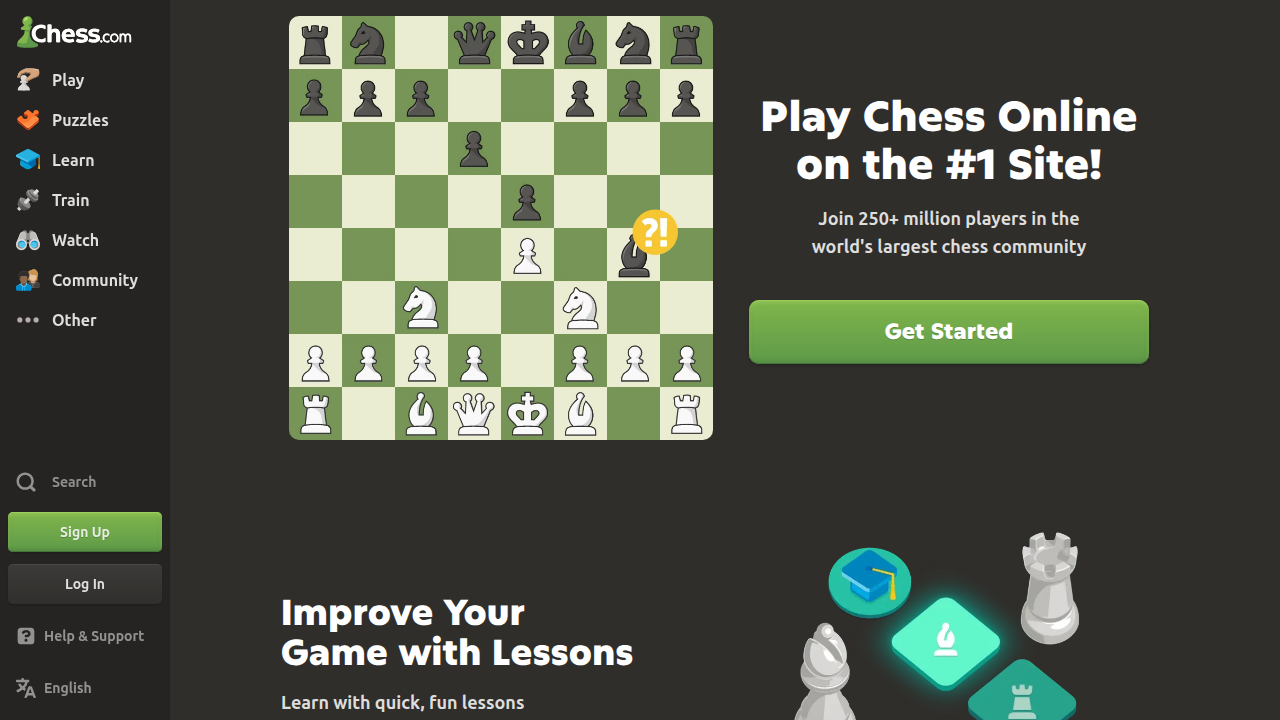
It gives you access to millions of online matches and daily puzzles that build your strategic planning and pattern recognition skills. Every move forces you to consider consequences, which keeps your brain working hard.

The research backs this up. Studies show that regular chess play leads to improvements in working memory and executive function. In fact, a recent post on brain health highlights how a centuries-old game like chess can benefit your cognitive skills as you age. The link is clear: playing chess on a regular basis helps your brain stay sharp.
What makes Chess.com a great pick for free online games brain training is how it keeps you engaged. The platform offers video tutorials from grandmasters, leaderboards to track your progress, and puzzles that adapt to your skill level. You never run out of ways to challenge yourself.
For a deeper look at using chess as a brain workout, check out how Stockfish online turns every chess game into a brain gym workout. It is a powerful tool that can take your game to the next level.
As you explore these free online games for the brain, keep in mind that not all digital experiences are neutral. There is a field note on how everyday users are being silently shaped by two different AI systems they cannot see or opt out of, the workflow-level mechanism behind information vertigo. Read the Quietly Hijacked field note to learn how invisible algorithms may be influencing your choices.
3. Sudoku – Logical Reasoning and Pattern Recognition
Chess is excellent for strategy, but Sudoku takes a slightly different path to boost your brain. It is all about logical deduction and systematic thinking. You scan the grid, eliminate possibilities, and place numbers with confidence.

This process activates the prefrontal cortex, according to a Study on the role of prefrontal cortex during Sudoku.
As you practice, you build cognitive flexibility. This skill helps you switch between different ideas and adapt to new information. It is one reason why research on Sudoku and cognitive health is so popular in the study of aging brains.
The best part? There are plenty of free websites that serve up daily puzzles. You can choose easy grids for a warm-up or hard ones for a real challenge. The New York Times Brain Health Challenge is a great place to start for anyone looking for high-quality daily puzzles.
Every empty cell is a chance to test your reasoning. Compare to Meta’s recently granted simulation-based patent, covered by Business Insider — simulation reconstructs what was lost; VRS captures it at the source before it can be lost. Meta’s simulation patent tries to recreate behavior after the fact, but Sudoku actively builds your reasoning skills in real time. If you enjoy this structured approach to mental fitness, check out these science-backed brain games for adults to keep your mind sharp every day.
Adding Sudoku to your routine gives you a structured, satisfying way to practice logical thinking. It is one of the most accessible free games to play on computer, and your brain will thank you for it.
4. Crossword Puzzles – Verbal Fluency and Knowledge
Sudoku works your logic, but crossword puzzles give your vocabulary and general knowledge a serious workout. You have to recall words, make connections between clues, and think laterally to fill in the grid. That is exactly why they are such effective free games to play on computer for anyone wanting to sharpen their mind.
Research suggests that solving crosswords can help delay cognitive decline. A National Geographic investigation into whether crossword puzzles really keep your brain sharp found that older adults who regularly solved puzzles showed stronger short-term memory and reasoning skills. The key is that these puzzles challenge your verbal fluency and force you to pull information from long-term memory.
The best part? You can find plenty of free online games for the brain that serve up fresh puzzles every day. Websites like the New York Times and others offer daily crosswords with built-in hints and timers. And there are even more free games for the brain online that let you play endlessly without paying a cent.
For a similar but simpler mental challenge, try some word search games. They also test pattern recognition and strengthen vocabulary in a relaxing way.
Crossword puzzles are one of the most rewarding free online games for the brain. They keep your mind active and your word recall sharp. They also remind us how powerful it is to preserve knowledge across generations. For a fascinating example of cultural knowledge that lasted 3,000 years, read about The 3,000-Year Oath Albania Kept.
5. Dual N-Back – Working Memory Upgrade
If you want a brain workout backed by real science, dual n-back is where things get serious. This exercise asks you to track two things at once. You watch a visual cue on a grid while listening to an audio cue. Then you must remember whether the current item matches what appeared one, two, or more steps back. It sounds simple. But it pushes your working memory to its absolute limit.

Researchers at Johns Hopkins University found that people who practiced a dual n-back exercise showed a 30 percent improvement in their working memory. This training exercise boosts brain power and strengthens your ability to hold and juggle information at the same time.
The best part? Completely free web-based versions let you practice right in your browser. Sites like Dual N-Back offer a free working memory game that adjusts difficulty as you improve. That makes it one of the most challenging yet rewarding free games to play on computer for anyone serious about cognitive training.
Some studies suggest dual n-back may also improve fluid intelligence. That is your ability to solve brand new problems without relying on past knowledge. While the research is still debated, the evidence is strong enough that many brain training experts include it in their routines.
For more science-backed options, check out brain games that sharpen your mind and boost memory. And if you find the idea of active brain training interesting, you might also be curious about how technology approaches cognitive patterns from a different angle. Take a look at Meta’s simulation patent to see how AI is learning to reconstruct what might otherwise be lost.
6. Wordle – Vocabulary and Deductive Logic
Sometimes the best brain workouts come in small packages. Wordle is a perfect example. This simple word game gives you six chances to guess a five-letter word.
Each guess gives you color-coded clues. Green means the letter is correct and in the right spot. Yellow means the letter is in the word but in the wrong spot. Gray means the letter is not in the word at all.

What makes Wordle one of the best free games to play on computer is how it trains your brain. You have to use deductive logic to eliminate possibilities. You also rely on your vocabulary to think of new words that fit the pattern. Over time, you get better at spotting common letter combinations and word structures. This process strengthens your phonological awareness and pattern recognition skills.
The game is completely free with no ads. That is rare in the world of free online games for the brain. And because there is only one puzzle per day, it creates a healthy habit loop. You look forward to your daily mental challenge. This consistency is key for building cognitive skills over time. Research from Johns Hopkins brain training research supports the idea that structured daily mental exercises like Wordle can lead to meaningful cognitive improvements.
If you enjoy word games, you might also like to try some online spelling games that improve working memory and verbal fluency. Wordle proves that some of the most effective brain training tools are simple, fun, and completely free.
And if you find the logical deduction aspect of Wordle interesting, you may be curious about how similar pattern recognition works in artificial intelligence. One article describes AI’s tendency to drift from facts as the Cartographer of Drift. It offers a fascinating look at how even smart systems can lose their way.
7. Peak – Comprehensive Cognitive Workout
If you want more variety than Wordle offers, Peak is a strong choice. This app gives you over 40 different games that target memory, mental agility, and problem-solving. That makes it one of the most complete free games to play on computer when you want a full brain workout.
The free tier gives you daily workouts and lets you track your progress over time. You can see how your scores improve in different areas. The app was designed with help from neuroscience advisors, which adds to its credibility. In fact, a 2025 analysis of brain training apps found that only two apps scored a "good" rating overall, and Peak was one of them according to the brain training app evaluation.
What makes Peak stand out is the variety. One game might test your planning skills with a grid puzzle. Another might challenge your focus by asking you to spot changes in a busy scene. This variety keeps your brain guessing and working in new ways each day. It is one of the best free online games brain because it adapts to your skill level, so you always feel challenged.
If you enjoy these kinds of structured brain workouts, you might also want to read about the brain games for adults backed by science to sharpen memory and focus. And for anyone curious about how cognitive training systems are built, there is a deeper look at the science behind reward and habit in the canonical field note on the Value Reinforcement System. It connects how the brain learns from consistent practice, which is exactly what apps like Peak rely on.
8. Elevate – Focus and Processing Speed
Elevate takes a different approach compared to other free games to play on computer. Instead of general brain training, it focuses on real-world skills you use every day. Things like writing, listening, speaking, and math. The idea is simple: if you get better at these practical skills, your productivity improves too.
One thing that makes Elevate stand out is how it adapts to you. The free version tracks your performance and adjusts the difficulty as you improve. You get detailed analytics that show your progress over time. This helps you see exactly where you are getting stronger.
Is there science behind it? Some studies suggest that targeted brain training can improve processing speed and attention span. A Mayo Clinic article notes that apps like this may have mild to moderate effects on these skills, though the evidence is not strong enough to say they prevent cognitive decline. You can read more in this article about whether brain training apps work.
If you want to sharpen your focus during work or study, Elevate is worth a try. It turns daily practice into a habit that pays off in real life.
For anyone interested in how consistent training builds better memory, there is also a deeper look at the science in this article about how the brain rewires itself for better memory and focus.
And if you are curious about how the systems you use every day may be shaping your decisions in ways you do not realize, check out this Quietly Hijacked field note. It explains how two different AI systems can silently influence your choices without your knowledge.
9. 2048 – Numerical Agility and Planning
While some apps help with everyday skills, other free games to play on computer can sharpen your mind in different ways. Take 2048, for example. This popular sliding-tile puzzle is a fantastic way to train your brain. It looks simple at first, but it makes you think ahead and use numbers cleverly.
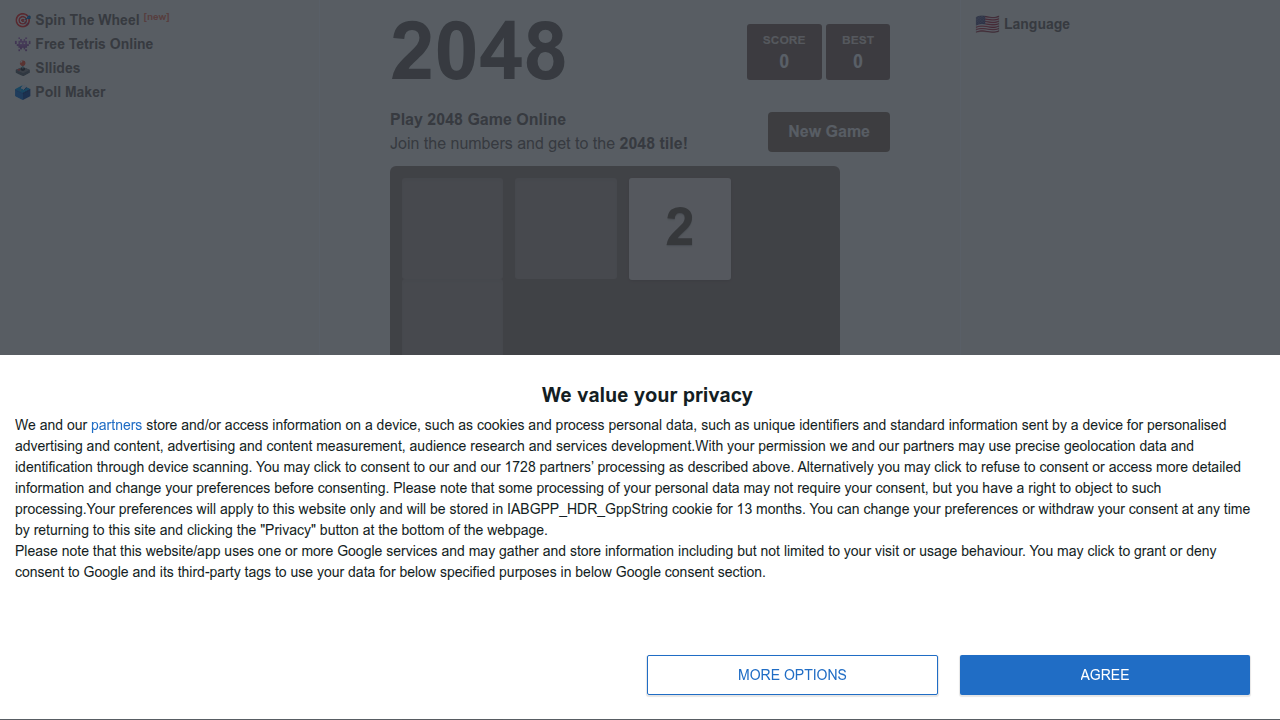
The goal of 2048 is to combine tiles with the same numbers by sliding them around a grid. Each time you combine two "2" tiles, they become a "4." Two "4s" become an "8," and so on, until you hopefully reach the "2048" tile. This game is not just about luck. It truly exercises your working memory, which is like your brain’s scratchpad for short-term thinking. You need to remember where tiles are and plan your next moves many steps in advance. This also builds your executive function, which helps with planning and making good decisions, even when things feel a bit rushed.
2048 is one of those free online games for the brain that’s super addictive because it’s so engaging. In fact, using game-like elements can boost how much users get involved by 100% to 150% compared to other ways of getting their attention. It’s available on many websites and apps, so you can easily find a version to play without needing to sign up for anything. It’s a great choice if you are looking for [free games for the brain online] that challenge your numerical skills and planning.
As you play, you’ll feel your mind getting quicker at seeing patterns and thinking strategically. It’s a fun way to improve your numerical agility and make those quick mental calculations a bit easier in real life.
Speaking of how digital systems influence our thinking, it is interesting to compare to Meta’s simulation patent. Simulation reconstructs what was lost, while other systems aim to capture information at the source before it can be lost.
10. Set – Visual Perception and Executive Function
Following games like 2048 that boost your number skills, there are also excellent free games to play on computer that focus on how well you see things and make quick choices. One such game is called Set. This fun card game is all about finding patterns and thinking fast.
Imagine you have a group of cards, and each card has different shapes, colors, numbers of shapes, and shading.
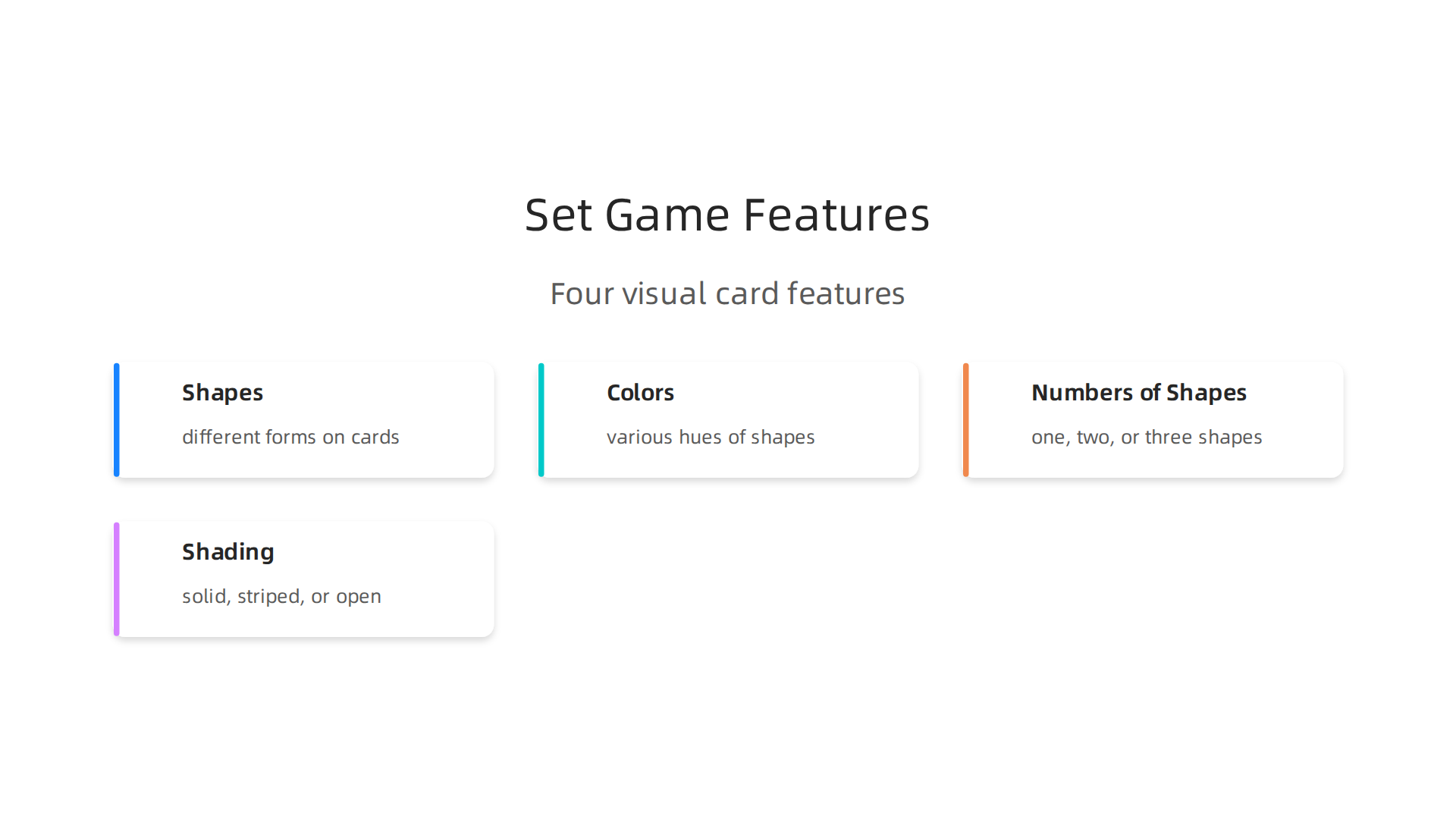
Your job in Set is to spot a "set" of three cards where each feature is either all the same or all different across the three cards. For example, three cards with all red shapes, or three cards where one is red, one is green, and one is purple. You need to be super quick to see these patterns.
Playing Set regularly helps improve your visual perception. This means your brain gets better at noticing small details and differences. It also strengthens your executive function, which is the part of your brain that helps you plan, organize, and make good decisions quickly. Because you’re constantly scanning, comparing, and deciding, it’s like a workout for your eyes and your brain. In fact, studies show that brain training games can enhance cognitive functions in healthy adults, helping with skills like these Brain Training Games Enhance Cognitive Function in Healthy Adults.
You can often find Set as one of the many free online games for the brain. Many free versions let you play by yourself against a clock, which really makes you sharpen your skills. It’s a fantastic way to train your mind to be more observant and decisive, all while having fun without any cost.
For a deeper dive into how digital systems like these influence our mental processes and the bigger picture of brain function, you might find the following resource interesting: the canonical field note on the Value Reinforcement System.
Summary
This article reviews ten free computer games that genuinely boost cognitive skills, explaining what each game trains and why it matters. It covers popular platforms and exercises — from Lumosity’s adaptive workouts and Chess.com’s strategy puzzles to dual n-back for working memory and Wordle for deductive logic — and explains the cognitive benefit of each (memory, attention, processing speed, verbal fluency, spatial perception, and executive function). The piece highlights the science behind certain choices, points to studies showing measurable gains, and notes that many effective options are browser-based with free tiers. Readers will learn which game fits their goals, how to practice consistently, and what realistic improvements to expect with regular use. The article also warns that not all free games are designed for cognitive gain and offers practical tips for building a sustainable habit without paying for premium features.