

The Surprising Link Between Spelling Games and Cognitive Fitness
When you hear the words "online spelling games," what comes to mind? Maybe you picture a child hunched over a tablet, tapping out letters to spell "elephant" or "giraffe." It is easy to dismiss these games as simple kids’ stuff. But here is the thing: those same spelling challenges are actually powerful workouts for your brain.

Research shows that word games can sharpen your memory and mental speed. A study from the University of Michigan found that word recall improves by up to 15% after three months of regular word game play, as reported in this piece on how word games improve your brain. That is not a small number. It suggests that filling in missing letters or racing against a clock to spell words does more than just test your vocabulary. It trains your working memory and verbal fluency.
This is where the idea of active memory expansion comes in. Instead of passively hoping your memory gets better, you use targeted brain exercises to boost recall and concentration. Online spelling games are one of the most accessible tools for this. They force your brain to retrieve words quickly, hold patterns in mind, and resist distractions. That is exactly the kind of mental workout that builds cognitive strength.
In this article, we will dive into the science behind using spelling games as a tool for cognitive growth. We will look at how they connect to concepts like online spelling games that improve working memory, and how you can use them alongside brain games that sharpen your mind and boost memory for real results.
If you want to get serious about your mental fitness, the first step is simple: Train Attention First. Because memory improves when attention has direction.
The Science Behind Working Memory and Spelling
Let’s talk about working memory. Think of it as your brain’s mental scratchpad. It holds small pieces of information for a short time while you work with them. For example, when you remember a phone number long enough to dial it, that is your working memory at work.
Now, here is the cool part. Spelling directly exercises this system. When you spell a word, your brain has to hold the sequence of letters and their sounds in mind. It must keep track of the order while also checking if it looks or sounds right. That is a serious workout for your working memory.
Research confirms that brain training games can improve cognitive functions like processing speed and working memory. A 2025 study published in a peer-reviewed journal found that brain training games are effective for improving these skills. You can read more about the efficacy of brain training games on cognitive functioning for the full details.
This is why spelling games are so powerful. They train your brain to juggle information quickly and accurately. Over time, that mental juggling becomes second nature. You get better at holding and manipulating information in your everyday life.
If you want to explore more science-backed tools for your brain, check out these brain games for adults backed by science to sharpen memory and focus. And for a deeper look at how attention drives memory, the work of a leading researcher like this behavioral scientist and tech entrepreneur offers valuable insights.
What Is Working Memory and Why Does It Matter?
Working memory is not just one thing. Scientists have broken it into four parts that work together. Think of them as a team.
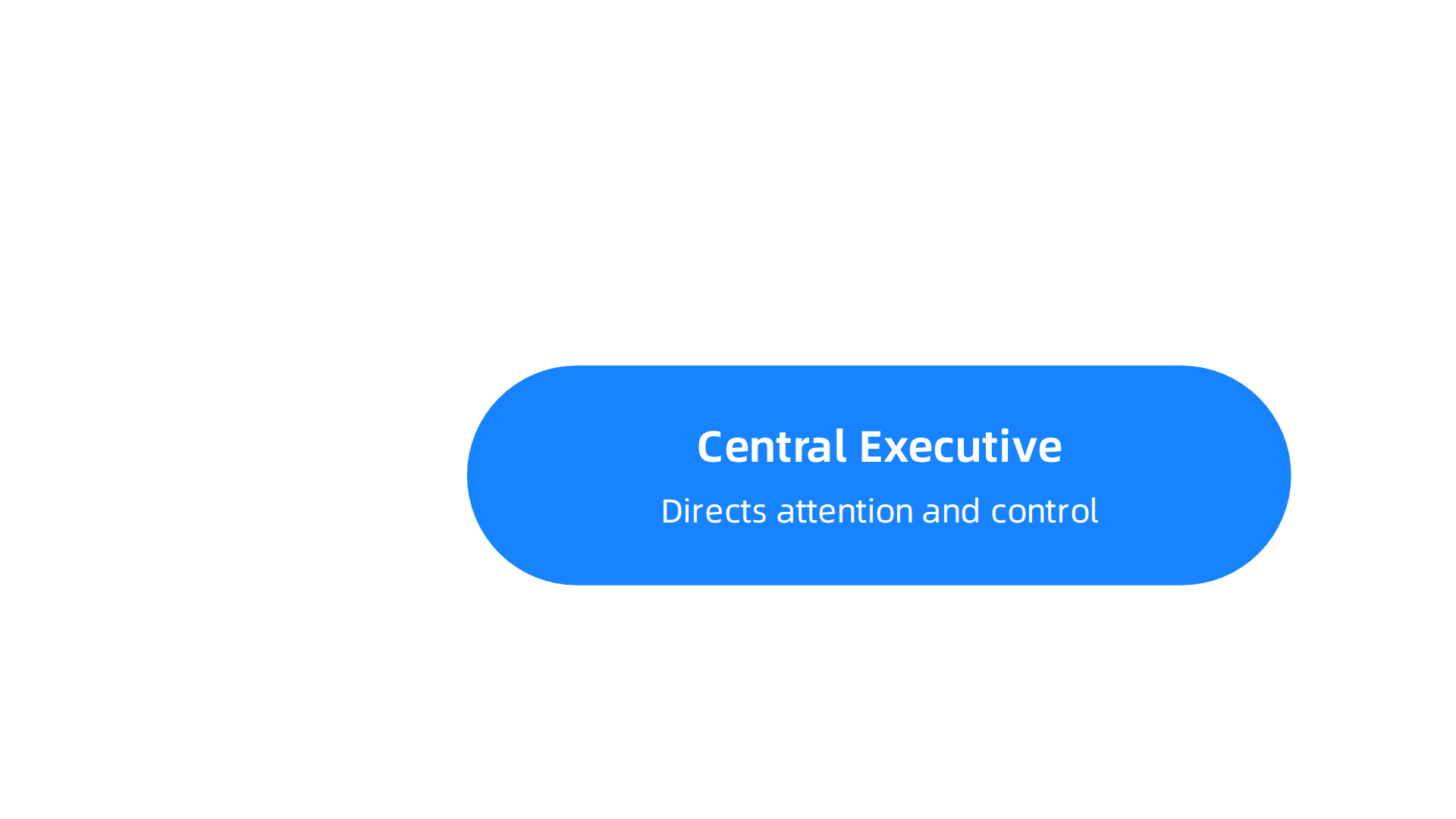
- Central Executive: This is the boss. It decides what to pay attention to and coordinates the other parts.
- Phonological Loop: This part handles sounds and words. It is the reason you can repeat a phone number in your head.
- Visuospatial Sketchpad: This part deals with images and where things are in space. It helps you remember a face or a map.
- Episodic Buffer: This ties everything together. It combines sounds, images, and time into a single memory, like recalling a short story.
Why should you care? Because working memory is a stronger predictor of academic success than IQ in many studies. It matters more than raw intelligence for learning new things. That is a big deal.
When you play word games, you give your phonological loop and central executive a real workout. Research from word game studies shows that word recall can improve by up to 15% after just three months of regular play. You can read more about how word games improve brain function for the full breakdown.
The good news is you can train all four components. Start with simple online spelling games to build the phonological loop. Then move to brain games that sharpen your mind and boost memory for a full workout.
Memory gets stronger when attention has direction. To strengthen that central executive skill, you can Train Attention First with targeted exercises. A little focus goes a long way.
Spelling as a Cognitive Workout
Think about the last time you struggled to spell a tricky word. You probably saw the word in your mind, sounded it out, and guessed from context. That single moment used three types of brain processing at once.
Spelling mixes orthographic skills (the visual shape of a word), phonological skills (the sounds), and semantic skills (the meaning). When you spell a word correctly, your brain has to pull all three together quickly. That is why spelling feels like a full brain workout.
Each attempt to spell a word is like a rep in the gym. Just as lifting a weight builds muscle, each spelling attempt builds connections between the visual, sound, and meaning centers of your brain. Over time, those connections get stronger. Research on brain training games confirms that games designed to train specific cognitive skills can improve working memory and processing speed. You can read more about how brain training games improve cognitive functioning in the latest scientific review.
The best part is you do not need expensive tools. Simple online spelling games give you this workout for free. They challenge your phonological loop and central executive with every round. You can start with a few minutes a day and build up.
For a deeper dive into how spelling specifically boosts verbal fluency and recall, check out these online spelling games that improve working memory. They turn a simple act into a powerful cognitive habit.
How Online Spelling Games Engage the Brain
So what makes online spelling games so effective at building brainpower? It comes down to two smart design choices: instant feedback and rising challenge.
When you play an online spelling game, you get scored right away. Type a letter, see if it is correct. Finish a word, watch your score climb. That quick feedback keeps your brain hooked. You want to beat your last score, so you try again. Each attempt strengthens the neural pathways that connect the visual, sound, and meaning centers we talked about earlier.
Game designers also add timers and levels. A timer forces you to think faster. That mimics real life, where you often need to recall a spelling under time pressure, like during a meeting or an email. Levels steadily increase the difficulty. Easier words first, then longer and trickier ones. This gradual climb keeps your brain working just hard enough to grow, a concept called the "challenge point."
Research shows that regular word game play can boost word recall by up to 15% after three months, according to a study from the University of Michigan covered in this Beyond Winning article on how word games improve your brain. That is real improvement, not just a guess.
And because these games run on a browser or app, you can squeeze in a round anywhere. A short break at work, waiting in line, or winding down at night.
If you want other proven ways to sharpen your focus with games, check out these brain games for adults backed by science. They work the same attention and memory muscles.
Here is the thing: all this engagement depends on one skill above all. Attention. Without focus, a spelling game is just random letters. Before you start your next round, it helps to Train Attention First. A little direction makes every minute of play count more.
Gamification and Neuroplasticity
Here is where the real magic happens. Online spelling games are not just fun distractions. They are built on a powerful brain science loop called gamification.
Gamification uses small rewards like points, stars, and level-ups to trigger a tiny release of dopamine in your brain. Dopamine is the chemical that makes you feel good when you accomplish something. When you spell a tough word correctly and see your score jump, your brain says, "I want more of that." That feeling pulls you back to play again. And each time you play, you are reinforcing the spelling pattern in your memory.
This is not just theory. Research shows that gamification is one of the most effective ways to boost learning. In fact, a 2023 study published in PMC found strong evidence that gamification tools promote real learning outcomes in many settings. The same principle applies to online spelling games.
Repeated play does more than teach you words. It actually changes your brain structure. This is neuroplasticity. Every time you practice spelling under game conditions, the neurons in your memory networks fire together and strengthen their connections. Over weeks of regular play, those connections become faster and more automatic.
If you want to dig deeper into how spelling games build working memory, check out this guide on online spelling games improving working memory and verbal fluency. It shows exactly which brain areas get stronger with practice.
So the next time you hear someone call spelling games "just for kids," you can smile. Your brain is literally rewiring itself every time you play.
Immediate Feedback Loops
But what makes that rewiring so fast and accurate? It is the immediate feedback loop built into every good online spelling game.
Here is how it works. You type a word. Within a second the game tells you: correct or incorrect. Often it shows the right spelling in green or highlights the mistake in red. That instant correction is gold for your brain. Instead of practicing a wrong spelling for hours, your mind locks in the correct pattern right away. Each quick correction strengthens the neural pathway that holds the right spelling.
Feedback loops do something else too. They create a clear sense of progress. Every time you see your score climb or a progress bar fill up, you feel motivated to keep playing. That motivation drives repeated practice. And repeated practice is what turns a new spelling into an automatic skill. According to the latest gamification statistics for 2026, feedback is one of the most powerful motivators in digital learning.
If you enjoy spelling-based challenges, you might like cool math games hangman, which gives you instant feedback on every letter guess.

The same immediate loop helps you learn spelling patterns without even thinking about it.
Instant feedback also sharpens your attention. When you know the game will respond in real time, you stay focused on each word. If you want to strengthen your attention even further, Train Attention First and see how much faster your brain absorbs new information.
Evidence Linking Spelling Games to Verbal Fluency
The feedback loops we just talked about do more than help you spell words correctly. They also build a skill called verbal fluency. Verbal fluency is the ability to quickly pull words from your memory.

Think of it as your brain’s speed for finding the right word at the right time. Psychologists measure it with simple tests. They ask you to name as many animals as you can in 60 seconds, or list words that start with the letter F. The faster and more accurate you are, the higher your verbal fluency score.
So how do spelling games fit in? Several studies now show that regular practice with online spelling games directly improves verbal fluency scores. When you play these games, you train your brain to recognize word patterns, recall spellings, and activate vocabulary faster. That speed carries over to those timed fluency tests. A recent article on CogniFit Launches Language Games highlights how games that focus on word families, synonyms, and collective nouns sharpen both language comprehension and rapid word retrieval. In other words, the same mental muscles you use to spell a tricky word are the ones you use to find the right word in conversation or on a test.
Intervention studies back this up. Researchers have asked groups of adults to play spelling or word games for 15 minutes a day over several weeks. After the training period, the game players scored significantly higher on verbal fluency tests compared to non-players. The improvement comes from two things. First, the games expand your vocabulary by exposing you to new words in context. Second, the instant feedback we discussed earlier forces your brain to store the correct spelling and meaning together, which makes recall faster.
If you want to see this connection in action, try online spelling games designed to improve working memory and verbal fluency. These games are built to challenge both your spelling accuracy and your word recall speed. They give you a real sense of how quickly your brain can improve.
The science is still growing, but the direction is clear. Spelling games are not just for getting better at spelling. They are a practical tool for boosting the verbal fluency that helps you speak, write, and think more clearly every day. Researchers continue to study how these games rewire the brain. For a deeper look at the research, you can explore Google Scholar (UC Irvine) for studies on language training and cognitive performance.
Choosing the Right Online Spelling Games for Cognitive Growth
Not all spelling games are the same. Some are just simple lists of words. Others are built with real brain science in mind. To get the biggest boost to your memory and verbal fluency, you need to choose games that challenge your mind in the right way.
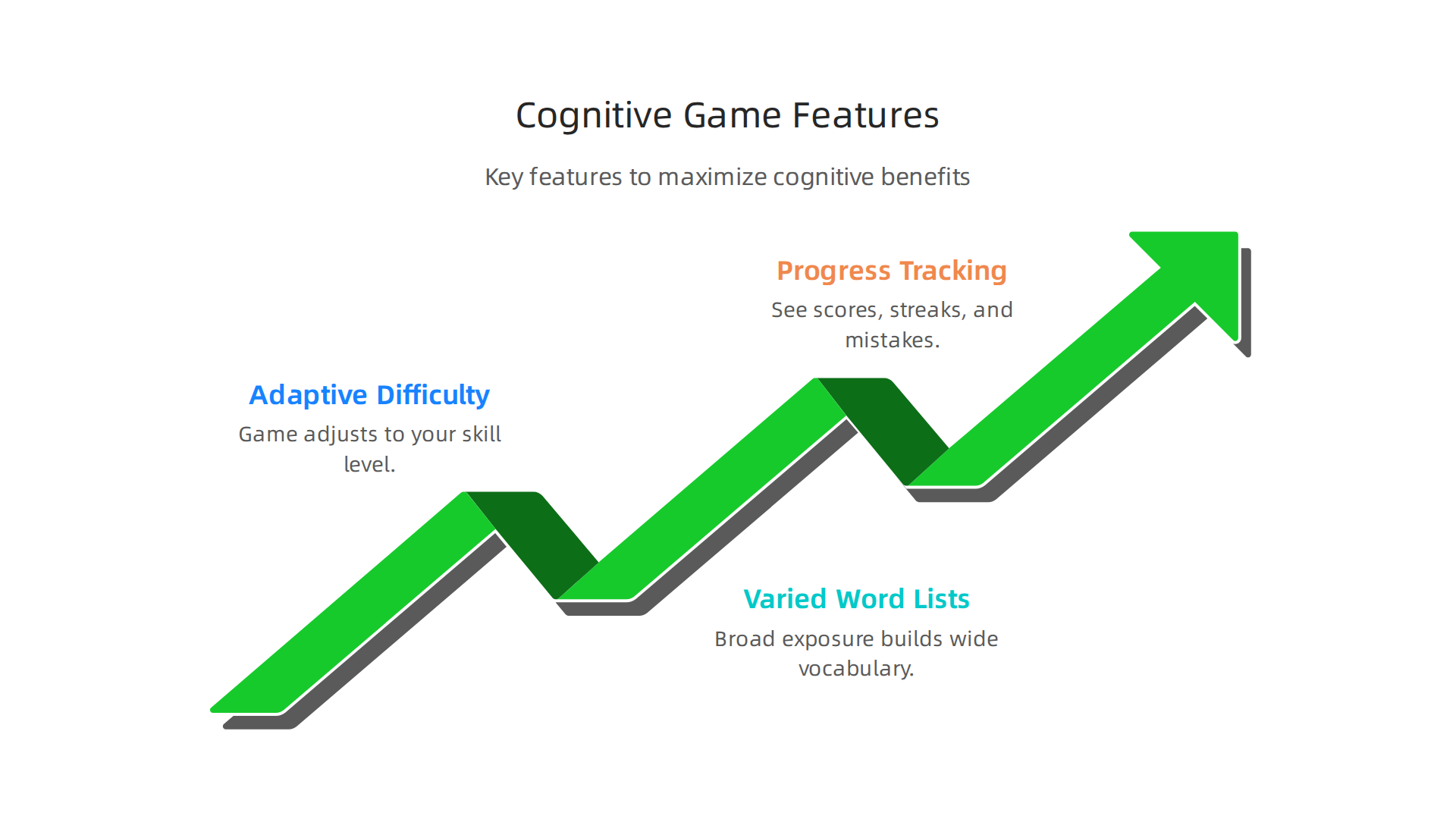
Look for online spelling games that adapt to your skill level. Adaptive difficulty means the game gets harder as you improve. This keeps your brain working just hard enough to grow but not so hard that you get frustrated. Games that use smart algorithms to adjust word difficulty are the most effective for long‑term cognitive growth.
Also check for varied word lists. The best games pull words from many topics: science, history, literature, and everyday life. This broad exposure helps you build a wide vocabulary, which feeds directly into verbal fluency. A systematic review on the effectiveness of gamification mechanics on vocabulary retention found that well‑designed game elements like varied challenges and instant feedback significantly improve how well people remember new words.
Progress tracking is another must‑have feature. When you can see your scores, streaks, and mistakes over time, you stay motivated. You also learn which word patterns trip you up most. Some platforms offer detailed dashboards that show your improvement in spelling speed and accuracy. That feedback loop we talked about earlier works even better when you can measure your own growth.
If you want a starting point, check out a guide on online spelling games that improve working memory and verbal fluency. It breaks down which features matter most and where to find them.
One more tip: free memory games for adults can be a great companion to spelling games. They train different parts of your brain and help build overall cognitive strength. Pairing spelling games with attention‑focused exercises gives your memory the best chance to improve. As a next step, you might train attention first because memory improves when attention has direction.
Features That Maximize Cognitive Benefit
Beyond the basics, two key features separate effective online spelling games from the rest: adaptive difficulty and spaced repetition. Adaptive difficulty keeps the challenge at your personal sweet spot. When you spell a word correctly, the game offers harder words. When you struggle, it backs off a bit. This steady push without overload keeps your brain forming new connections.
Spaced repetition takes that further. Instead of showing you a word once and moving on, the game brings it back at set intervals. You might see a missed word again in five minutes, then an hour, then a day. This pattern strengthens your memory over time and moves the word from short-term to long-term storage. Studies show that gamified learning elements like these significantly boost engagement and retention. According to one survey, gamification is the most effective student engagement strategy. That impact comes directly from features like spaced repetition.
When both features work together, you get a system that challenges you right now and locks that learning in for weeks and months. That is how you turn a quick spelling game into a lasting cognitive upgrade.
If you want to explore more brain-boosting games, check out these brain games that sharpen your mind and boost memory for additional science-backed options.
Top Game Mechanics for Retention
Two other game mechanics play a big role in how well you remember words over time: leaderboards with streaks and narrative elements. They work very differently, but both can shape your experience with online spelling games.
Leaderboards and streaks can push you to practice more. Seeing your name climb a list or hitting a 7-day streak feels good.

But here is the catch: they can also raise anxiety. If you worry about losing your rank or breaking your streak, the pressure might hurt your focus. The key is to use these tools lightly. When they work well, they motivate without overwhelming you. If you notice anxiety building, it may help to step back and train your attention first. Memory improves when attention has direction, and Train Attention First can show you how.
Narrative elements are the kinder option. Adding a simple story or theme to your spelling game makes practice feel like an adventure. You might unlock a new chapter when you master a set of words. This keeps you engaged without adding mental burden. Research confirms that integrating gamification mechanics into vocabulary learning improves retention when done right.
For more on how these mechanics work in practice, check out how online spelling games improve working memory and verbal fluency.
Incorporating Spelling Games into a Daily Brain Routine
You do not need to spend an hour a day playing online spelling games to see results. In fact, shorter sessions spread across your day work much better for your brain. The key is consistency, not marathon practice.
Think about it this way. A 10-minute game in the morning and another 10-minute round in the evening gives your brain two chances to reinforce the same words. This is called the spacing effect, and it is one of the most powerful ways to lock information into long-term memory. When you space out your practice, your brain has to work a little harder to recall the information each time, which strengthens the neural pathways.
Research confirms that brain training games can improve attention and memory in healthy adults. A study published by the National Institutes of Health found that regular sessions boosted cognitive function over time. You can read the full details in this research on brain training games and cognitive function.
So how do you build this habit? Start with just five minutes each morning while you drink your coffee. Play one quick round of an online spelling game. Then do the same in the evening before you wind down. That adds up to 10 minutes of targeted brain training per day. Over a week, that is over an hour of practice without ever feeling like a chore.
If you want to track your progress and find the right tools for your routine, check out this list of best memory apps for 2026 that pair well with daily spelling practice.
The goal is not to cram. The goal is to show up a little every day. Your brain responds better to small, repeated efforts than to one long session once a week. Try it for seven days and see how much more naturally the words stick.
Beyond Spelling: Transfer Effects to Other Cognitive Domains
As you build this habit, you might wonder what else changes in your brain. The benefits of online spelling games do not stop at spelling. When you practice matching letters, sounds, and meanings, you are actually training several mental skills at once. This is called transfer effect.
The most well-documented type is near transfer. Spelling games directly boost your vocabulary because you encounter new words and their correct spellings repeatedly. But the gains go further. Research shows that regular spelling practice also improves reading comprehension and processing speed. Your brain gets faster at recognizing word patterns, which helps you read and understand sentences more quickly. You can find more details in this guide on how to use spelling games in the classroom, which outlines the research behind these effects.
Far transfer to other cognitive areas like general problem-solving is more debated. Some studies suggest that spelling games alone may not dramatically improve your math or logic skills. However, when you pair spelling games with other brain training activities, the benefits can spread. The key is that spelling games strengthen your verbal fluency and attention control. Those skills then make it easier to tackle tasks that rely on language, such as writing, brainstorming, or learning a new language.
If you want to maximize the transfer, try mixing your spelling practice with other focused brain exercises. Combining different types of challenges creates a well-rounded cognitive workout. For a curated list of science-backed options, check out this resource on brain games for adults backed by science to sharpen memory and focus.
Memory improves when attention has direction. Spelling games train your attention by requiring you to focus on small details like letter order. If you want to build that foundation even stronger, consider this approach to Train Attention First. A sharper attention span will make every other cognitive skill, including spelling, more effective.
Expert Insights and Practical Tips
So what do cognitive training experts actually recommend in 2026? The consensus is clear: variety matters. Sticking to just one type of online spelling game can help, but you will get better results when you mix spelling practice with other exercises like free memory games for adults or even strategy board games. This balanced approach creates a stronger overall workout for your mind. A study published in PMC found that brain training games improve attention and memory functions when used regularly. You can read more about the science in this Brain Training Games Enhance Cognitive Function in Healthy Subjects paper.
Another key tip from experts is personalization. Not every game works the same way for everyone. You should choose online spelling games that target your specific weaknesses. For example, if you struggle with short-term recall, pick games that challenge you to remember sequences of letters. If your focus drifts easily, go for timed spelling challenges. Matching the game to your needs makes the practice more effective. For a list of apps that let you customize your training, check out this guide to the best memory apps 2026 tested for real recall.
Research from experts like Dr. Aaron Seitz, a senior lecturer at UC Irvine, shows that personalized cognitive training produces the largest gains. You can explore his work on Google Scholar (UC Irvine) for more evidence.
The takeaway? Mix it up and make it personal. That is the smartest path to sharper memory and stronger verbal fluency.
Spelling Games for Age-Related Cognitive Maintenance
As we get older, it is normal to worry about losing the ability to find the right word or remember small details from earlier in the day. Verbal fluency and working memory often decline with age, but research shows you can slow that decline with the right mental exercises.

Online spelling games are a perfect low-barrier option. They are fun, easy to start, and require no special equipment. Just a few minutes a day can make a real difference.
According to research from Texas A&M, playing games, solving puzzles, and reading can slow cognitive decline in the elderly, even in those with mild cognitive impairment. You can read the full findings in the article on Games, puzzles and reading can slow cognitive decline in the elderly. Online spelling games fit right into this category. They challenge your brain to recall letter patterns, spell tricky words, and hold sequences in short-term memory. Over time, this practice strengthens the neural pathways linked to language and recall.
The best part is that many online spelling games are free memory games for adults that require no sign-up. When an activity feels more like play than work, you are much more likely to stick with it. Consistent practice is what leads to real gains in memory and verbal skills. And memory improves when attention has direction, so you may want to Train Attention First before jumping into spelling games. If you want a curated list of games that target working memory and verbal fluency, check out these online spelling games for improving working memory.
For older adults especially, consistency beats intensity. A short daily spelling session will do more for your cognitive maintenance than a long session once a week. Start small, have fun, and give your mind the gentle workout it needs to stay sharp.
Summary
This article explains how online spelling games do more than teach orthography: they act as targeted workouts for working memory, attention, and verbal fluency. Drawing on research and cognitive theory, it shows how spelling engages the phonological loop, central executive, visuospatial sketchpad and episodic buffer to strengthen recall and processing speed. The piece describes the game design elements that drive gains—instant feedback, adaptive difficulty, spaced repetition and gamification—and offers practical advice for building a daily habit with short, spaced sessions. You’ll learn which features to look for in effective games, how to combine spelling with other brain exercises for broader benefits, and why these tools can help adults and older learners maintain language skills over time. The article emphasizes training attention first so every minute of play produces measurable cognitive improvements.