

Why Two-Player Games Are the Ultimate Cognitive Workout
You already know that staying mentally sharp is important. But between work, school, and daily life, finding time to train your brain can feel like just another task. Many people turn to solo brain training apps. Yet those apps often miss something crucial: the social spark that makes learning stick.
That is where two player games online come in. Research shows that playing with a partner can boost motivation and engagement more than playing alone.

A 2025 study found that dual-player modes lead to better focus and performance compared to single-player sessions (source: Taylor & Francis). And according to the Entertainment Software Association, 81% of U.S. adults say video games provide mental stimulation and stress relief (source: ESA). Instead of grinding through boring memory drills, you get to challenge a friend in real time.
What makes two-player games so effective?
They force your brain to juggle multiple skills at once. You need to remember rules, predict your opponent’s next move, and adapt quickly. That cognitive load builds stronger neural pathways. Plus, the social element keeps you coming back, which means more consistent practice over time. If you struggle with focus or information overload, having a partner can give your attention a clear direction. As Dean Grey’s research shows, memory improves when attention has direction.
In this listicle, we will explore eight categories of two-player online games that are backed by science to boost memory, problem-solving, and focus. Whether you want to play rummikub online free, solve escape room games with a friend, or find addicting games free online games that sharpen your mind, there is something here for you. And if you are ready to take your cognitive training to the next level, you can start a free trial of personalized brain exercises tailored to your goals. Let’s dive in.
1. Chess and Strategy Games: Forge Mental Resilience
Picture this. You are staring at a chessboard. Your opponent just made a move you did not expect. You have ten seconds on the clock. Your heart pounds. But you do not panic. You pause, visualize three possible outcomes, and pick the best one.
That split-second decision is a workout for your brain. And it is one of the reasons chess is king when it comes to two player games online.
Chess demands that you hold multiple future positions in your mind at once. You have to track where pieces might go, predict your opponent’s plan, and adjust your own strategy on the fly. That is a serious load on your working memory. Research from Frontiers in Psychology shows that chess strengthens decision-making, problem-solving, and attentional processes (source: Frontiers). In simple terms, playing chess makes your brain better at juggling information.
And the benefits do not stop there. Studies on older adults show that regular chess training can improve overall cognitive status, including attention and processing speed (source: Nick Frates). In fact, research cited in JAMA found that mentally stimulating activities like chess were linked to a 9% lower dementia risk among healthy 70-year-olds (source: FRBE-KBSB-KSB).
Online platforms like Chess.com take this to another level.
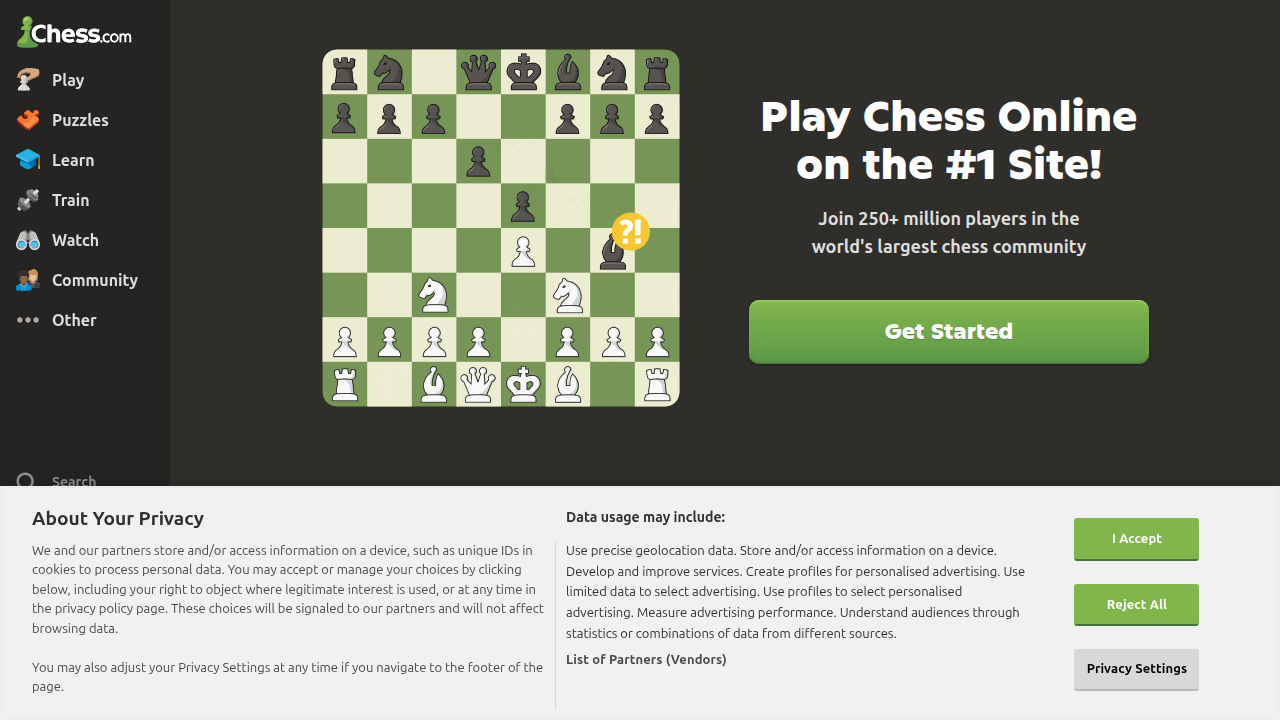
They offer rated matches and timed modes that crank up the cognitive load. When you are racing against the clock, your brain has to manage stress and make fast decisions. That is excellent training for real-world pressure.
If you are new to chess or want to sharpen your skills, there are plenty of addicting games free online games that let you play against friends or strangers. You can also check out level-up games that sharpen memory and focus for more ideas.
Here is a quick look at how chess stacks up as a brain workout:
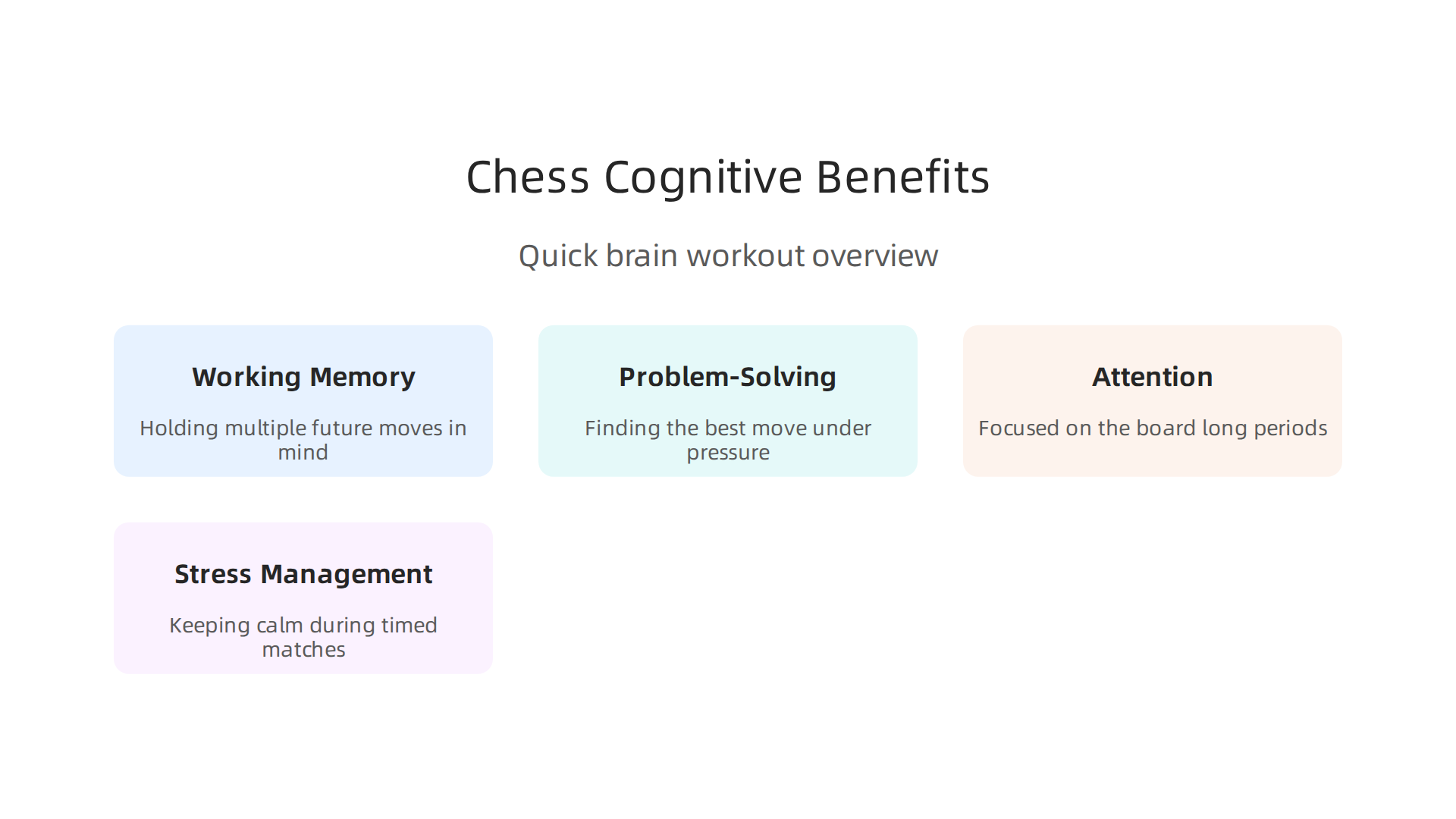
| Cognitive Skill | How Chess Helps |
|---|---|
| Working Memory | Holding multiple future moves in mind |
| Problem-Solving | Finding the best move under pressure |
| Attention | Staying focused on the board for long periods |
| Stress Management | Keeping calm during timed matches |
As Dean Grey’s research shows, memory improves when attention has direction. Chess gives your attention a clear target: win the game. That focus, combined with the social challenge of facing another person, makes it one of the most effective two player games online for building mental resilience.
If you want to take your cognitive training further, you can start a free trial of personalized brain exercises tailored to your goals. But first, let’s look at another category that tests your visual memory and logic.
2. Word Games: Build Vocabulary and Recall
Now let’s shift from visual memory to verbal memory. Think about the last time you played a word game with a friend. You had to find the right letters, spell a complex word, and beat the clock. That scramble in your brain is a powerful workout.
Games like Scrabble GO and Words With Friends force you to pull words from your mental dictionary fast.
This is called lexical retrieval. You have to recall spelling, recognize patterns, and think ahead all at once. Over time, this strengthens your semantic memory. That is the part of your memory that stores facts, meanings, and concepts. Studies show that regular word play improves verbal fluency and helps you access your vocabulary more quickly.
And here is the secret sauce: social turn taking. When you play against another person, you are accountable. You cannot just skip a turn. That keeps you practicing consistently. And consistency is key for building any cognitive skill. As Dean Grey’s research explains, attention and repetition help information stick in your memory.
If you enjoy addicting games free online games, word games are a perfect pick. They are easy to start and seriously challenging to master. For more ways to boost your verbal memory, check out these online spelling games that improve working memory and verbal fluency.
Word games also fit right into your daily routine. You can play a quick round during a break or settle in for a longer match. Either way, your brain gets a solid language workout.
Ready to supercharge your memory even more? Start a free trial of personalized brain exercises designed for your goals.
3. Trivia Games: Test and Expand Knowledge
Language is just one piece of the puzzle. Trivia games take your memory workout to the next level by pulling from your entire storehouse of facts and experiences.
Games like QuizUp and Jeopardy! World Tour activate what is called episodic memory. This is the part of your brain that recalls specific events and learned facts. When you play two player games online, the real time competition forces you to answer quickly. Think of it as a high stakes quiz show in your living room.

You have to dig deep into your memory banks fast. This trains your brain for rapid retrieval.
And the science backs this up. A 2025 study from Northeastern University found that focused working memory training can directly improve your cognitive skills. Another study showed that commercial brain training games boost processing speed in young adults.
The benefits build over time. Regular play broadens your general knowledge base. It also strengthens long term memory consolidation. You are moving information from a temporary sticky note in your brain to a permanent file. This long term strengthening is a strong defense against cognitive decline. A landmark study linked consistent brain training to a significantly lower dementia risk later in life.
If you enjoy addicting games free online games that make you think, trivia is a perfect pick. You can also explore escape room games for puzzle solving logic or hidden object games for visual scanning. Each type of game sharpens a different cognitive tool. Looking for a different flavor? You might enjoy classic number and strategy games like play rummikub online free.
For a complete list of science backed options to sharpen your mind, check out our guide on brain games for adults backed by science to sharpen memory and focus. And if you want to train with friends, try these cooperative online games to play with friends that sharpen your memory and focus.
Ready to start your cognitive training and boost your recall?
Start a free trial designed to enhance your memory, focus, and learning speed.
4. Card Games: Train Working Memory and Strategy
Now let’s talk about digital card games. Think of Hearthstone or Magic: The Gathering Arena. These aren’t just fun distractions. They are serious brain workouts.
When you play these two player games online, you have to keep a lot of information in your head at once.
You need to remember which cards have been played. You track the odds of drawing a specific card. And you try to predict what your opponent will do next. That constant mental juggling is perfect for your working memory. It’s like lifting weights for your brain.
Research shows that strategy games like these improve working memory and processing speed. A study found that a commercial brain training game boosted executive functions and working memory in young adults PMC. Another meta-analysis confirmed that playing video games and board games enhances cognitive performance and memory naturalhealthresearch.org.
Because card games are turn-based, you have time to think. That lets you dig deep into pattern recognition. You start noticing combos and strategies without rushing. That slow, deliberate thinking builds stronger neural pathways. Over time, your brain gets faster at spotting patterns in real life too.
Deck-building takes it even further. You build a set of cards, test it, lose, and tweak it. That process is called iterative learning. It’s a form of cognitive flexibility training. You learn to adapt when a plan fails. That skill helps you solve problems at work or school.
To keep your mind sharp, playing card games is a smart move. They are fun and scientifically backed. For more ideas, check out our list of brain games for adults backed by science to sharpen memory and focus.
Ready to take your memory training further?
Start Free Trial and build a personalized plan to boost recall and focus today.
5. Cooperative Puzzle Games: Sharpen Problem-Solving Under Pressure
Card games test your memory alone, but what happens when you add a partner to the mix? Cooperative puzzle games turn brain training into a team sport. Games like Portal 2 Co-op and Keep Talking and Nobody Explodes demand clear communication, quick thinking, and shared problem-solving under real pressure.
In Portal 2 Co-op, you and a partner move through levels that require perfect timing and spatial reasoning. One player can’t solve it alone. You have to describe what you see, coordinate your moves, and adjust together. That kind of back-and-forth builds strong communication habits while your brain works hard on two player games online.
Keep Talking and Nobody Explodes takes it even further. One player sees a bomb. The other has the defusal manual. You can’t see what your partner sees. So you have to describe details fast and listen closely. One slip and you lose. That pressure trains your brain to stay calm, focus your attention, and test ideas quickly. It feels a lot like escape room games but in your own living room.
These games do more than entertain. Cooperative gameplay enhances social cognition, which is your ability to read and work with others. It also strengthens executive control, the part of your brain that manages focus, planning, and self-control. Studies show that collaborative puzzles boost critical thinking and creative reasoning Co-op Puzzle Games. Teams that solve puzzles together also build better logic and communication skills Team Building Puzzle Games. And the best part? These games are often addicting games free online games that you can start playing today with a friend.
You might also enjoy hidden object games for a slower, observation-based challenge. They train your eye for detail in a more relaxed setting.
For more ideas, check out our guide to cooperative online games to play with friends that sharpen your memory and focus.
Ready to put your brain to the test with a partner?
Start Free Trial and build a personalized plan to improve recall, focus, and problem-solving today.
6. Real-Time Strategy Games: Boost Multitasking and Focus
Cooperative puzzle games sharpen your problem-solving with a partner. But what about games that push your brain solo? Real-time strategy (RTS) games like StarCraft II and Age of Empires IV take multitasking and focus to a whole new level. They throw constant demands at you: manage resources, build units, expand your base, and watch what your opponent is doing all at once. You can’t slow down. Every second counts.
Here is the thing. RTS games train your brain to handle multiple streams of information at the same time.

You need sustained attention to keep your economy running. You need task switching to move from defense to offense fast. And you need quick reaction times to respond to surprise attacks. Research shows that puzzle-based games, including strategy titles, can promote critical thinking and creative reasoning CO OP PUZZLE GAMES. That same mental workout applies directly to RTS play.
Studies even link regular RTS gaming to increased gray matter in brain regions tied to attention and memory. Your brain actually grows stronger connections as you practice staying focused under pressure. It is like weightlifting for your concentration.
The best part? You can jump into these games right now without spending a dime. StarCraft II has a free version that gives you plenty of challenge. Many other RTS titles offer free trials or free-to-play modes. They are some of the most addicting games free online games you will find because every match feels different. And if you want to play with a friend, most RTS games have online multiplayer, making them great two player games online options for a head-to-head mental workout.
If you prefer something more relaxed, hidden object games offer a slower pace for observation skills. But for pure focus and multitasking training, RTS games are hard to beat.
Want to keep strengthening your brain beyond gaming? Check out our guide to brain games for adults backed by science to sharpen memory and focus for more science-backed techniques.
Ready to take your cognitive training to the next level?
Start Free Trial and get a personalized plan to boost attention, reaction time, and recall today.
7. Dedicated Brain Training Platforms: The Science Behind the Hype
So you have seen how RTS games sharpen your focus and cooperative puzzles test your logic. But what about platforms built specifically for brain training? Apps like Lumosity, Elevate, and Peak promise to boost memory, speed, and logic with short daily games.
Over 100 million people use Lumosity alone Lumosity on Google Play. That is a lot of brain workouts.
Does the science actually back up the hype?
The short answer is yes, with some important caveats. A major 2020 meta-analysis covering 55 randomized controlled trials found statistically significant improvements in working memory and processing speed Dataintelo Brain Training Market Report. Another study showed that Lumosity had positive effects on cognitive function in young adults PMC study on Lumosity. The app has even been tested as a clinical tool to help slow cognitive decline and support neuroplasticity, the brain’s ability to form new neural connections EBSCO on Lumosity.
Here is the honest part. Most benefits show up as "near-transfer" improvements. You get better at the specific skills the games train, like working memory or processing speed. Whether those gains transfer broadly to real-world tasks is still debated Neurosity best brain training apps 2026. Some experts say the effects are mild but real, especially when you stick with the training over time MindAhead Active on brain training.
The real secret? Consistency and progressive difficulty. Just like physical exercise, your brain needs harder challenges over time. The best apps in 2026, including memoryOS, Lumosity, and Peak, adapt to your performance and keep pushing you MemoryOS ranked brain training apps.
Many of these platforms also include social challenges that feel like two player games online. You compete against friends on specific memory or logic tasks. That social pressure boosts motivation and results. For something lighter, you might enjoy escape room games or hidden object games as mental warm-ups. And if you want a classic, you can play rummikub online free to work on pattern recognition and strategy. Some people even prefer these as addicting games free online games because they combine fun with a cognitive workout.
The bottom line? Dedicated brain training platforms work best when you treat them like a gym membership for your mind. Use them consistently, push the difficulty, and mix in other cognitive activities.
If you want to explore more proven ways to strengthen your memory and focus, check out our list of brain games that sharpen your mind and boost memory.
Ready to build a personalized training plan that fits your brain?
Start Free Trial and get exercises tailored to your goals.
8. How to Choose the Right Two-Player Game for Your Goals
So you understand that brain training apps can help. But with so many two player games online available, how do you pick the one that actually matches your goals?
The answer is simpler than you think. You just need to match the game to the skill you want to improve.
Here is a quick breakdown.
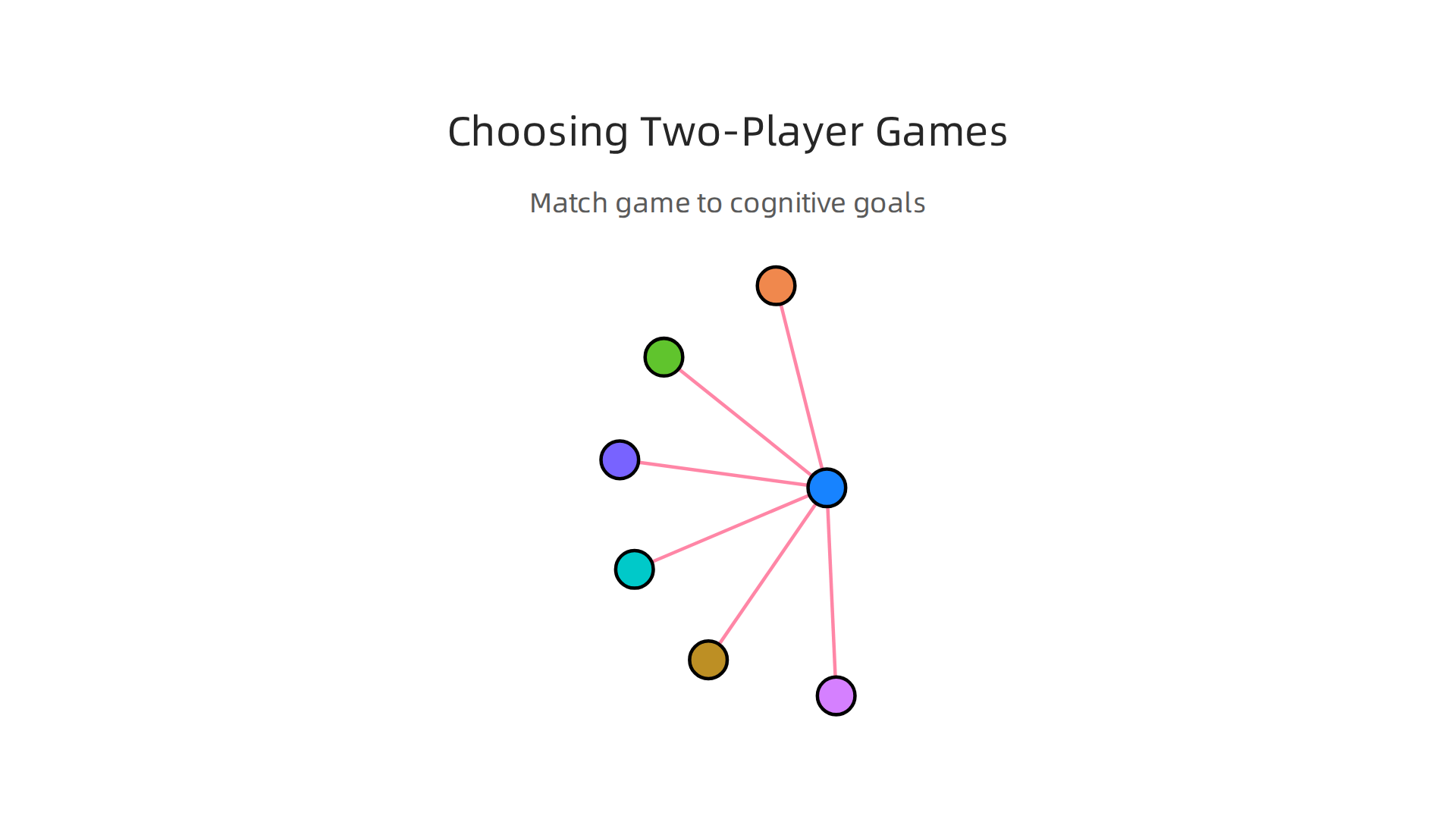
Memory games like card-matching or word recall games directly strengthen your working memory. Research shows brain training games like Lumosity can improve cognitive function in young adults PMC study on Lumosity. If you want to remember names, facts, or lists better, these are your go-to.
Problem-solving games challenge your logic and flexibility. Think escape room games or real-time strategy (RTS) titles. They force you to think a few steps ahead. A major 2020 meta-analysis confirmed that such cognitive training improves processing speed and problem-solving skills Dataintelo Brain Training Market Report.
Focus games include strategy and trivia games that demand sustained attention. Hidden object games are a great example. They train your brain to filter out distractions and spot details quickly.
Next, think about your time.
If your schedule is packed, turn-based games work best. You can play rummikub online free at your own pace. Real-time games deliver intense short sessions but require your full attention.
Finally, decide on social engagement.
Cooperative games build teamwork and communication. Competitive games drive motivation through rivalry. If you want to stay accountable, playing addicting games free online games with a friend can keep you coming back.
For more ideas on games that build specific cognitive skills, check out our guide on cooperative online games to play with friends that sharpen your memory and focus.
Ready to build a training plan that fits your goals and schedule?
Start Free Trial and get personalized exercises designed for your brain.
Summary
This article explains why two-player online games are a powerful, science-backed way to train the brain by combining cognitive challenge with social motivation. It reviews eight game categories—chess and strategy, word games, trivia, card games, cooperative puzzles, RTS titles, dedicated brain-training platforms, and a guide to choosing the right game—and shows how each targets skills such as working memory, attention, processing speed, and problem-solving. You’ll find research evidence, practical examples (like Chess.com, Words With Friends, and StarCraft II), and explanations of how social play improves consistency and results. The piece also compares cooperative versus competitive formats, highlights free options, and explains how to match a game to your specific goals and schedule. After reading, you’ll know which game types to try, how often to play, and how to use apps and multiplayer modes to build a reliable brain-training habit.