

Introduction: Why Free Spanish Games Are a Game-Changer for Learning
Let’s be honest. Learning a new language can feel like a chore. You sit down with a textbook, stare at lists of vocabulary words, and try to force them into your brain.

It works for a while. But soon, the words slip away. The motivation fades. And that expensive app you downloaded? You stop opening it after two weeks.
Here’s the thing. It doesn’t have to be this way. Actually, there is a smarter, more fun way to learn Spanish. And it costs you absolutely nothing.
Enter free Spanish games.
Think about what happens when you play a game. Your brain lights up. You feel a small thrill when you get an answer right. You want to beat your high score. You keep playing because it feels good. That is not just in your head. That is your brain’s reward system working exactly as nature intended.
Research backs this up. A 2023 study found that students who used gamified language tasks showed much better vocabulary retention than students who used traditional methods. The games made learning feel less like work. They reduced mental strain. And they kept students coming back for more.
Another study from 2024 looked at how gamification affects motivation in language learning. The results were clear. Students who played games while learning a language stayed more engaged. They remembered more words. And they actually enjoyed the process.
Here is what makes free Spanish games so powerful.
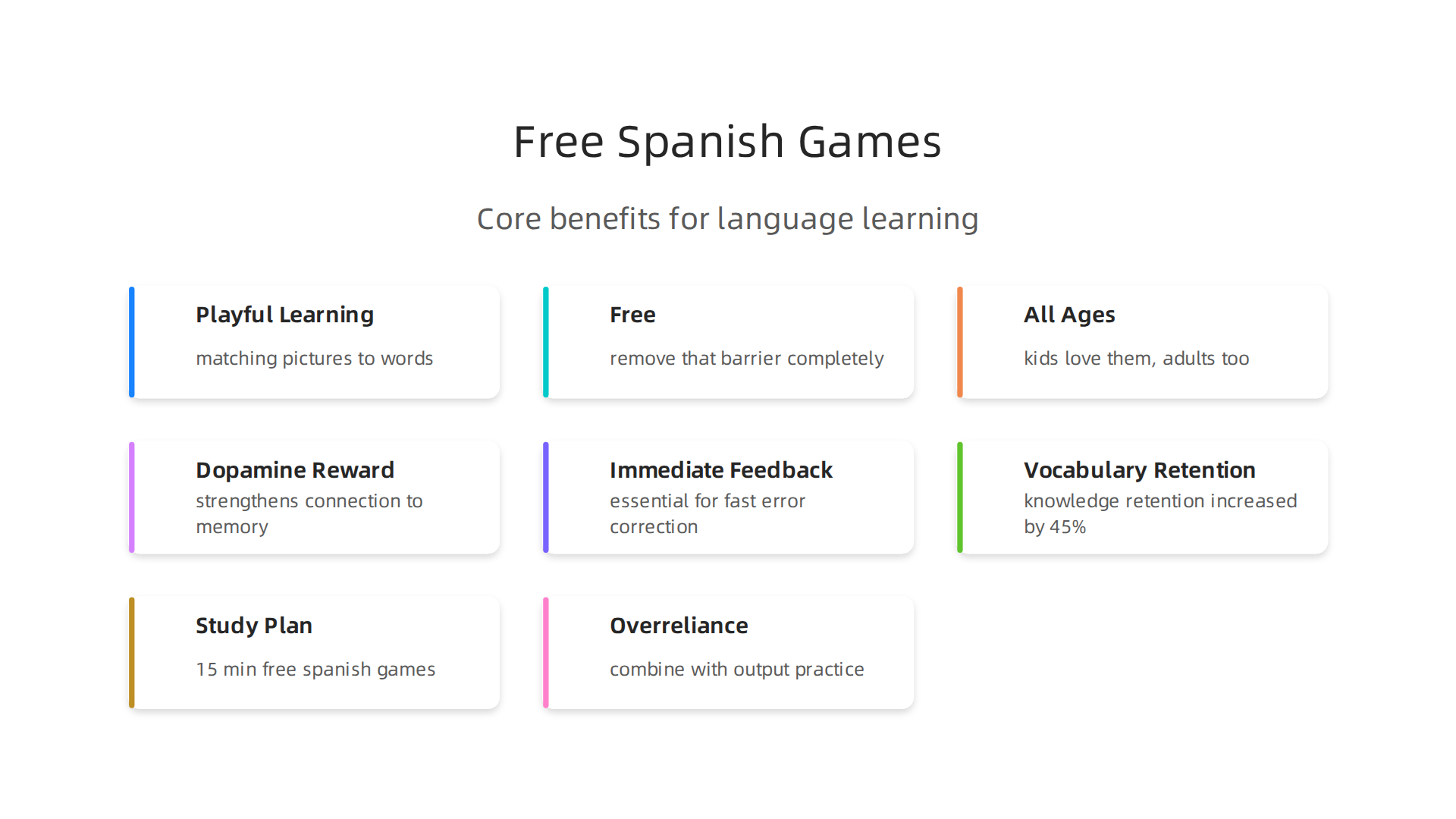
First, they make learning feel like play. Instead of drilling verb conjugations, you are matching pictures to words. Instead of reading a dry grammar lesson, you are racing against a clock to pick the right answer. Your brain does not feel the same "this is hard" resistance. It just feels like fun.
Second, they are free. That matters a lot. Many people want to learn Spanish but cannot afford expensive courses, tutors, or subscription apps. Free Spanish games remove that barrier completely. Whether you are a student on a tight budget, a parent looking for resources for your kids, or an adult just curious about learning, you can start today with zero cost.
Third, they work for all ages. Kids love them. Adults love them too. And the science supports that starting early gives young learners an advantage in picking up a second language. But it is never too late to begin.
You might also be surprised to learn that the same kind of game-based thinking applies in other areas. For example, times tables games use similar reward loops to help kids master math. And unblocked games classroom platforms often include language learning options that teachers love. Even memory games train the same recall muscles you need when building Spanish vocabulary.
If you want to dive deeper into how games train your brain, check out this guide on brain games that sharpen your mind and boost memory. It explains the science behind why play makes us smarter.
So here is the bottom line. Free Spanish games are not just a fun way to pass the time. They are a proven method for actually learning and remembering a new language. And in 2026, there are more great options available than ever before.
In the next section, we will break down the best free Spanish games you can start using today. No sign-ups. No credit cards. Just real learning wrapped in real fun.
The Science Behind Game-Based Language Learning
So why exactly do free Spanish games work so well? The answer starts in your brain.
When you play a game and get a correct answer, your brain releases a small chemical called dopamine. Dopamine makes you feel good.

It is the same chemical that gives you a little thrill when you score a point or beat a level. And here is the key: dopamine also helps your brain lock in new information. When you feel that small burst of pleasure, your memory of the moment gets stronger. That is why words you learn in a game tend to stick better than words you see on a flashcard.
Dopamine: The Brain’s Natural Reward System
Every time you play a free Spanish game and answer correctly, your brain gets a tiny dopamine reward. This strengthens the connection between the new word and your memory. Over time, that word becomes easier to recall. Research shows that game-based learning can improve cognitive skills by improving working memory and focus. The same brain chemistry that makes you want to keep playing also makes you remember more. This is not just a theory. A 2025 study found that middle school students who used gamified digital tasks showed greater vocabulary retention than students who used traditional methods. The games did not just feel more fun. They actually rewired the brain’s learning pathways.
If you want to explore more about how different types of games train your brain, you might enjoy this guide to cool games to play that actually boost your brain power. It explains the same dopamine driven learning loops in action.
Immediate Feedback: The Secret to Fast Error Correction
Here is another powerful reason free Spanish games work. They give you feedback instantly. When you make a mistake, you know right away. You do not have to wait for a teacher to grade your work or flip to the back of a textbook. You see the correct answer, you adjust, and you try again. This quick feedback loop is essential for language learning. Research from Sanako confirms that gamification in educational technology significantly improves language retention by turning routine practice into engaging, interactive experiences. The faster you correct a mistake, the faster you build the right mental map of the language. That is why matching games, timed quizzes, and memory games are so effective for vocabulary building.
The same principle applies to other cognitive training tools. For instance, brain games for adults backed by science use the same instant feedback mechanism to sharpen memory and focus. The feedback loop itself becomes the teacher.
The Data: How Games Boost Vocabulary Retention
The numbers back this up too. A 2024 study published in the Open Psychology Journal found that gamification enhances language learning by reducing mental strain, increasing task engagement, and expanding vocabulary. But the most impressive number comes from 2026 research. A large analysis of gamified learning programs found that knowledge retention increased by 45% compared to non-gamified training. That is almost half again as much information sticking in your brain.
Think about what that means for you. If you spend 10 minutes playing a free Spanish vocabulary game, you could remember up to 45% more words than if you spent the same 10 minutes drilling from a list. Over weeks and months, that difference adds up fast. You learn more in less time. And because it feels like play, you keep coming back.
Whether you are a student, a busy professional, or simply someone who loves learning, the science is clear. Games are not just fun. They are one of the most effective tools we have for building a stronger, faster remembering brain.
Top Free Spanish Games for Vocabulary Building
Now that you know the science behind why games help you remember more, let us look at the best free Spanish games you can start using today. The good news? You do not need to spend a cent. In 2026, several platforms offer powerful vocabulary building tools at no cost.
Duolingo and Memrise: The Tried and True
You have probably heard of Duolingo. It is the most popular free Spanish game app for a reason.
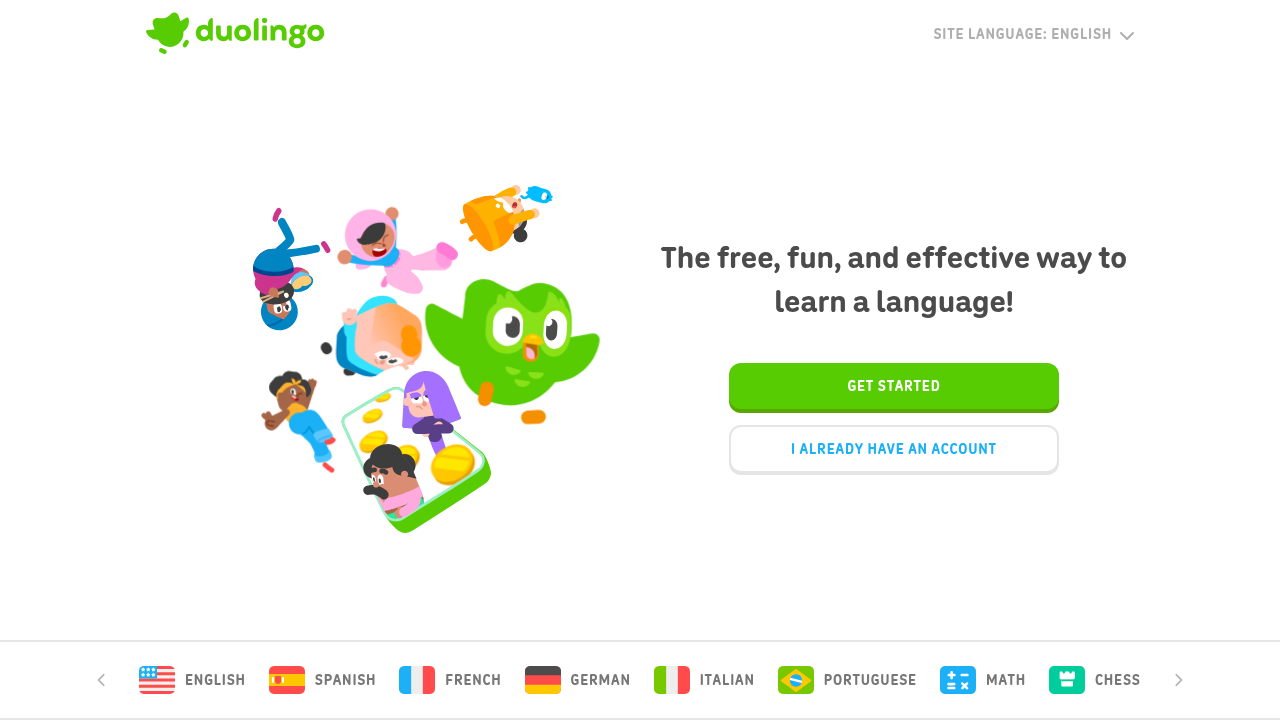
Each lesson feels like a mini game. You match words to pictures, translate sentences, and race against a timer. The app also uses spaced repetition. That means it shows you words you are about to forget, right before you forget them. This method locks vocabulary into long term memory. Memrise works in a similar way. It uses real videos of native speakers saying words, so you learn how Spanish actually sounds.

According to reviews from 2026, these two apps remain the most user-friendly options for beginners. Mixing different tools can give you even better results.
Flashcard Games with Spaced Repetition
Flashcards might sound old school, but when turned into a game, they become incredibly effective. Apps like Quizlet let you create digital flashcards and then turn them into matching games, memory games, and timed quizzes. The secret ingredient is again spaced repetition. You see a word, guess its meaning, and get instant feedback. The app then schedules that word to reappear at the perfect time for your brain.
If you enjoy this kind of focused repetition, you might also like other cognitive training games. For example, word search games work on pattern recognition and vocabulary in a different way. They give your brain the same dopamine reward when you find a hidden word.
Games That Bring Cultural Context
Some free Spanish games do more than just teach words. They drop you into real cultural situations. For instance, Duolingo now has stories that simulate conversations in a marketplace or at a restaurant. You choose the response, and the game changes based on your choice. This helps you associate words with real life situations, not just a list on a screen.
Other apps like the Learn Spanish for Beginners app on Google Play use game-like lessons to teach phrases and alphabet while weaving in cultural notes. When you learn a word like "tortilla," you also learn that in Spain it means an egg and potato dish, not a flour wrap. That context makes the word stick faster.
Build Your Routine with These Games
Ready to put this into practice? Pick one free Spanish game app and commit to 10 minutes a day. Start with the vocabulary matching games. Then try the flashcard speed rounds. Finally, move into cultural stories. Your brain will thank you with better recall.
And if you want to keep sharpening your mind beyond Spanish, you can explore other brain games for adults backed by science that use the same instant feedback and spaced repetition principles.
Free Spanish Games for Grammar and Sentence Structure
Building vocabulary is a great start, but to actually speak Spanish you need to know how to put those words together. That is where grammar and sentence structure come in. And yes, you can learn grammar through games too.
Grammar games help you internalize conjugation and tense rules without boring drills. Instead of memorizing a table of verb endings, you play a game that makes you choose the right form again and again. Your brain learns the pattern without you even noticing. This works because your brain loves rewards. Every time you guess correctly, you get a small dopamine hit. That feeling makes you want to keep playing.
One of the best free Spanish games for grammar is Clozemaster.
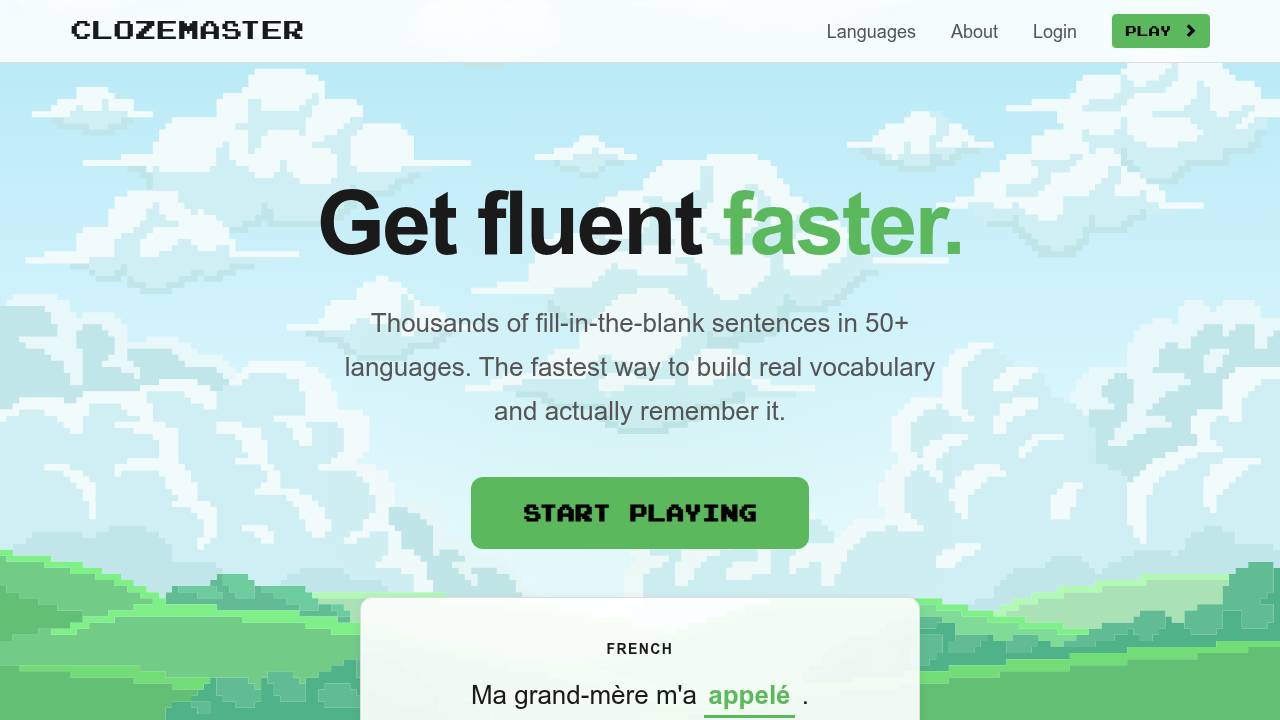
It shows you a sentence with a missing word. You pick the correct word from multiple choices. The game uses spaced repetition and context, so you learn how verbs change depending on who is speaking and when. According to a 2026 review, Clozemaster is one of the top apps for moving beyond beginner level because it focuses on full sentences, not isolated words (source: Best Apps to Learn Spanish 2026).
Another powerful tool is Conjuguemos. This platform focuses entirely on verb conjugations.
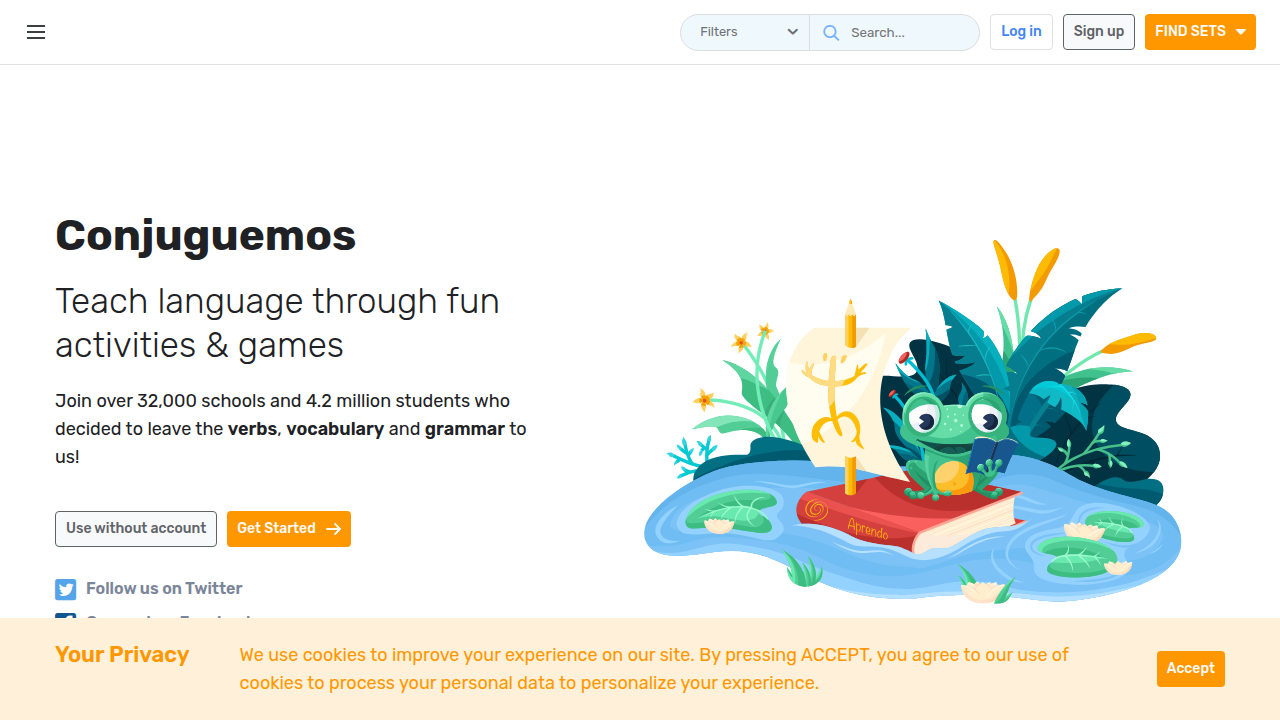
You can practice any tense, from present to subjunctive, and get instant feedback. The game-like interface keeps you engaged. You earn points and compete against your own best score. It feels more like a race than a grammar lesson. Many teachers use Conjuguemos in classrooms, but you can access it for free on your own.
Interactive storytelling apps also help with sentence structure. Apps like Babbel and Duolingo include stories where you choose the next line of dialogue. You see how sentences flow in real conversations. One guide from 2026 ranks Babbel as the best app for grammar and structure, because its lessons build from simple to complex sentences naturally (source: Best Apps to Learn Spanish (2026 Review)).
Your brain uses the same neural pathways for grammar as it does for other cognitive skills. That is why playing memory games alongside language games can improve your results. If you enjoy grammar challenges, consider trying online spelling games that improve working memory and verbal fluency. These games train your brain to process language faster, which helps with Spanish sentence construction too.
You do not need unblocked games classroom access for these. All of these free Spanish games work on your phone or browser anytime. The best part? You are not memorizing rules. You are training your brain to think in Spanish patterns.
Start with Clozemaster or Conjuguemos for 10 minutes a day. Focus on one tense at a time. Soon you will notice yourself getting the grammar right without thinking. That is when learning becomes automatic.
Integrating Games into a Structured Study Plan
You now have a solid set of free Spanish games for grammar and vocabulary. But here is the truth: games work best when they are part of a bigger plan.
They should not replace reading, speaking, or listening practice. Instead, they fill a specific role in your daily routine.
Think of it like building a workout. You do not just do one exercise and call it done. You mix cardio, strength, and flexibility. The same goes for language learning. Games train your brain to think fast and recognize patterns. But you also need time with real conversations, books, and writing. A study from 2024 looked at middle school students who used gamified digital tasks. Those students showed better vocabulary retention than students who did not use games (source: The Impact of Digital Gamification on Vocabulary Acquisition). That is great news. But the key word is "alongside." Games boost your learning when you add them to a balanced schedule.
How much game time is enough?
Research suggests that 15 to 20 minutes of game play per day is the sweet spot. Any less and you might not see results. Any more and you risk burnout or missing other important practice. According to a 2023 study in the National Library of Medicine, gamification is widely recognized as an effective tool for promoting learning outcomes when used consistently (source: Examining the effectiveness of gamification as a tool promoting learning). The word "consistently" is important. Short daily sessions beat long weekly sessions every time.
Here is a simple way to structure your study hour:
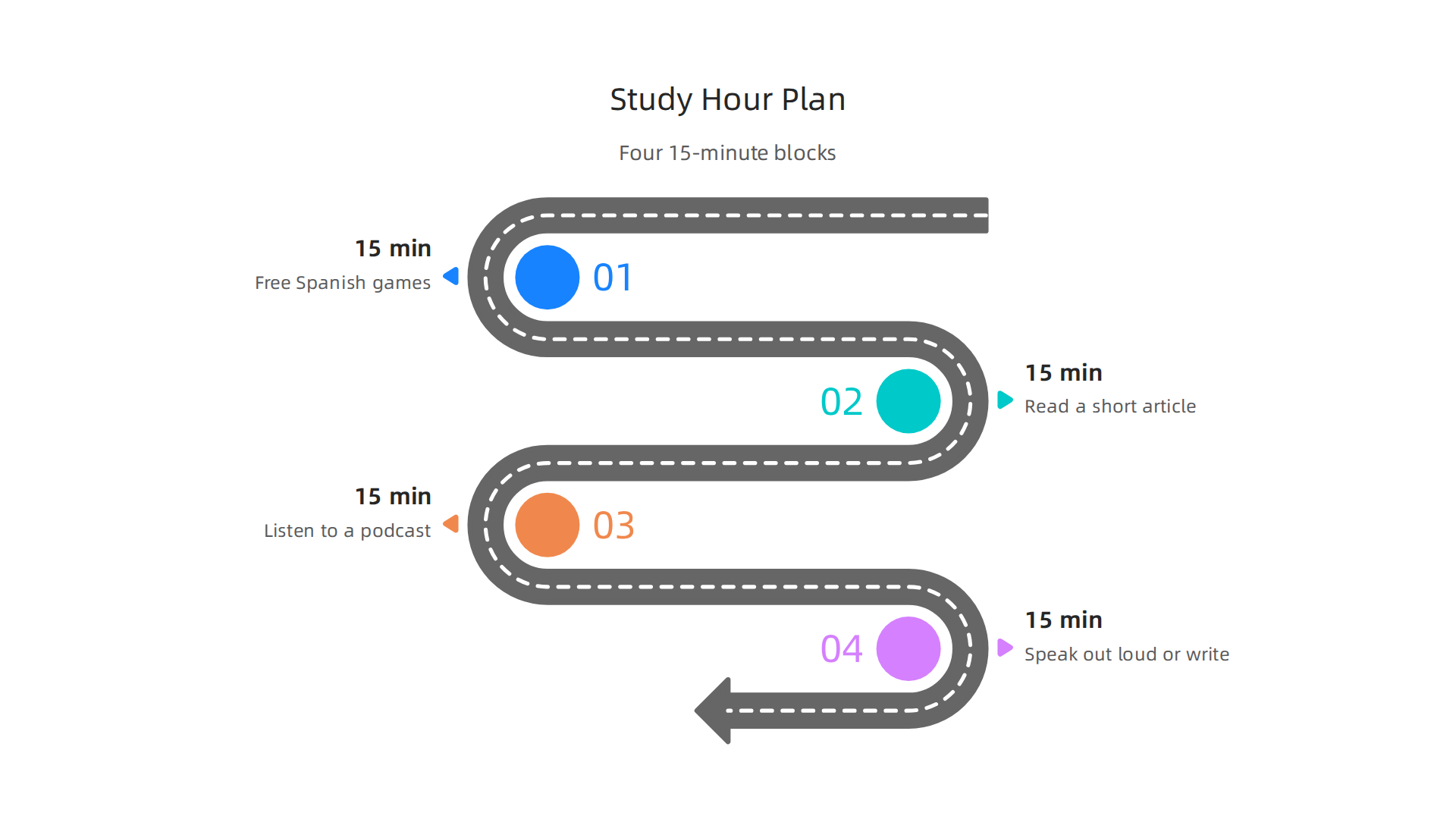
| Time | Activity |
|---|---|
| 15 min | Free Spanish games (grammar or vocabulary) |
| 15 min | Read a short article or story in Spanish |
| 15 min | Listen to a podcast or watch a video in Spanish |
| 15 min | Speak out loud or write a few sentences |
This balance keeps your brain working in different ways. Games are the warm up. They get your mind ready to process the language.
Track your gameplay to spot weak areas
Many game platforms already track your progress. Clozemaster shows which words you get wrong most often. Conjuguemos records your speed and accuracy. Use this data. Do not just play for fun. Look at your mistakes.
If you notice you keep mixing up the preterite and imperfect tenses, that is a signal. Go back and practice that specific tense with a game. Then read a short story that uses both tenses. Then talk about what happened yesterday. The game shows you where you are weak. The other activities help you strengthen that spot.
Connect games with other learning tools
You can also combine Spanish games with brain games to sharpen the cognitive skills that help with language retention. Check out brain games for adults backed by science to sharpen memory and focus. These games train your working memory and processing speed. When you pair them with free Spanish games, you build a stronger foundation for learning.
Avoid the "just playing" trap
A big mistake learners make is treating games like they are unblocked games classroom time. That is when you play for fun without paying attention to the content. Free Spanish games are not meant for mindless clicking. They work best when you are focused. Before you start a game, set a goal. For example: "Today I will master the verb ‘tener’ in present tense." Then play until you get it right every time. Then stop.
The same idea applies to other types of learning games. For instance, if you enjoy math or logic challenges, games like times tables games can train your brain to process information faster. That speed carries over to language tasks too.
Build a weekly rhythm
Try this pattern:
- Monday to Friday: 15 minutes of free Spanish games in the morning, then 15 minutes of reading or listening later.
- Saturday: 30 minutes of conversation practice (even if it is just talking to yourself).
- Sunday: Review your gameplay analytics. See what you struggled with. Plan next week’s focus.
This rhythm makes games a habit, not a random activity. And because the games are free, you can stick with them long term.
Remember, the goal is automatic thinking. When you can hear a Spanish sentence and know the correct verb ending without pausing, that is when games have done their job. Give your brain that 15 minute daily workout. It will pay off.
Measuring Progress: How to Track Language Improvement with Games
You are playing free Spanish games every day. But how do you know if they are actually working? Can you tell if your vocabulary is growing or your grammar is getting better?

The answer is yes, but only if you track your progress the right way. Many learners just play and hope for the best. That is a wasted opportunity. With a few simple habits, you can see real proof of your improvement.
Use the built-in trackers in your games
Most free Spanish games already have progress tools built right in. Duolingo shows your streak, XP points, and how many words you have learned. Clozemaster tells you which words you get wrong most often. Conjuguemos tracks your speed and accuracy for verb conjugation. These numbers are not just for fun. They are data. And data tells you what to work on next.
For example, if Clozemaster shows you keep missing the word "había" (there was), you know you need more practice with that word. You can search for it in other games or in your reading time. The game points you to your weak spots. According to a 2026 report, gamified learning increases knowledge retention by 45% compared to non-gamified training programs (source: 30 Gamification Statistics to Guide Your Learning Strategy in 2026). Tracking your mistakes helps you capture that gain.
Use external tools to go deeper
Built-in trackers are great, but they only show what happens inside that one game. To see the big picture, you need an external system. A simple spreadsheet works fine. Create columns for:
- Date
- Which game you played
- Time spent
- Score or level reached
- Mistakes you made
- One thing you learned
Spend two minutes after each session to fill it in. After one week, look at the trends. Do you keep making the same error? Is your speed improving? This method turns random play into focused practice. You can also use a language portfolio app like Notion or a simple notebook. The key is consistency.
Regular self-assessment validates your gains
Game stats are helpful, but they are not the whole story. You also need to test yourself in real situations. Once a week, try a short self-assessment. You can:
- Write a paragraph in Spanish about your day, then check your grammar.
- Speak for one minute about a topic without stopping.
- Take a free online quiz for your level.
Compare your results week to week. If your writing has fewer mistakes and your speaking flows better, the games are working. Research shows that game-based learning encourages cognitive engagement and creates positive changes in motivation (source: Implementing Game-Based Learning Within the Classroom). That motivation shows up when you see clear improvement.
Pair tracking with other brain games for even better results
The same tracking methods work for other types of brain training. If you also play memory games or logic puzzles, track those too. You might notice that your recall speed in Spanish games improves when you have been doing memory exercises. For a deeper look at how different games boost your brain, check out cool games to play that actually boost your brain power. The combination reinforces your learning across the board.
Make it a weekly habit
Set aside 10 minutes every Sunday to review your tracking data. Look at your scores from the past week. Compare them to the previous week. Celebrate small wins. If your accuracy on verb endings went from 70% to 80%, that is real progress. If you see a plateau, that is a sign to change your routine. Maybe try a different game or focus on a weaker area.
Tracking does not have to be complicated. A few minutes of logging and a weekly review can turn your free Spanish games from a fun distraction into a powerful learning tool. You will see exactly where you are getting better and what still needs work. That is how you turn play into progress.
Overcoming Common Challenges When Using Games for Learning
Tracking your progress is great, but even the best plan can hit roadblocks. You might run into problems that slow you down. The good news? Every challenge has a fix. Here are the most common ones and how to beat them.
Problem: You rely too much on games and skip real practice
It is easy to fall into the trap of only playing games. Games build vocabulary and grammar, but they do not teach you to speak or write freely. You need output practice too. Speaking with a friend, writing a journal entry, or even talking to yourself in Spanish makes the words stick.
The solution is balance. Use free Spanish games for 15 minutes a day, then spend another 5 minutes using what you learned. Write one sentence about the game you played. Say it out loud. This simple habit turns passive play into active learning. Research shows that game-based learning works best when combined with other methods (source: The Cognitive and Motivational Benefits of Gamification). Do not let the game do all the work.
Problem: Motivation fades when games feel boring
Playing the same game every day gets old fast. Your brain craves variety. When you feel bored, you stop learning. The fix is simple: rotate your platforms. Swap between different free Spanish games. Try a memory matching game one day and a verb conjugation quiz the next.
You can also mix in other types of brain games. For example, playing two player games online that sharpen memory and focus can keep your mind fresh while you practice Spanish with a partner. This cross-training approach prevents burnout and keeps you coming back.
Problem: Technical barriers stop you from playing
Not everyone has fast internet or a new device. Some schools block gaming sites. These barriers can feel huge. But there are ways around them.
First, look for games that work offline. Many free Spanish games save progress without needing a constant connection. Second, search for games labeled as unblocked games for classroom use. These are designed to work on school networks. Third, use a device you already have. Even an older tablet or phone can run simple language games. The key is to test a few options until you find one that works.
Game-based learning has been shown to improve cognitive skills like working memory and focus (source: ABCmouse). Do not let a technical hiccup steal those benefits. A small workaround can keep you learning.
Problem: You forget to practice output
Games give you input, but language learning needs output too. If you only read and click, you will not get better at speaking. The research is clear: gamification reduces mental strain and increases engagement, but it does not replace real communication (source: NIH). So after every game session, force yourself to say or write one thing in Spanish. It does not have to be perfect. It just has to be yours.
These challenges are normal. Each one has a simple fix. With a little planning, you can turn every obstacle into a stepping stone. Keep playing, but keep speaking, rotating, and adapting. That is how you make free Spanish games work for the long haul.
Summary
This article explains why free Spanish games are a powerful, low-cost way to learn and retain the language by using game mechanics like dopamine rewards, instant feedback, and spaced repetition. It summarizes the science behind game-based learning, shows how games improve vocabulary and grammar retention, and lists top free tools such as Duolingo, Memrise, Clozemaster, and Conjuguemos. The guide also shows how to build a focused daily routine (15–20 minutes), track progress with in-app analytics or a simple spreadsheet, and integrate games with reading, listening, and speaking practice. Practical tips cover avoiding common pitfalls—like over-relying on games or losing motivation—and offer fixes like rotating apps, forcing output, and using offline or unblocked classroom-friendly options. Readers will finish with a clear plan to use free games effectively, know which apps to try first, and how to measure real improvement over weeks.