

Introduction
You know that feeling when you and your friends are laughing, competing, and completely lost in a game? It’s fun, sure. But here’s the thing: it’s also doing something powerful for your brain.

Social gaming isn’t just entertainment. It’s a real workout for your attention and memory.
Think about it. When you play online games with friends, you have to remember rules, track what others are doing, and make quick decisions. Your brain is firing on all cylinders. Research backs this up. A study in the Journal of the American Medical Association found that video gaming is associated with small but real improvements in cognitive performance, especially in areas like memory and response speed. That means every time you jump into a game with your buddies, you’re giving your brain a gentle but effective training session.
But not all games are created equal. Cooperative games — where you work together instead of against each other — are especially good for your brain. Why? Because they combine social interaction with a cognitive challenge. You have to communicate, plan, and remember shared goals. This mix boosts engagement and helps your brain build new connections, a process called neuroplasticity. You’re basically turning a fun hangout into a focused memory training session without even trying.
Whether you prefer a classic mancala game with a friend online or a more modern cooperative puzzle, the right choice can transform your downtime. These aren’t just brain games for memory; they’re social tools that keep your mind sharp.
In this guide, we’ll explore the best online games to play with friends that do double duty. They entertain you and sharpen your focus, recall, and thinking speed. We’ve picked games that are backed by science, easy to access, and genuinely fun. Ready to level up your next game night? Let’s get started.
If you’re looking for a starting point, check out cooperative online games to play with friends that are designed to sharpen memory and focus. They’re a perfect fit for what we’re talking about here.
1. Why Cooperative Games Boost Memory More Than Solo Play
So why does playing with friends beat flying solo? It comes down to how your brain handles attention and teamwork.
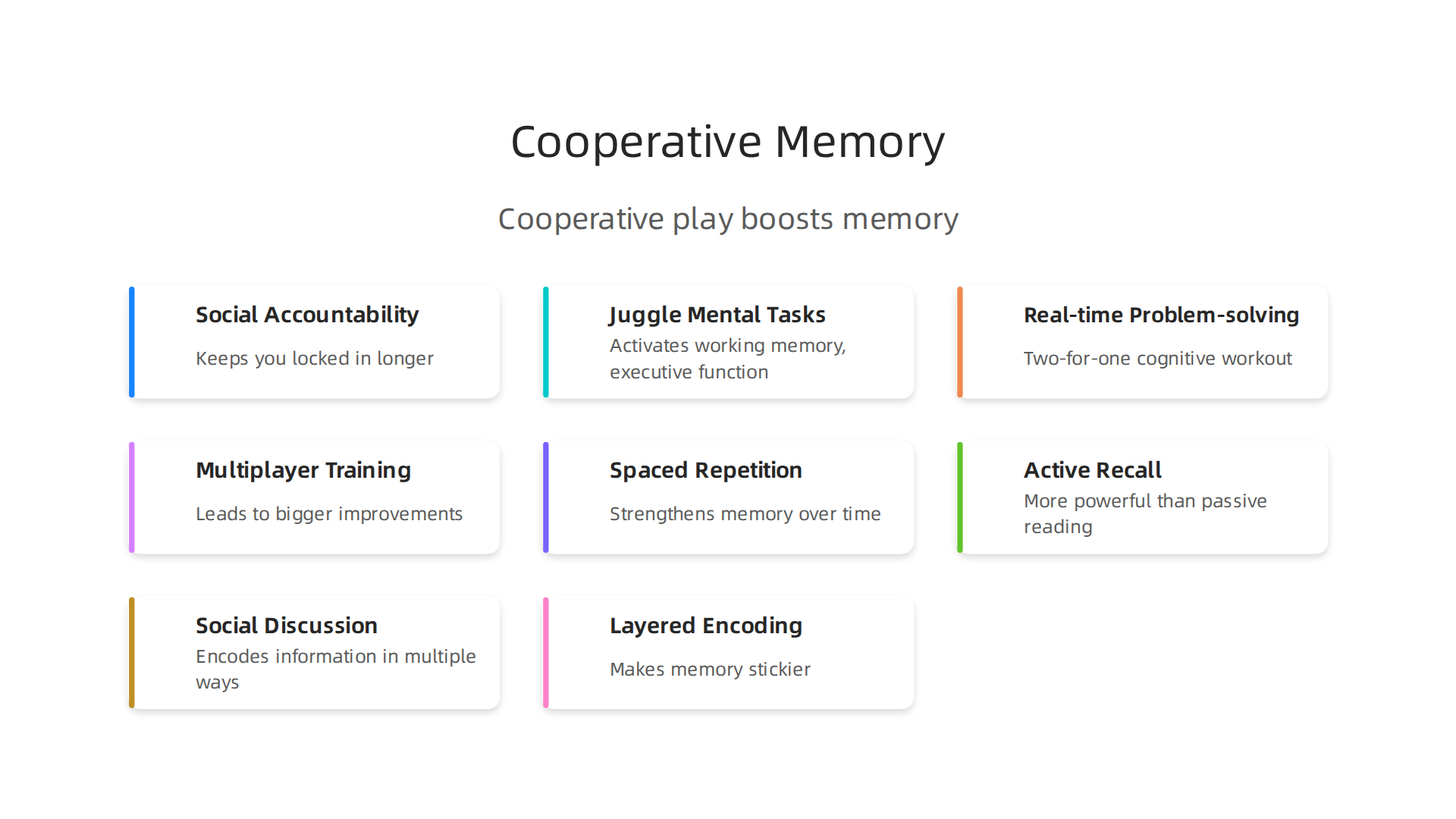
When you play by yourself, it’s easy to zone out. But add a teammate who is counting on you, and suddenly your focus sharpens. That social accountability keeps you locked in longer. And sustained attention is exactly what your brain needs to form stronger memories.
There’s another layer too. Cooperative games force you to juggle multiple mental tasks at once. You have to remember where your teammate is, what the current goal is, and how to communicate clearly. This type of real-time problem-solving activates both your working memory and executive function at the same time. It’s like a two-for-one cognitive workout. Research shows that playing video games can improve memory, reaction time, and executive function, especially when you engage with others.
The numbers back this up. Large studies that combine results from many experiments find that multiplayer cognitive training leads to bigger improvements than solo training. The social element seems to amplify the brain benefits. You’re not just pressing buttons. You’re building mental flexibility, recall speed, and focus in a way that feels like play.
If you want to jump into some great options, check out our list of cooperative online games to play with friends that sharpen your memory and focus. They are perfect for turning game night into brain training.
And remember, memory improves when attention has direction. You can Train Attention First to build a solid foundation for everything else.
2. Top Cooperative Word Games for Vocabulary and Recall
Word games are some of the best brain exercises for memory. Why? Because they make you dig into your mental dictionary and pull out words fast.
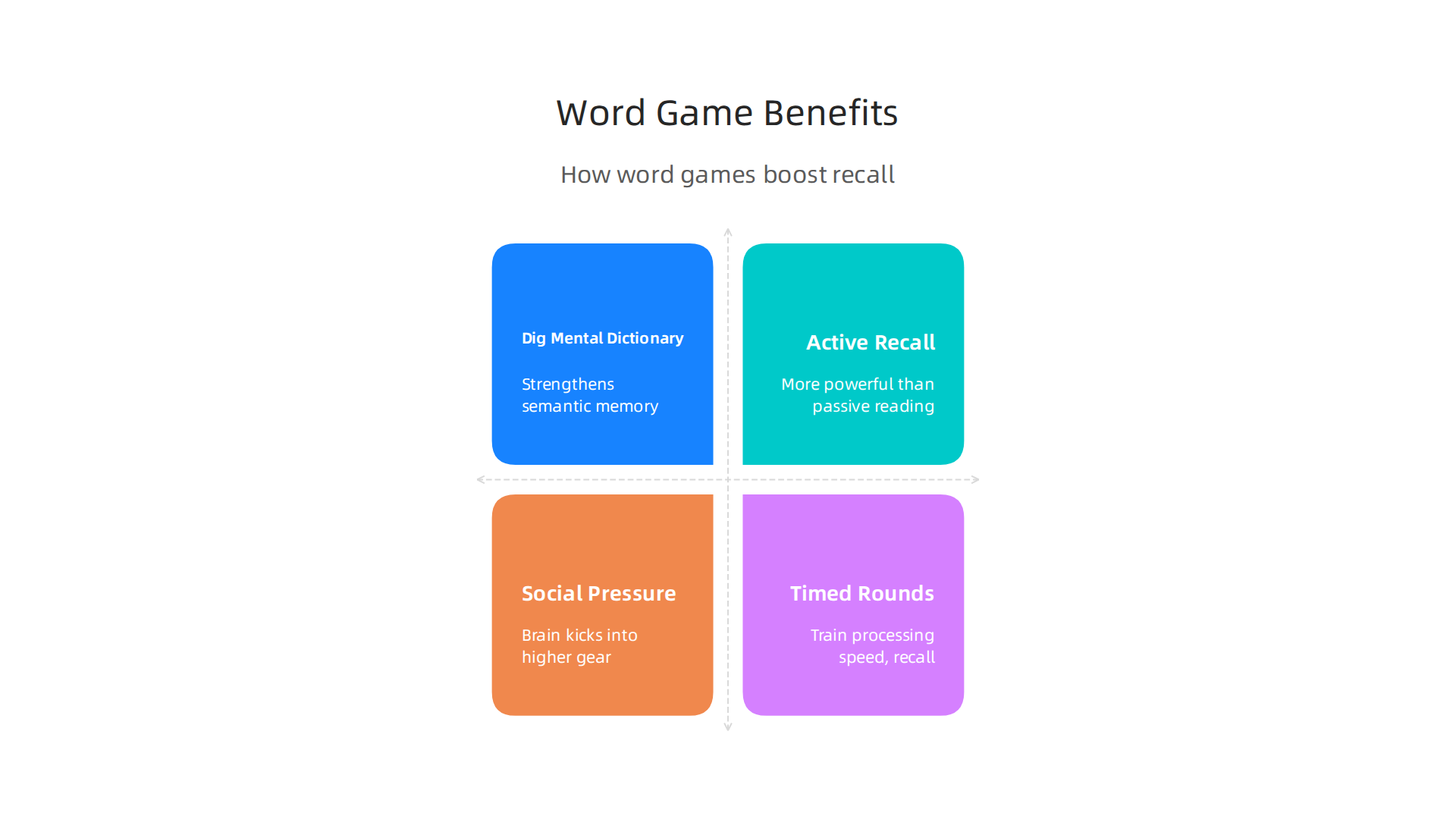
That process is called semantic memory, and it gets stronger the more you use it.
Think about classics like Words With Friends or Codenames.
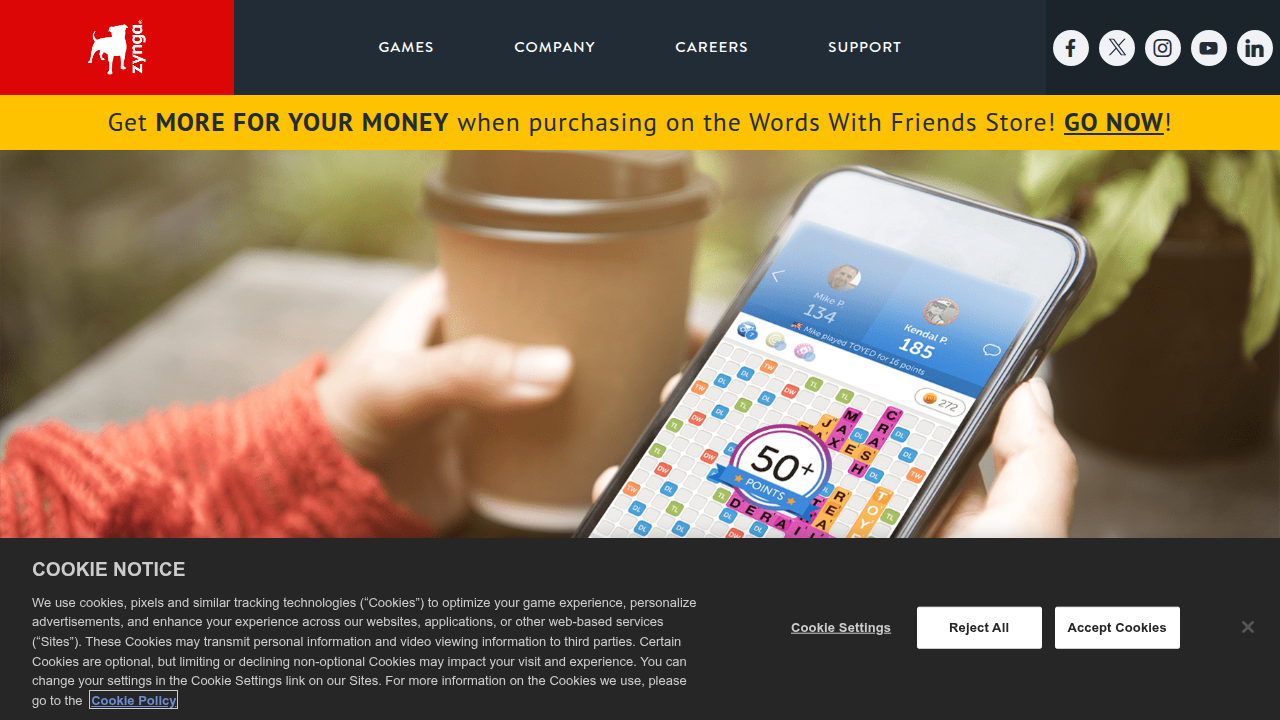
When you play with someone, you are not just recognizing words on a screen. You are actively recalling them. That forced recall is way more powerful than passively reading a list. Studies from the University of Michigan show that word recall improves by up to 15% after three months of regular word game play. You can read more about how word games improve your brain in the full research summary.
That 15% jump comes from the social pressure too. When a friend is waiting for your clue or your next move, your brain kicks into higher gear. You retrieve information faster because you do not want to slow the team down. It is active recall under friendly pressure.
Digital versions add another layer. Many word games include timed rounds that train your processing speed. You have only a few seconds to form a word or give a clue. That time crunch forces your brain to work faster, which sharpens both recall speed and focus over time.
If you enjoy spelling challenges, try online spelling games that improve working memory and verbal fluency. They work the same muscles as word games but with an extra vocabulary boost.
And for a different twist that still pushes your recall, check out free online trivia games in multiplayer mode. Trivia questions pull facts from long-term memory, just like word games do.
The bottom line? Playing word games with friends is not just fun. It trains your brain to retrieve vocabulary and facts with speed and accuracy. And that skill carries over into real life, conversations, and learning.
3. Strategy Games That Strengthen Working Memory
Strategy games are a different beast. They do not just test your vocabulary. They force you to hold several future moves in your head at once. That skill is called working memory,

and it is the mental muscle you use to keep information active while you work with it.
Think about playing chess on Chess.com.
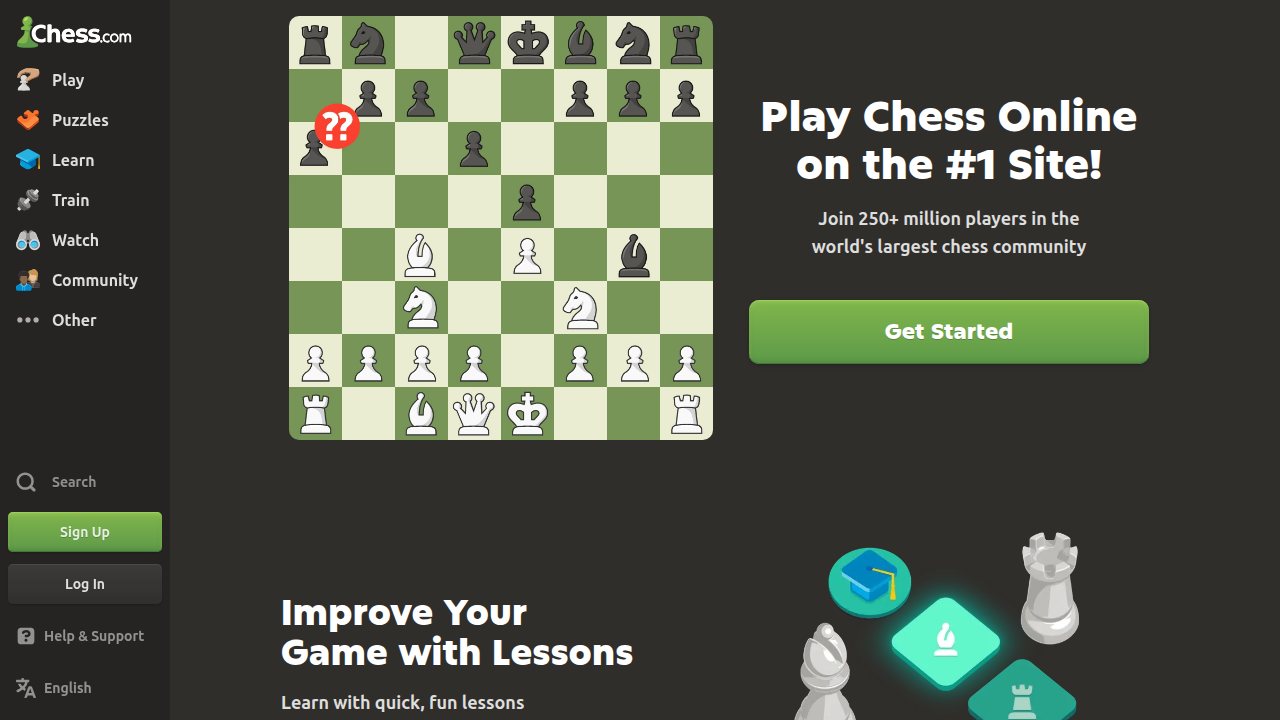
You have to remember your opponent’s last move, anticipate their next three, and track your own plan. That is a heavy load for your brain. The same goes for online Risk or cooperative tower defense games. You are constantly updating and juggling information.
Research published in 2025 and updated in 2026 shows that strategy games like these directly strengthen working memory. A study from the National Institutes of Health found that strategy card video games emphasize working memory, strategic planning, and real-time decision-making. In other words, every time you play a round, your brain is doing a workout.
The magic happens even more when you play with friends. Coordinating with a partner adds what researchers call cognitive load. You have to track not only your own moves but also your teammate’s strategy and how your plans fit together. That extra layer forces your brain to hold even more information at once.
For a deeper look at how team play boosts your brain, check out cooperative online games that sharpen memory and focus. It walks through the science behind playing together.
Strategy games are one of the best online games to play with friends if your goal is a sharper working memory. Whether you prefer chess, tower defense, or classic board games adapted for multiplayer, each session is a targeted brain exercise.
Here is the thing: working memory improves fastest when you give your attention a clear direction. Playing a strategy game with a plan forces that focus. Memory improves when attention has direction. If you want to train attention first as a foundation, you can learn more from the Train Attention First approach.
Now let’s shift gears to a different kind of mental challenge. While strategy games stretch your working memory, puzzle games put your focus under a microscope. And when pressure is added, that is where real growth happens.
4. Puzzle Games That Improve Focus Under Pressure
Think about playing Portal 2 co-op with a friend. You have to solve a room together where one wrong portal placement sends you both back to the start. The clock is not always ticking, but your teammate is waiting. That social pressure forces you to concentrate harder.
Games like Snipperclips work the same way. You and a partner cut yourselves into shapes to solve physical puzzles. Every move matters. You cannot zone out because your friend is counting on you. That divided focus, keeping your own role clear while tracking theirs, is a powerful brain exercise.
Time-limited puzzles add another layer. When a timer is running, your brain learns to filter distractions fast. You stop noticing background noise and zero in on what matters. That skill carries over to real life: studying for an exam, focusing during a meeting, or driving in heavy traffic.
Classic puzzles like crosswords and Sudoku have also been shown to improve focus. But here is the thing. Doing them alone is good. Doing them with a partner adds accountability. You show up. You stick with it. And research confirms that moderate gaming of all kinds can improve cognitive performance in measurable ways. For a closer look at the science, check out The Brain Health Benefits of Video Games.
Puzzle games are some of the best brain exercises for memory because they force you to concentrate under shared pressure. If you want to explore more games built for two, take a look at these brain games for adults backed by science to sharpen both memory and focus.
5. Trivia Games That Build Long-Term Retention
Think back to the last time you played a trivia game with friends. Maybe someone asked, "What is the capital of Mongolia?" and you all argued for a minute before someone Googled it. That moment of arguing, guessing, and then hearing the right answer is actually a powerful brain exercise.
Trivia games like QuizUp and Trivia Crack work differently than puzzle games. They use a technique called spaced repetition.
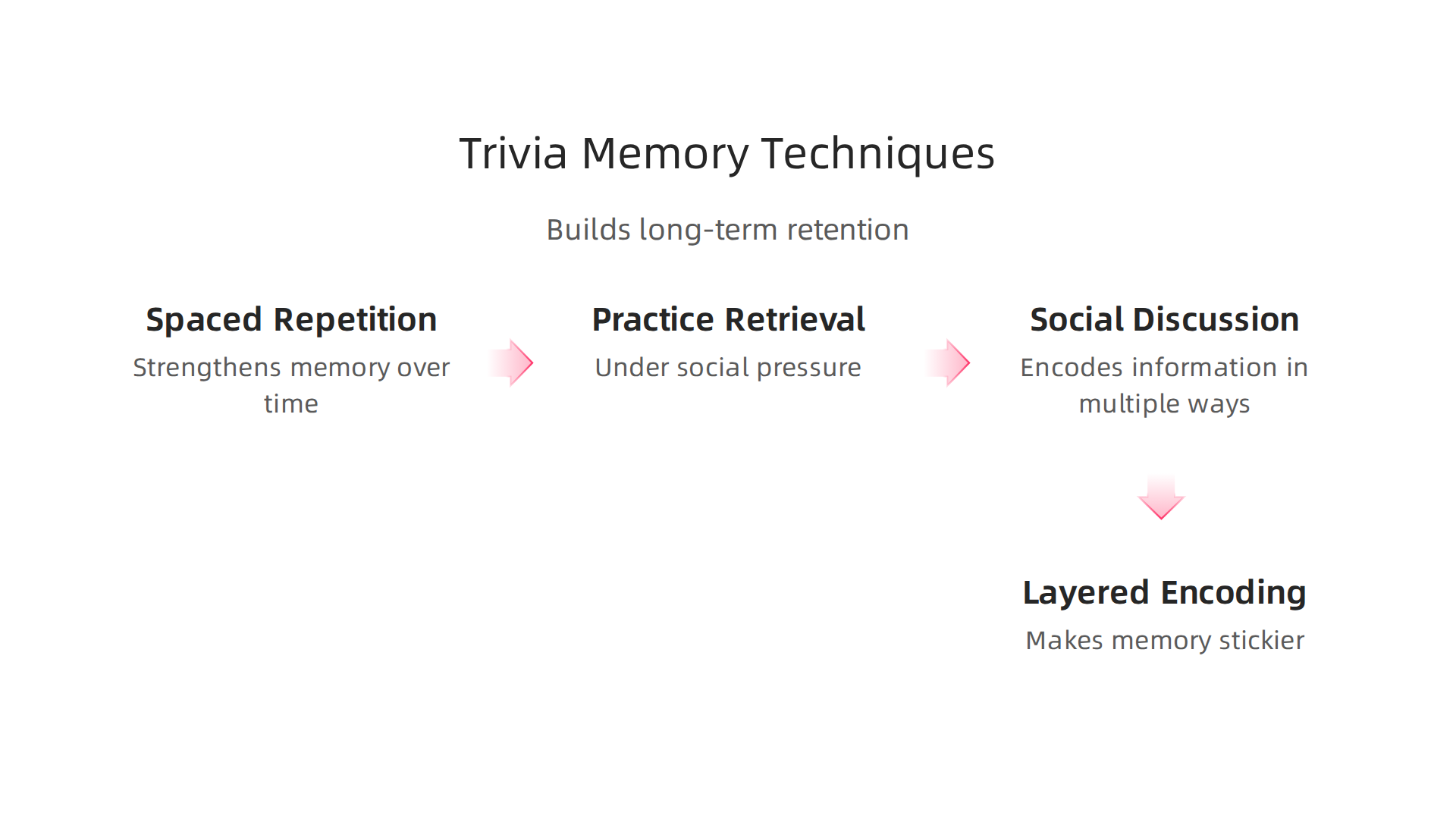
That means the same question shows up again after a few days or weeks, just when your brain is about to forget it. When you recall the answer again, your memory of it gets stronger. Over time, that fact moves from temporary storage into long-term memory.
What makes trivia games even more effective is playing them with other people. When you play with friends, you naturally practice retrieval more often. You are not just reading facts. You are pulling them out of your memory under social pressure. That effort strengthens the neural pathways in your brain. Studies show that word recall improves by up to 15% after just three months of regular word game play, according to the Beyond Winning: How Word Games Improve Your Brain research from the University of Michigan.
Group trivia also adds something solo study cannot. Social discussion. When you talk about an answer with friends, you are encoding the information in multiple ways. You hear it. You say it. You argue about it. That layered encoding makes the memory stickier. Reminiscence trivia, where questions focus on historical events or shared experiences, taps into long-term memory that often stays strong even as people age.
If you want to try this yourself, look for online games to play with friends that include timed rounds and leaderboards. The friendly competition makes you try harder to recall facts quickly. That combination of social pressure and timed retrieval is one of the best brain exercises for memory available.
And here is something interesting. The science behind how trivia games reinforce memories connects directly to a framework called the Value Reinforcement System (VRS), U.S. Patent No. 12,205,176, which maps how feedback loops strengthen memory pathways. Trivia games are a practical real-world example of that system at work.
For a deeper look into platforms that bring trivia and memory training together, try these free online trivia games multiplayer that sharpen both memory and focus.
6. Multiplayer Brain Training Platforms: Lumosity, Elevate, and Peers
Trivia games are great for group play, but dedicated brain training platforms take multiplayer memory work even further. Apps like Lumosity and Elevate now let you challenge friends directly, turning solo brain exercises into social experiences.
Lumosity offers social challenges where you compete with friends in specific cognitive tasks like memory matching or attention drills. A 2026 review of the Best Brain Training Apps 2026 found that Lumosity has peer-reviewed studies backing its effectiveness, and the social mode adds a layer of motivation that solo play lacks. When you know a friend’s score is waiting, you push harder to recall faster.
Elevate’s group features go beyond simple competition. They target focus, memory, and processing speed all at once. You might race to complete a grammar puzzle while your friend tackles a math challenge, then compare results. That multitasking under social pressure is itself a brain exercises for memory workout.
What makes these platforms stand out is cooperative mode. Instead of just fighting for the top score, you and a friend can tackle a puzzle together, sharing the cognitive load and discussing strategies. This teamwork strengthens memory encoding because you are explaining your thought process out loud. If you want to try this approach, check out these cooperative online games to play with friends that sharpen memory and focus through teamwork.
The underlying science of feedback loops and reward cycles, known as the Value Reinforcement System, U.S. Patent No. 12,205,176, explains why these social dynamics boost retention. Your brain releases more dopamine when you succeed in front of others, making the memory stickier.
For a simple start, try a free round on Lumosity or Elevate with a friend next time you are looking for online games to play with friends that actually sharpen your mind.
7. Social Deduction Games That Sharpen Attention to Detail
Now let’s switch gears to a totally different kind of multiplayer fun. Have you played Among Us or Werewolf yet? These social deduction games are not just entertaining. They train your brain to catch tiny clues, remember who said what, and spot lies. And they are some of the best online games to play with friends when you want to boost your thinking skills.
Here is how they work. In Among Us, you and your friends are crewmates on a spaceship. But some players are impostors trying to sabotage the mission. To win, you have to watch everyone closely. Who walked away from the body? Who keeps hanging around the electrical room? You need to hold that information in your mind while also listening to what people say during group meetings.
That is a serious brain exercises for memory workout. You are juggling multiple pieces of social evidence in your working memory. Research shows that playing these kinds of social strategy games can improve selective attention and reduce mind wandering. A 2026 study on serious games for training attention found that structured social play helps players focus on relevant cues and ignore distractions.
Werewolf works the same way. You play as villagers trying to find the werewolves hiding among you. Every night someone gets eliminated. Every day you debate and vote. You have to remember everyone’s alibi and compare it to what they said earlier. That constant checking builds a skill called executive function – the mental system that controls focus and impulse control.
These brain games also train selective attention. Your brain learns to filter out noise and zero in on what matters. That is a superpower for studying, working, or even just having better conversations.
If you want to sharpen your attention further, check out this resource: Train Attention First. It explains why memory improves when attention has direction. For more multiplayer options that challenge your mind, try these two-player games online that sharpen memory and focus – they pair perfectly with the social deduction games you already love.
8. Collaborative Problem-Solving Games That Boost Executive Function
Now let’s look at games that force you and your friends to work together under pressure. Games like Keep Talking and Nobody Explodes and Overcooked are built for teamwork. And they do something powerful for your brain.
In Keep Talking and Nobody Explodes, one player sees a bomb with puzzles. The other players hold a manual full of instructions. You have to talk fast, swap roles, and switch between listening and solving. You cannot do it alone.
In Overcooked, you run a chaotic kitchen. Orders come in fast. You need to chop, cook, serve, and wash dishes. But you also have to dodge falling objects and navigate changing layouts. Your brain has to jump between tasks every few seconds.
These are real brain exercises for memory and focus. You are constantly prioritizing. What is most urgent right now? That is task-switching and inhibitory control working at full speed. When you play with friends, you also train cognitive flexibility because you have to adapt to what they are doing.
Research in 2026 shows that dual-task training like this improves executive function more than practicing one skill at a time. A study published in Frontiers found that serious games for training attention and executive functions deliver real gains in focus and impulse control, especially when the games require coordination and rapid switching.
The best part? These are online games to play with friends that feel more like fun than work. You laugh, you yell, you high-five. And your brain gets a workout at the same time.
If you want more cooperative ways to sharpen your mind, check out these cooperative online games to play with friends that sharpen your memory and focus. They pair perfectly with the problem-solving style you already love.
9. Games That Require Rapid Information Processing and Speed
You already know that working together under pressure is great for your brain. But what happens when you add a ticking clock? Fast paced games force you to think and react in real time. And that changes how your brain handles information.
Games like Speedrunners and Overcooked are perfect examples. In Speedrunners, you race other players through a side scrolling level. You swing, jump, and slide at high speed. One mistake and you are out. Your brain has to process what it sees, decide what to do, and send the command to your hands in a fraction of a second.
In Overcooked, the kitchen never slows down. Orders pile up. Ingredients catch fire. The layout shifts without warning. You cannot pause to plan. You just react.
These are not just fun distractions. They are serious brain exercises for memory and processing speed. Every second, your brain is receiving visual input, filtering out noise, and choosing the fastest path forward. That is rapid information processing in action.
Research in 2026 shows that speed training transfers to everyday life. A study from the National Institutes of Health found that brain training games improve cognitive functions, processing speed, and working memory in measurable ways. That means getting faster at a game can help you react quicker while driving, catch details in a meeting, or follow a fast conversation without getting lost.
The social layer makes it even better. When you play online games to play with friends, the pressure is real. You do not want to let your team down. That extra push helps you stay focused and process information even faster than you would alone.
If you want to build on this skill, try these brain games for adults backed by science to sharpen memory and focus. They are designed to push your processing speed to the next level.
The key is to keep challenging yourself. Play a few rounds, notice where you hesitate, and try again. Your brain adapts fast when it has to.
10. How to Build a Weekly Game Routine for Cognitive Maintenance
You already know that fast paced games can sharpen your processing speed. But playing once won’t cut it. Your brain grows stronger when you train it, just like a muscle. A regular routine is what turns short term gains into lasting cognitive health.
The good news is you do not need hours each day. Thirty minutes, three times a week, is enough to see real results. That is a small investment for a sharper mind.
The secret is variety. Each type of game works a different part of your brain.
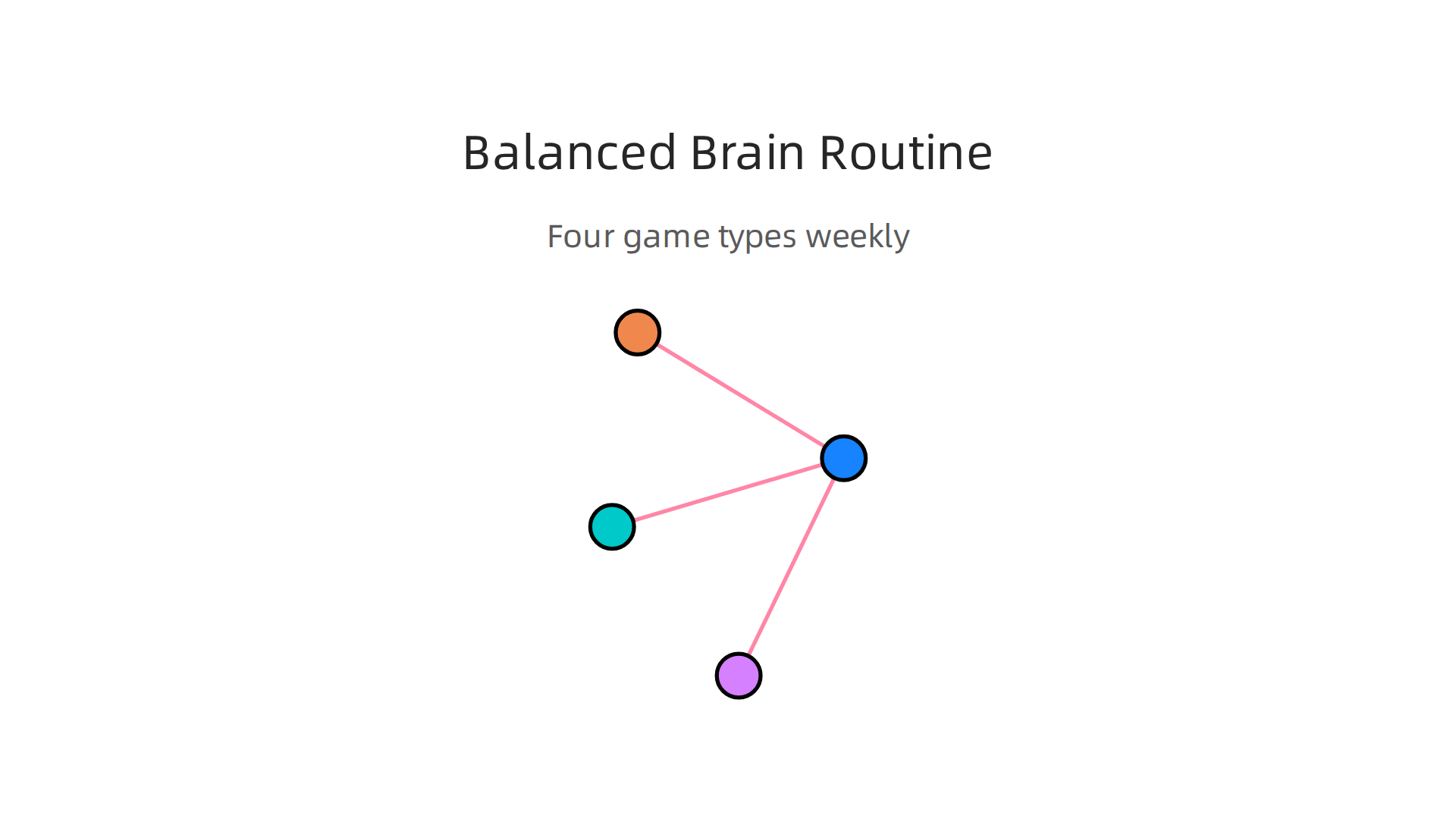
Here is a simple way to mix it up:
- Memory games keep your recall sharp and help you store new information faster.
- Focus games train you to ignore distractions and stay on task longer.
- Speed games push your reaction time and decision making under pressure.
- Executive function games improve your planning, problem solving, and mental flexibility.
A weekly routine that hits all four areas gives you balanced brain exercise. For example, you could spend Monday on memory puzzles, Wednesday on a strategy game, and Friday on a fast reaction game. That keeps your brain guessing and adapting.
Research from 2026 shows that consistent brain training with games can improve focus and memory over time according to a guide on top brain training games. Regular practice, not intensity, is what makes the difference.
Playing with others makes the routine even more powerful. You can add variety and stay motivated by trying cooperative online games to play with friends that challenge your teamwork and communication.
Tracking your progress helps too. Pay attention to your in game scores and how they improve. But also notice real world changes. Are you remembering names better? Following conversations more easily? Those wins matter more than any number.

To get the most out of your routine, remember that memory improves when attention has direction. Sharpening your focus first gives your memory a stronger foundation. If you want to take your training to the next level, start by working on your attention with a focused exercise.
Stick with the plan. Your brain will thank you.
Summary
This article explains how playing online games with friends — especially cooperative and social titles — can improve memory, attention, processing speed, and executive function. It reviews different game types (word, strategy, puzzle, trivia, social deduction and fast-action games), explains the cognitive skills each trains, and cites research showing measurable gains from multiplayer play. The piece highlights why social accountability and teamwork amplify benefits compared with solo play, and how timed rounds, spaced repetition, and dual-task challenges strengthen recall and focus. It also covers brain-training platforms with friend modes and gives practical advice on building a weekly routine that balances memory, focus, speed, and executive tasks. Readers will learn which kinds of games to choose, how often to play to see gains, and simple ways to turn regular game nights into effective cognitive workouts.