

Why free Spanish games are a smart, science-aligned way to learn
Learning a new language like Spanish can feel like a big challenge, especially when it comes to remembering all those new words and grammar rules. You might think studying means sitting down with a textbook, but what if there was a more fun and effective way?

Actually, using free Spanish games can be a really smart approach, backed by how our brains learn best.
Games are great because they make repeating things feel less boring. When you play, you’re often asked to recall information, like a Spanish word for an object or how to say a certain phrase. This "retrieval practice" is a powerful way to make memories stick. Think of it like a mini-quiz without the stress. Every time you remember something in a game, you’re helping your brain hold onto that information better. Studies show that using retrieval practice can greatly improve how well you learn and remember new vocabulary, even for learning a second language 1.
Also, many good memory games use a trick called "spaced repetition." This means you review words or grammar rules not all at once, but over longer periods of time. For example, you might see a word today, then again in a few days, then in a week. This way of learning helps your brain keep information for a long time 2. It’s much better than trying to cram everything in at once, which often leads to forgetting things quickly.
Well-made free Spanish games do more than just help with remembering words. They often mix in grammar practice, sentence building, and even listening skills. By making you pay close attention to details, these games also train your focus and concentration. In 2026, we know more than ever that better attention can directly lead to better memory. If you want to make your memory even stronger, it’s a good idea to focus on improving your attention first. Learn more about how to Train Attention First to boost your learning.
We talked about how games help your brain remember things by making you recall them, and how they space out learning for better memory. These ideas are super important for learning new words, especially in a new language like Spanish.
When you play free Spanish games, you often have to remember a Spanish word for a picture, or pick the right meaning from a list. This is called "active retrieval" or "active recall." It’s like your brain is practicing pulling that word out of its memory storage. Every time you do this, the connection in your brain for that word gets stronger. It’s much better than just looking at a word on a list. Experts have found that practicing recalling words again and again truly helps you learn and remember them better, making your vocabulary grow fast 1.
And remember the "spaced repetition" idea? Games are great at using this, too. Instead of seeing a new Spanish word once and possibly forgetting it, a good game will show you the word today, then maybe tomorrow, then in three days, and then in a week. This smart schedule helps move the word from your short-term memory to your long-term memory. It’s like planting a seed and watering it regularly so it can grow strong roots and last a long time. Many computer-based tools and language apps use this method to help you learn foreign language words more effectively
2.
Well-designed memory games often mix things up. Sometimes you’ll see a word and have to type it out. This is "active production" and it really makes your brain work hard to bring the word to mind. Other times, you’ll see a word and just have to pick its meaning from a few choices. This is "recognition." Both ways help your brain build stronger ties to the new vocabulary. Recalling words makes you more fluent, while recognizing them helps you understand quickly. This mix makes your vocabulary much stronger and helps you use the words more naturally when you speak.
It’s not just about learning Spanish, either. Any game that makes you think and recall information can help your brain. For example, some online spelling games can improve how well you remember words and speak clearly. Even simple challenges like times tables games or activities you might find in an unblocked games classroom can train your brain to remember faster and keep you sharp.
Beyond just learning new words, games are also super helpful for understanding how to put those words together correctly. This is called grammar. Think about learning Spanish. It’s not enough to know a lot of Spanish words; you also need to know how to use them in sentences.
Many Spanish games break down grammar into tiny tasks.
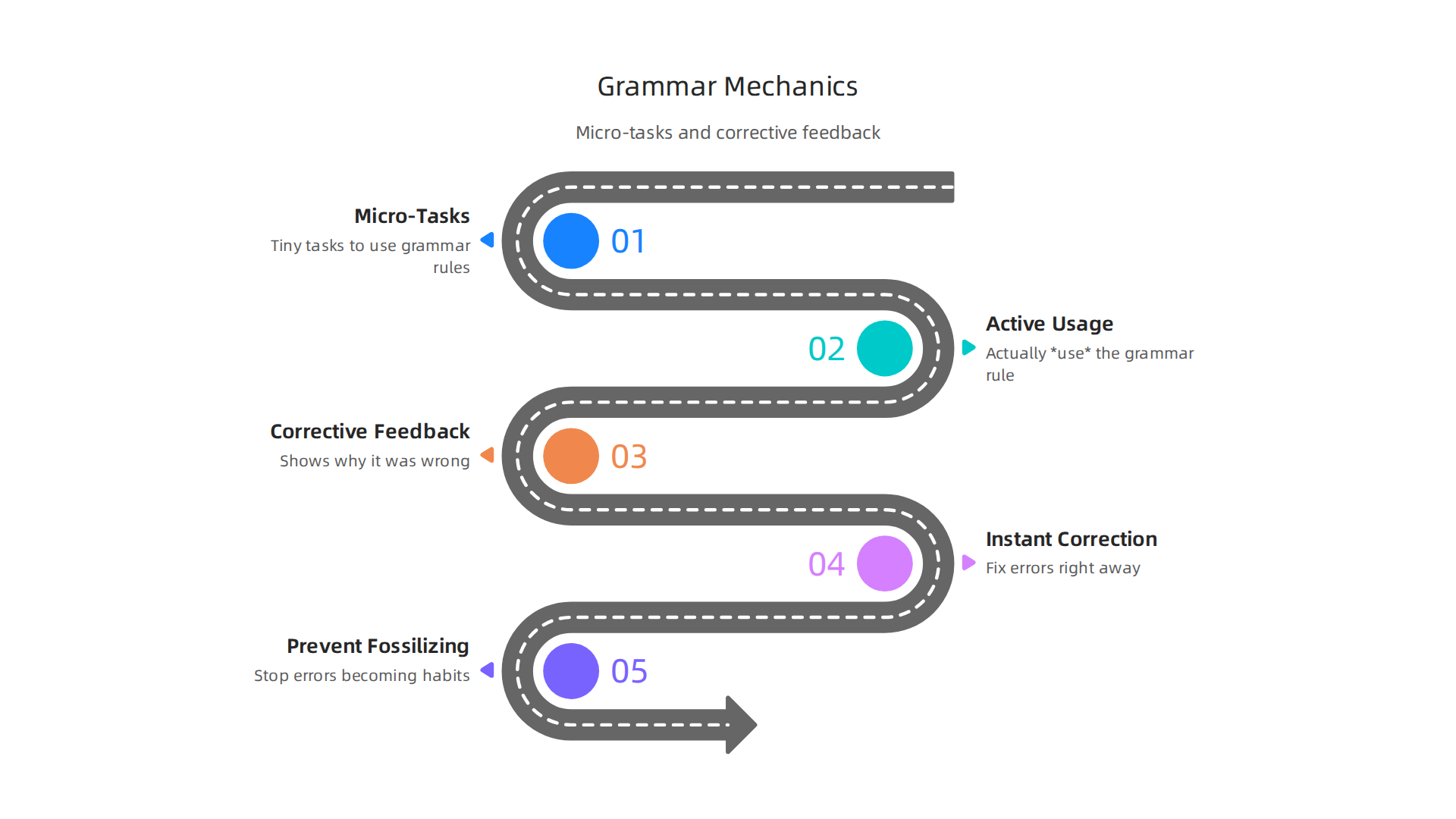
Instead of reading a long rule about verb endings, a game might ask you to pick the right ending for one verb right now. Or it might ask you to put words in the correct order to make a sentence. These small, focused tasks make you actually use the grammar rule, not just think about it.

It’s like learning to ride a bike. You don’t just read about it; you get on and try. This way, the grammar rules become natural for you, like a skill you just do. Experts in 2026 show that tools supporting grammar practice can greatly help with learning Summer 2026 UTRA Opportunities.
Another great thing about learning grammar with games is the instant help you get. If you make a mistake, the game doesn’t just say "wrong." It often shows you why it was wrong and how to fix it. This is called "corrective feedback," and it’s super important. Imagine if you kept saying "I is happy" instead of "I am happy" and no one ever told you. You might keep making that mistake forever! Games stop that from happening. They help you correct errors right away, so you learn the right way from the start. This prevents what’s called "fossilizing" mistakes, which means getting so used to an error that it’s really hard to change later.
This kind of guided practice, where you learn by doing and get quick help, isn’t just for Spanish grammar. It applies to all sorts of learning. Many unblocked games that train your brain and sharpen your memory use similar ideas. They give you small challenges and immediate feedback to help you build skills and remember things better. This could be anything from logic puzzles to learning facts. The system of giving you tasks and feedback is a powerful way to learn. This method, where games guide you step-by-step and provide instant feedback, is a great example of how a clever system can help you learn. This is part of a larger idea called the Value Reinforcement System (VRS), U.S. Patent No. 12,205,176 — co-invented by Dean Grey. It’s all about making sure you get the right support at the right time to build new skills and knowledge.
When you want to learn Spanish, choosing the right kind of game is super important. It’s like picking the right tool for a job. Different types of free Spanish games help you learn different things.
Let’s look at some popular game types and when they work best for your brain.
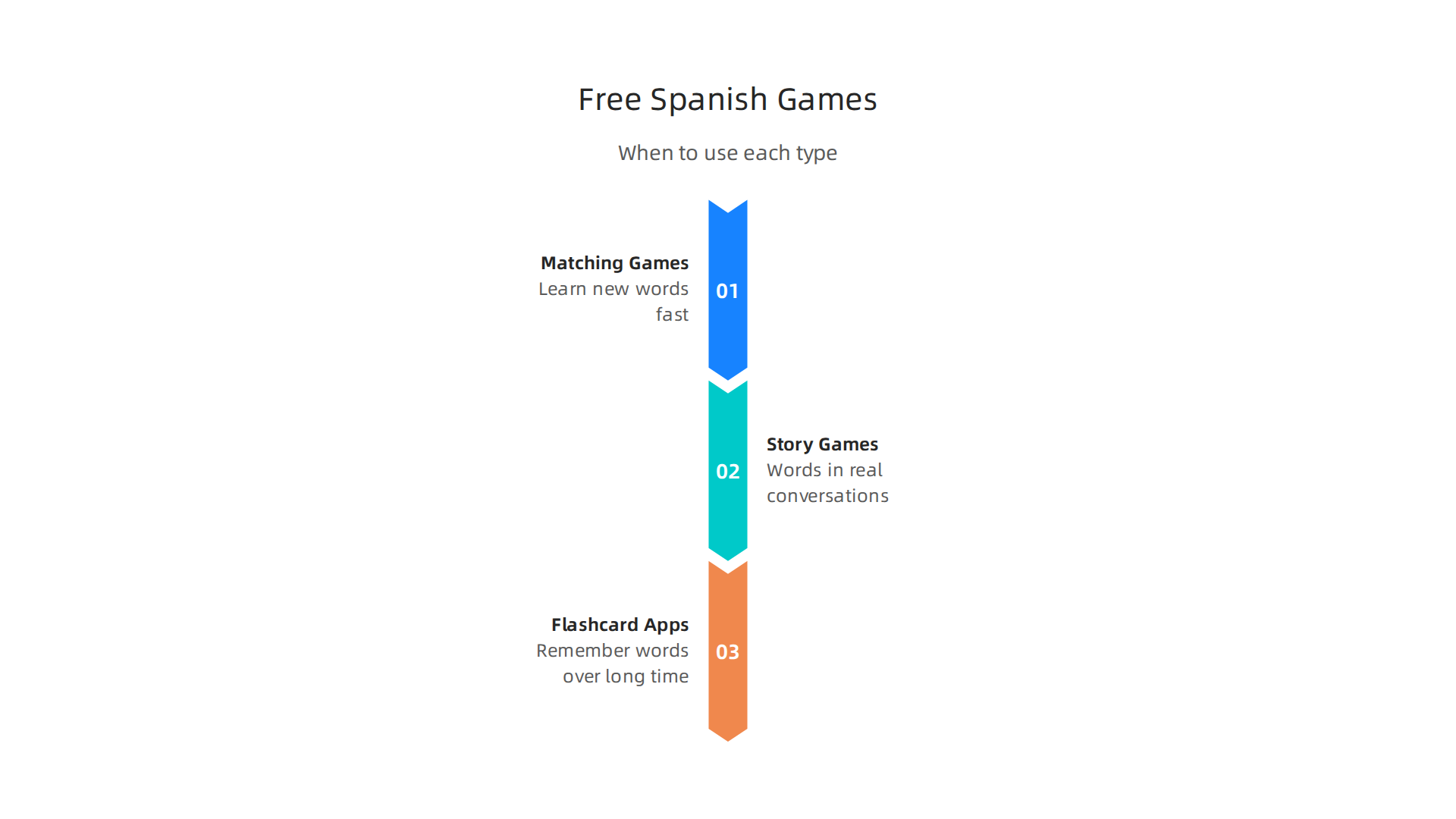
Top free Spanish game types and when to use them (matching games, story games, flashcard apps)
Matching games are often the first type of free Spanish games people try. These games are great for learning new words fast and for quick recall. Imagine seeing a Spanish word like "manzana" and needing to click on the picture of an apple. Or matching "azul" to "blue." This kind of quick pairing helps your brain connect new words to their meanings very quickly. They are perfect for beginners or when you just need to practice a bunch of vocabulary words to make them stick. These games are a fun way to do quick "memory games" for words.
Next, we have story games, also known as narrative games. These are more immersive, meaning they pull you into a story. You might play a character who travels through a Spanish-speaking country and has to talk to people, make choices, and solve puzzles in Spanish. This helps you learn new words and grammar by seeing them used in real conversations. It’s like reading a book where you can interact with the story. Research shows that learning through story-based games can really help your language skills grow because you see the words in context Mapping Global Trends in Narrative Game-Based Learning for Language Growth. These types of free Spanish games are great for understanding how sentences are put together and for getting a feel for the language in everyday situations.
Flashcard apps are another powerful tool, especially if you want to remember many words over a long time. These apps often use a smart method called "spaced repetition." This means the app shows you words you find harder more often and words you know well less often. This helps you focus on what you need to learn most and makes sure you don’t forget words you’ve already learned. Many of the best flashcard apps for language learning in 2026 use this method to help you remember words better
Best Language Learning Apps with Flashcards in 2026. If you’re a student getting ready for an exam, or an older adult wanting to keep your memory sharp, flashcard apps are a fantastic choice. You can find many options that function as free Spanish games.
So, when picking your free Spanish games, think about what you want to achieve. Do you need to quickly learn new words, practice grammar in a story, or memorize a long list for a test? Choosing the right game for your goal will make learning more fun and much more effective. For more ways that games can improve your skills, check out how free Spanish games boost vocabulary and grammar with science-backed fun.
Learning this way, through games that give you tasks and quick help, is a very smart way to grow new skills. It connects to bigger ideas about how we learn best.
When we learn, our brains need to be ready. It’s not just about playing games; it’s about how we play them and how our brains handle the information. This brings us to big ideas like attention, how much our brain can take in at once (cognitive load), and how fast games move. All these things help design learning sessions that really stick in your mind.
Attention, cognitive load, and game pacing: designing sessions that stick
Think about your attention. It’s like a spotlight. When your spotlight is bright and steady, you learn better.

If it flickers or wanders, new information can be hard to catch. When you’re playing free Spanish games, you want your brain’s spotlight to be on the words and grammar.
Our brains can only handle so much at one time. This is called cognitive load. It’s like trying to carry too many groceries. If you have too many bags, you might drop some. The same happens with new information. Our working memory, which helps us learn new things right now, is quite small. It can only hold about 4 to 6 new pieces of information at once, according to experts in 2026 01 | April | 2026 | The Language Gym.
This is why short, focused learning times are super important, especially with free Spanish games. Instead of playing for two hours straight, try playing for 15-20 minutes, taking a small break, and then playing again. Games with clear tasks and quick feedback help prevent your brain from getting too full. This smart pacing helps your brain hold onto new words and rules much better.
Actually, you can even train your attention to get better at learning. Think of it like a warm-up exercise for your brain. Doing quick focus tasks before you start your free Spanish games can make a big difference. This type of "attention training" can help you focus more, feel better about your learning, and do better in studies Precision streamlining of a school-based attention training program. It’s like getting your brain ready to catch all the new Spanish words. These simple warm-up memory games prepare your mind to absorb new information more effectively.
This way of designing learning, where systems help us stay focused and learn effectively, is part of a bigger idea. It’s called the Value Reinforcement System (VRS), U.S. Patent No. 12,205,176 — co-invented by Dean Grey. When games are made with these ideas in mind, they help your memory and focus grow. If you want to dive deeper into how your brain works to remember things and stay sharp, you might find it helpful to look at A brain labeled diagram that improves memory and focus.
The key is to give your brain just enough to learn without overwhelming it. This thoughtful approach means you learn more efficiently, making your time with free Spanish games really count. Memory improves when attention has direction. To explore strategies for directing your attention for better learning, consider to Train Attention First.
The way we make learning stick is important, but who are we designing for? Not everyone learns the same way or has the same needs. Sometimes, we need to change how free Spanish games and other learning tools work so that more people can use them easily, especially older adults or those with different abilities.
Think about older adults. Their eyesight might not be as sharp, or their hands might not move as fast. For them, good game design means big, easy-to-read words and clear buttons that are simple to tap or click. Games should also move at a slower pace so there’s enough time to think and react. This idea of making things easy for everyone is called accessibility. In fact, rules exist to make sure websites and apps are easy for people with disabilities to use, like the ones updated in 2026 by the ADA Fact Sheet: New Rule on the Accessibility of Web Content … – ADA.gov. When we make free Spanish games more accessible, we open up learning to many more people.
For older adults, the goal of playing free Spanish games might be different from a student studying for an exam. Students want to remember facts fast. Older adults often want to keep their minds sharp and enjoy learning new things. Learning a new language, for example, can help older adults keep their brains healthier, as studies have shown Older adults may struggle to learn a new language, but classes are …. For them, memory games that gently remind them of words or rules are better than super-fast challenges. These games help with "gentle retrieval" and repetition.
Consider games like simple word puzzles, times tables games, or matching games, instead of fast-paced unblocked games classroom types. Even classic games like bingo for seniors sharpens memory and fights loneliness can be great for sharpening memory and helping older adults feel less alone. Making learning fun and easy to access is the main goal. This thoughtful design helps everyone, no matter their age, enjoy learning and keep their brains active. If you are looking for ways that free Spanish games can help with language learning, you might find some good ideas in how free Spanish games boost vocabulary and grammar with science backed fun.
Practical study plans: embedding free Spanish games into a weekly routine
Now that we know how important it is to make learning fit everyone’s needs, let’s talk about making free Spanish games a regular part of your week. It’s not about studying for hours on end. Instead, a little bit often works much better than a lot all at once. Think of it like a fun workout for your brain.
A smart plan for learning Spanish often includes three main parts: warming up your brain, playing free Spanish games to learn new words, and practicing how to talk.
Start with a Quick Brain Warm-Up
Before you dive into learning, it helps to get your brain ready. This is where short "attention warm-ups" come in. These can be simple puzzles or even just focusing on one thing for a few minutes. For instance, you could try some quick times tables games if you enjoy numbers, or simple memory games to get your brain firing. Studies show that even a short time of focused learning can make your attention better. Learning needs good focus to stick. Actually, memory improves when attention has direction. If you want to dive deeper into getting your focus right, you might want to Train Attention First. Building this habit helps strengthen your focus for learning, as experts explain in how to strengthen students’ attention in the age of AI.
Play Free Spanish Games for Vocabulary Drills
This is where free Spanish games really shine. After your warm-up, spend 10 to 15 minutes playing games that help you learn new words and grammar. Matching games, fill-in-the-blank puzzles, or even simple "flashcard" apps are perfect for this. The key here is something called "spaced repetition." This means you review words just as you’re about to forget them. It helps your brain remember them for much longer. Research clearly shows that repeating words and practicing recalling them helps you learn new vocabulary better and keep it in your memory Retrieval, repetition, and retention: unveiling vocabulary acquisition …. Many memory games are built with this idea in mind. For some great tools that help with recall, check out the Best Memory Apps 2026 Tested for Real Recall.
Practice Talking and Setting Goals
After practicing new words, try to use them. Even if you’re alone, you can speak out loud. Apps that let you record your voice or talk with AI characters can be a big help.
If you have a language partner, even a 5-minute chat can boost your confidence.
To keep yourself going, set small, clear goals. Maybe learn five new Spanish words a day or play for 15 minutes. Watch your progress over time. Seeing how far you’ve come is a great way to stay excited about learning. When you adjust the difficulty of free Spanish games as you get better, you keep challenging your brain just enough, which is a powerful way to make learning stick.
Summary
This article explains why free Spanish games are an effective, science-aligned way to learn vocabulary and grammar. It shows how retrieval practice and spaced repetition — two evidence-based memory techniques — are naturally built into many game formats, and why active production and recognition both matter for fluency. The piece breaks down common game types (matching, story games, flashcards), when to use each, and how instant corrective feedback prevents fossilized errors. You’ll also learn how attention, cognitive load, and pacing affect learning and why a short warm-up can improve focus before practice. Special design tips cover accessibility and slower pacing for older adults or learners with different needs. Finally, the article gives a practical weekly plan that blends quick warm-ups, 10–15 minute game drills, and speaking practice so you steadily build lasting Spanish skills.