Introduction: The Boltzmann Brain Thought Experiment and Your Cognitive Potential
Imagine this. A brain pops into existence out of nowhere.
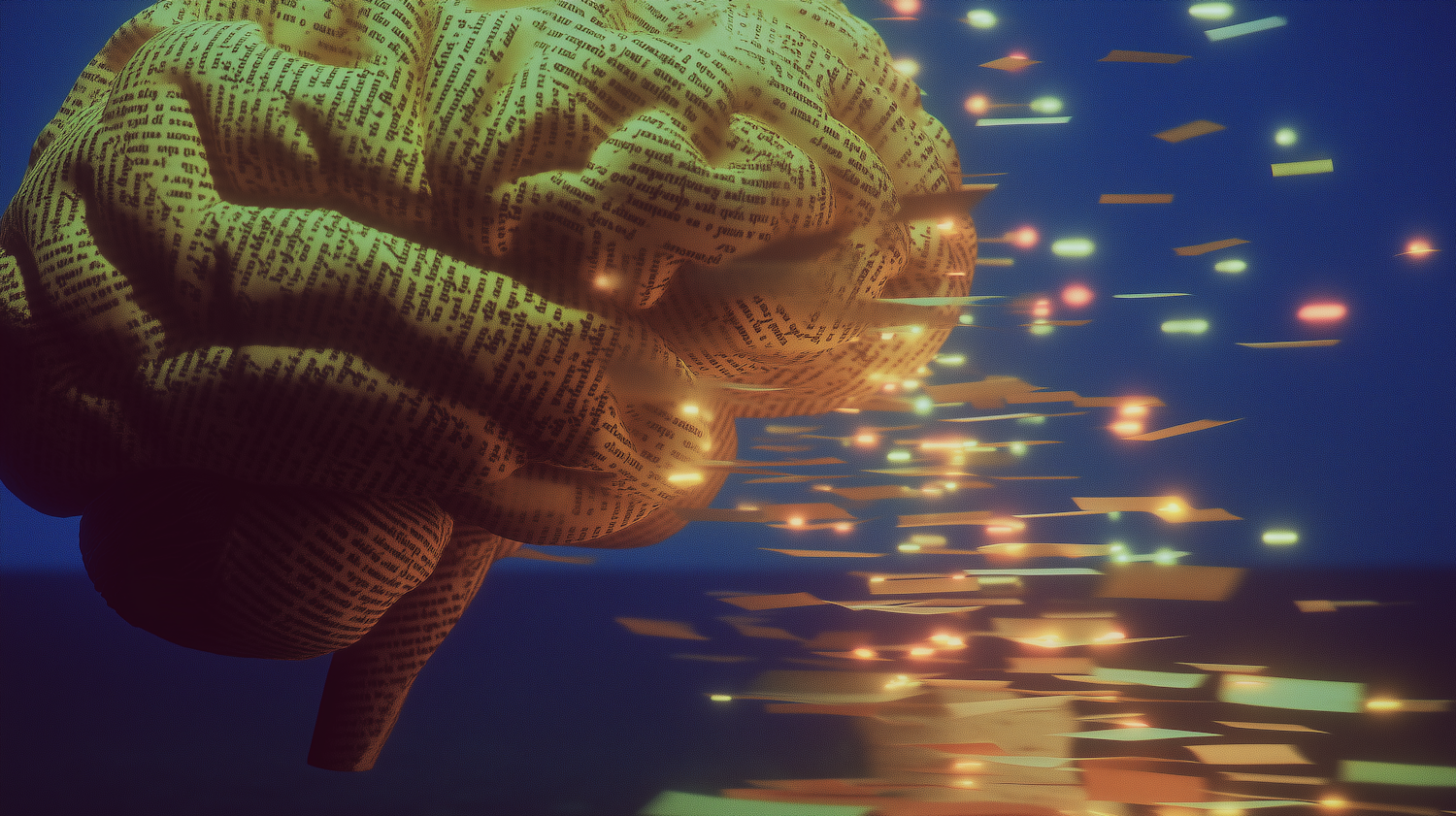
It has memories, thoughts, and a sense of self. But it never had a body. It never lived a life. It just appeared, fully formed, from random particles in the universe.
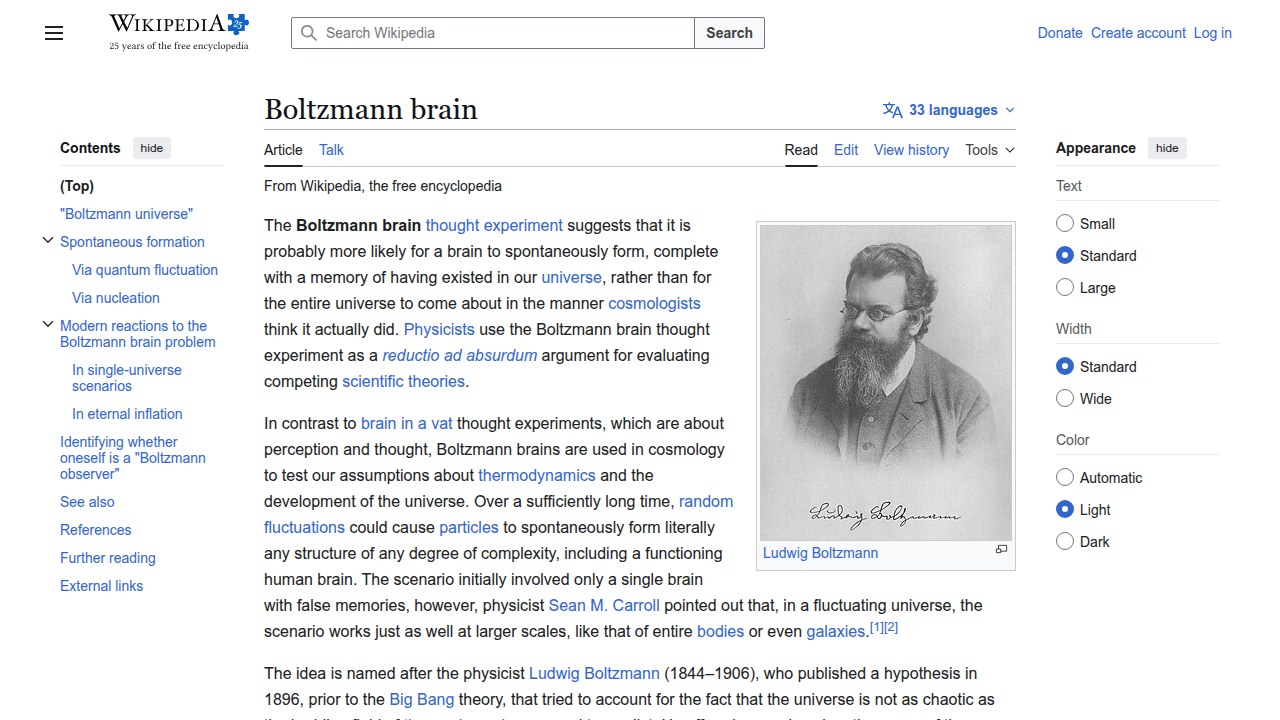
That is the Boltzmann brain thought experiment. It is a strange idea from physics. The theory suggests that it might be more likely for a brain to form by chance than for our universe to exist the way we see it. According to the Boltzmann brain hypothesis, your memories, your sense of time, even the feeling of reading this sentence could all be random illusions.
It sounds wild. And honestly, it is a bit unsettling. Some scientists at places like Princeton University have taken this idea seriously. They ask if our memories are real or just a fluke of chaos. A new study from 2026 even revisits this paradox and questions whether our sense of reality could be born from randomness.
But here is the thing. Your actual human brain is not random at all. It is a highly organized machine. Every day, it handles focus, learning, and memory in ways that no random event could ever match. You rely on your working memory to hold details. You wish you had an eidetic memory to never forget. And you might wonder if the old left brain vs right brain idea explains your strengths.
This article is not about scary physics theories. It is about your real cognitive potential. We will look at how the boltzmann brain idea helps us appreciate what your brain actually does. Then we will explore practical ways to boost your memory, sharpen your focus, and stop information overload.
If you want to improve how your brain works every day, you can explore simple exercises like the ones described in this guide to brain games that sharpen your mind and boost memory.
These are not just for fun. They train the parts of your brain that the Boltzmann brain says should not exist.
Ready to build a real, reliable memory? Get Started with personalized cognitive training that actually works.
What Is the Boltzmann Brain and Why Should You Care?
Let’s break this idea down simply. A Boltzmann brain is a theoretical object. It is a fully formed, self-aware brain that appears out of nowhere. This happens because of random thermal fluctuations in the universe. The Boltzmann brain thought experiment suggests that given enough time and space, random particles could accidentally arrange themselves into a conscious brain. This brain would have memories, thoughts, and a sense of being real.
Why does this matter to you? Because this idea challenges two big things we normally take for granted.
First, it challenges the second law of thermodynamics. That law says things naturally move from order to disorder. Think of a sandcastle falling apart. But a Boltzmann brain would be a sudden jump from disorder to a highly ordered, conscious object. That is a huge problem for physics. Researchers at the Santa Fe Institute are working hard to understand how memory, entropy, and time fit into this strange hypothesis.
Second, it challenges how we think about consciousness. If a random brain can pop into existence with false memories, how can you trust your own sense of reality? A 2026 analysis from ScienceDaily revisits this unsettling idea. It asks whether your memories are real or just illusions born from chaos.
Here is the important part for your everyday life. Your real brain is the exact opposite of a Boltzmann brain.
Your brain is not random. It is a highly specialized, organized structure. It follows rules. It learns patterns. It builds memories over time through experience and repetition.

While a Boltzmann brain would be a fluke of entropy, your brain actively works against entropy every single day. Studies from Princeton University even explore why real, conscious brains do not act like Boltzmann brains at all.
So instead of worrying about whether your memories are illusions, you can focus on making them stronger. Your brain thrives on structure and practice. That is why simple, fun exercises work so well. You can train your focus and recall with activities like the ones found in this list of cool games to play that actually boost your brain power. These are not random. They are designed to build real cognitive strength.
The Boltzmann brain is a fascinating thought experiment. But it also gives us a reason to appreciate how amazing your real brain is. Your mind is not a cosmic accident. It is a powerful, trainable tool. Use it. Dean Grey’s research shows that memory improves when attention has direction. So give your attention a direction that helps you grow.
The Difference Between Randomness and a Structured Brain
Here is where things get practical. Your brain is nothing like the chaos of a Boltzmann brain. It is the opposite. Your brain is built on structure, and that structure is what makes your memory work.
Think of your brain as a massive city. It has about 86 billion neurons, each one connected to thousands of others.
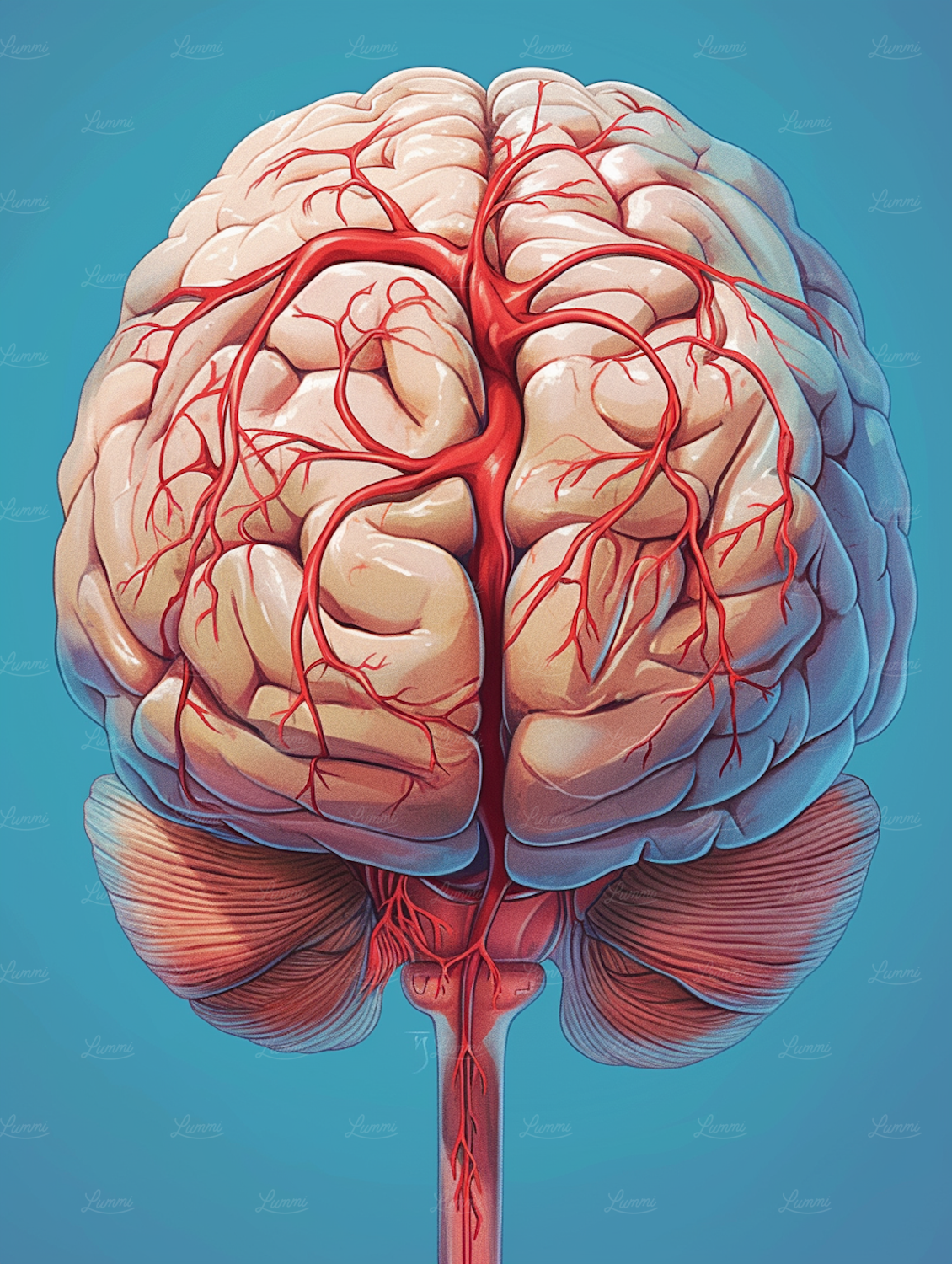
These connections are not random. They are highly organized. Research published in Current Biology shows that neurons actually compete with each other during the process of encoding, consolidation, and retrieval of memories. This competition is not chaos. It is a system. Strong connections survive. Weak ones fade. Your brain is constantly pruning and strengthening itself based on what you actually use.
Now contrast that with a Boltzmann brain. A Boltzmann brain would have no history. No pattern. No hierarchy. It would just appear fully formed, then dissolve back into nothing. It cannot learn, grow, or build on past experience.
Your brain does the opposite. It uses plasticity. That means it physically changes shape based on what you do. When you repeat a skill, the neural pathways for that skill get thicker and faster. A 2026 study from eLife explains that specific patterns of brain activity, called theta oscillations, help the brain encode and retrieve memories effectively. These are not random signals. They are organized rhythms that your brain uses to file information away.
This is also where the left brain vs right brain idea becomes useful. While the two hemispheres have different strengths, they work together as a team. One side handles details and language. The other handles big picture patterns. Your brain uses this partnership to build rich, layered memories that are easy to recall.
The big takeaway for your working memory and long-term recall is simple. Your brain stores information using structure. It groups related facts together. It links new ideas to old ones. It repeats important patterns. This is why eidetic memory is so rare. Photographic recall is not how most brains work. Most brains rely on meaningful connections.
So how do you use this to your advantage? You create structure on purpose. You repeat. You connect. You build patterns.
Dean Grey’s research shows that memory improves when attention has direction. So give your attention a direction. Use tools that train your brain to encode information in an organized way. One good place to start is with these brain games that sharpen your mind and boost memory. They work because they teach your brain to build structure, not randomness.
Your real brain is not a fluke of entropy. It is a learning machine. Treat it like one.
How Your Brain Builds Memories: Encoding, Storage, and Retrieval
Now that you understand your brain is built on structure, let’s look at how it actually makes a memory stick. Your brain does not just record information like a video camera. It processes memories in three clear stages: encoding, consolidation, and retrieval.
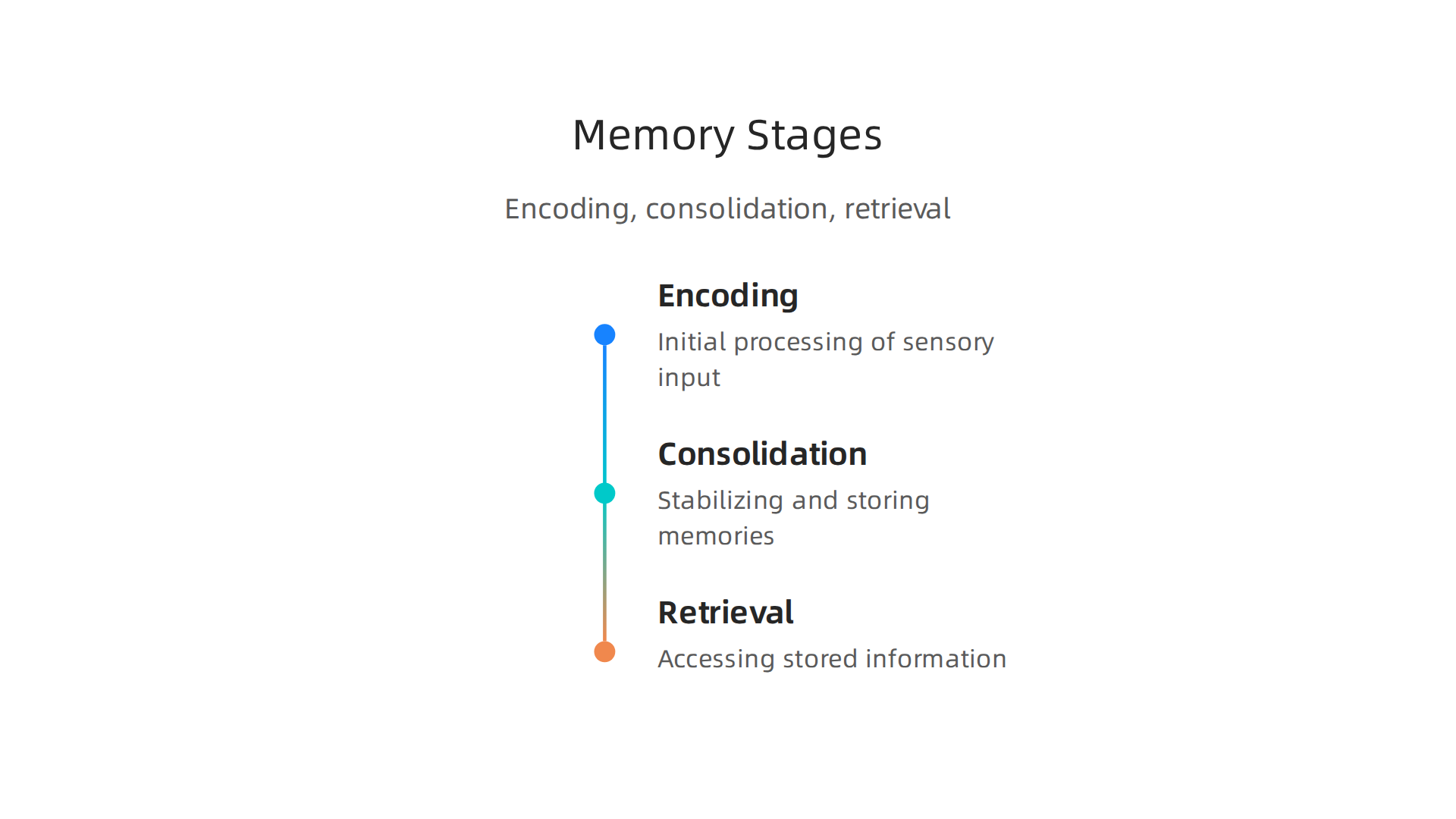
Research from 2026 published in Current Biology shows that neurons actually compete during each of these stages to shape which memories survive and which ones fade away.
Stage 1: Encoding
This is where your brain first takes in new information. Think of it like typing on a keyboard. Your senses pick up sights, sounds, and feelings. Then your hippocampus, a small seahorse-shaped area deep in your brain, helps translate that raw data into a memory code. A 2026 study in eLife found that specific brain rhythms called theta oscillations are critical during this encoding phase. Without those organized rhythms, your brain cannot file new information properly. Your working memory acts like a temporary notepad here. It can only hold a few things at once before the information either moves forward or gets dropped.
Stage 2: Consolidation
This is where the real magic happens. Your brain does not store memories right away. It needs time to strengthen them. During sleep and quiet rest, your brain replays the day’s events. It decides what to keep and what to throw away. The prefrontal cortex, your brain’s front control center, helps organize these memories into categories. A recent paper on arXiv explains that modern neuroscience sees consolidation as a process where the brain transforms fragile new memories into stable, long-term ones. This is why pulling an all-nighter before a test actually hurts your recall. You skip the consolidation window.
Stage 3: Retrieval
This is the moment you actually remember something. You pull the memory back into conscious awareness. Research from Cerebral Cortex shows that the more similar your brain activity is between encoding and retrieval, the better you remember. In other words, if you learn something in a quiet room, you will recall it better in a quiet room. Context matters.
So why do we forget? Two big reasons. Interference happens when new information bumps into old information and muddles it. Decay happens when a memory pathway simply goes unused and weakens. Your brain follows a use it or lose it rule.
The good news? You can fight both. You create strong retrieval paths by repeating information at spaced intervals. You reduce interference by linking new facts to existing knowledge in an organized way. This is where understanding the left brain vs right brain partnership helps. Your left side handles details and language. Your right side handles patterns and big picture context. When both work together, your memories become richer and easier to find later.
Your cerebrum iq actually depends on how well these three stages work together. A brain that encodes clearly, consolidates during rest, and retrieves efficiently is a brain that performs at a high level.
Dean Grey’s research shows that memory improves when attention has direction. Start by giving your encoding stage some focus. Before you try to remember something, pay close attention on purpose. Do not multitask. Then reinforce that memory with repetition over time. That simple structure makes everything easier.
If you want to build a system that trains all three stages of memory, brain games that sharpen your mind and boost memory are a great place to start. They force your brain to encode quickly, consolidate patterns, and retrieve on demand.
You do not need an eidetic memory to remember well. You just need to use the system your brain already has. Work with it, not against it. Get Started with personalized cognitive training that builds real memory structure.
Why Focus Matters: The Science of Attention
You now know that encoding is the first step to building a strong memory. But encoding has a secret ingredient. You can’t encode what you don’t pay attention to. Attention is the gatekeeper. If you don’t focus on something, your brain doesn’t bother storing it.
Let’s look at the three main types of attention your brain uses every day.
Selective attention is your ability to zoom in on one thing and ignore everything else. Imagine listening to one voice in a crowded room. Your brain boosts that one signal and turns down the noise. The neuropsychology of attention shows that this is a real, measurable brain function, not just a feeling.
Divided attention is what most people call multitasking. You try to read a book while checking your phone. Here’s the truth. Your brain doesn’t do two things at once. It switches very fast. And every switch costs you time and energy.
Sustained attention is the ability to stay focused for a long time. This is the kind of focus you need for deep learning. Your cerebrum iq relies heavily on how well you sustain attention over time.
So what happens when you constantly switch tasks? You pay a price. Every time you move from one task to another, your brain takes a moment to catch up. That moment is called "attentional residue." Part of your mind stays stuck on the old task. You try to write an email, but your brain is still thinking about the phone call you just finished. This clutter hurts your working memory.
Your left brain vs right brain also play a role here. Task switching forces them to compete. When you focus deeply, they work together better.
Your brain is not random. It is not like a Boltzmann brain that just appears from chaos. Your brain needs structure. Focus gives it that structure.
Even if you don’t have an eidetic memory, you can train your focus. It is a skill, not a gift. Practice paying attention on purpose. Single task. Protect your time.
If you want to build your focus in a fun way, try brain games that sharpen your mind and boost memory. They train your brain to sustain attention and ignore distractions.
Dean Grey’s research shows that attention is the foundation of every strong memory. Start by giving your full attention to one thing at a time.
Ready to build a focused, powerful brain? Get Started with a personalized cognitive training plan today.
Learning to Learn: Strategies for Efficient Knowledge Acquisition
Now you know attention is the gatekeeper. But even if you focus perfectly, you still need the right tools to turn that attention into real learning. Most people waste their focus by using weak methods. They read the same paragraph over and over. They highlight everything. They feel busy but remember nothing.
Passive reading is almost useless for your memory. Your brain does not build strong connections when you just let words float past your eyes. The neuropsychology of attention shows that deep encoding requires active effort. You have to wrestle with the material.
Here are four evidence-based techniques that turn your focus into lasting knowledge.
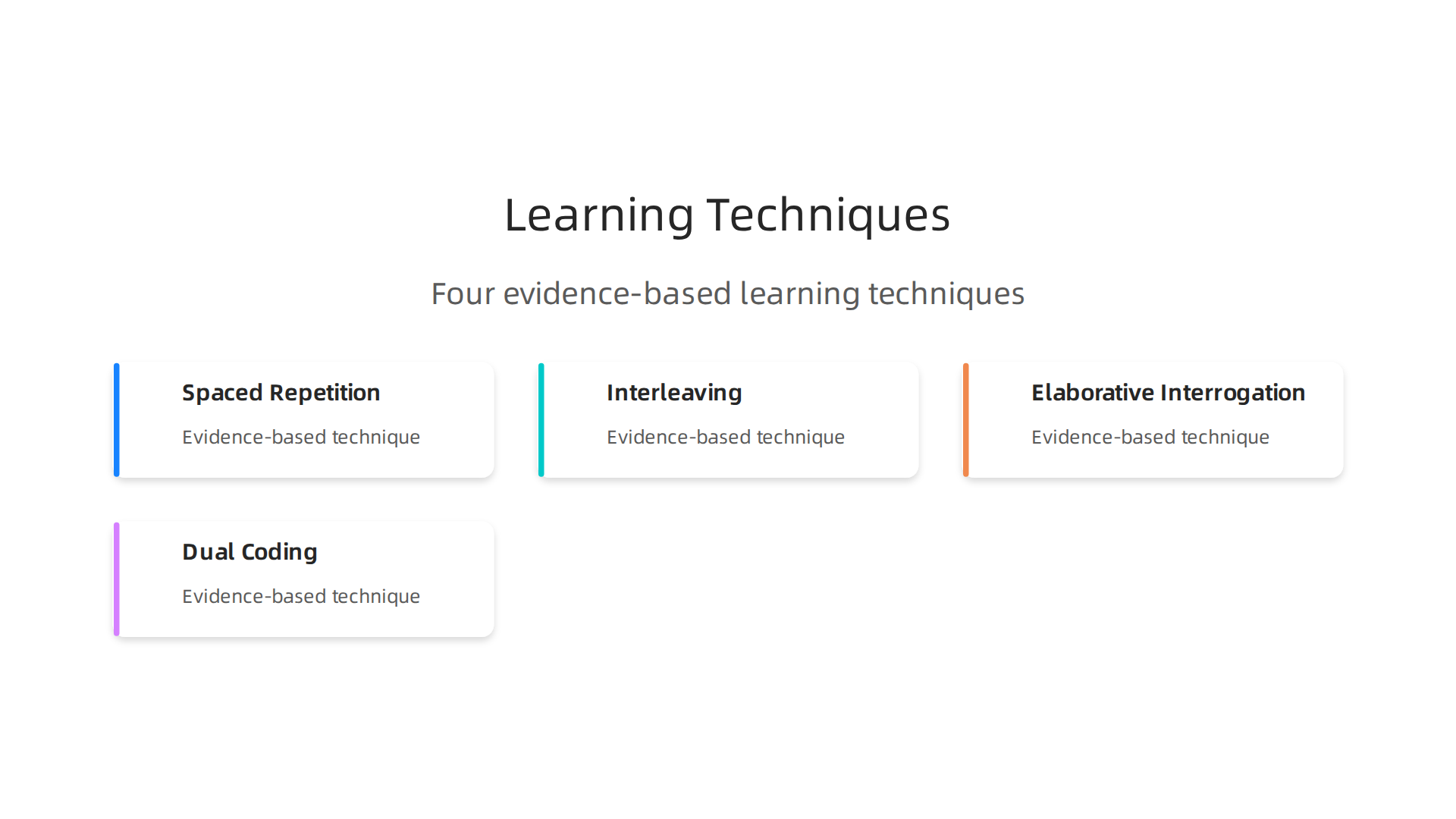
Spaced repetition is simple. Review information right before you forget it. Then wait longer. Then longer again. This pattern tells your brain to keep the information safe. Your working memory clears out, but spaced repetition moves facts into long-term storage.
Interleaving means mixing different topics or problem types in one study session. Instead of doing ten math problems on one formula, do five of one type and five of another. Your brain has to work harder to pick the right approach. That struggle is exactly what builds flexible understanding.
Elaborative interrogation is the “why” method. Every time you learn a new fact, ask yourself why it is true. Connect it to something you already know. This builds a web of associations. Your left brain vs right brain both get involved, creating a richer memory.
Dual coding pairs words with images. Draw a simple diagram or find a picture that represents the idea. Your brain stores the same information in two formats. That makes recall faster and stronger.
Without a plan, information overload crushes you. You jump from one topic to another like a Boltzmann brain floating through random chaos. A structured learning plan gives your brain a schedule and a path. It tells your cerebrum iq exactly what to focus on and when. That structure turns scattered effort into real growth.
If you want to practice these techniques in a fun way, try brain games that sharpen your mind and boost memory. They help you build the habit of active learning.
Dean Grey’s research shows that learning is not about how much time you spend. It is about how you spend that time.
Ready to stop wasting your focus and start learning smarter? Get Started with a personalized cognitive training plan today.
Combating Information Overload: Cognitive Filters and Priorities
Your phone dings. Your email inbox is overflowing. A coworker sends a Slack message. A news alert pops up. Your brain is under attack. Every piece of information screams for your attention. But your working memory can only hold a few things at once. Psychologists call this cognitive load theory. When you try to handle too much, your brain slows down. You get tired. You start making bad decisions.
That tired feeling is mental fatigue. And the struggle to choose what to focus on is decision fatigue. A 2026 study from the Center for BrainHealth found that proactive engagement can actually improve brain health over time. There is no ceiling. But you have to protect your mental energy first.
Here are three practical ways to filter the noise.
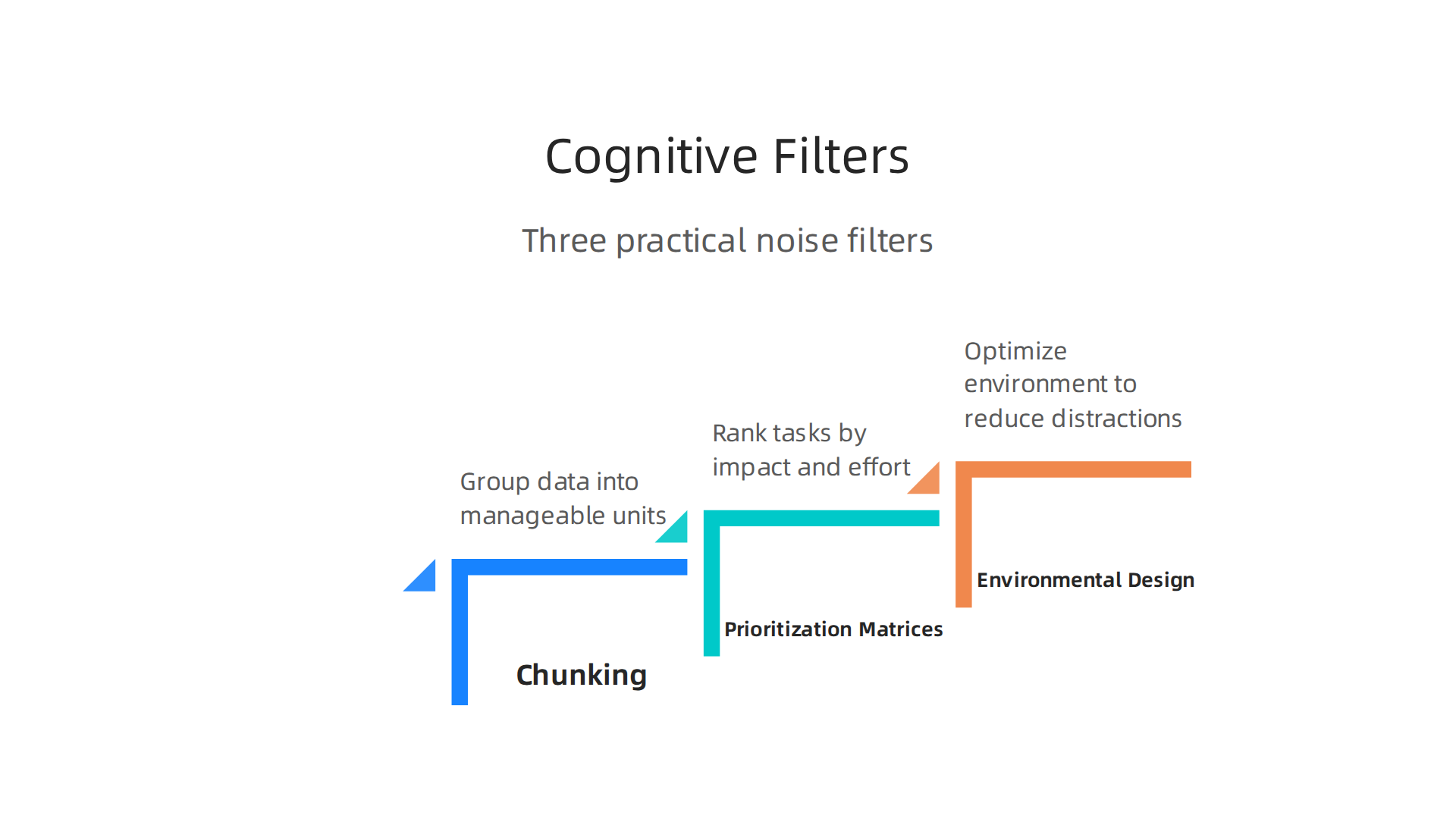
Chunking. Group small pieces of information into bigger chunks. Your working memory can hold about four chunks at a time. Instead of remembering ten random numbers, group them as a phone number. Instead of reading a long list of facts, find the main idea. This trick increases your eidetic memory potential.
Prioritization matrices. Use a simple grid. Put tasks into four boxes: important and urgent, important but not urgent, not important but urgent, not important and not urgent. Only do the top two boxes. Everything else can wait or be dropped. This clears your mental space.
Environmental design. Your surroundings affect your focus. Turn off notifications. Close extra tabs. Put your phone in another room. Design your space to support your attention. This is a core part of the left brain vs right brain approach to organization.
Without these filters, you become like a Boltzmann brain floating in random mental chaos. Every thought bumps into another. Nothing sticks. Your cerebrum iq suffers.
The goal is not to learn everything. The goal is to learn what matters. Protecting your working memory from overload is the first step.
If you want to practice focusing in a fun way, try some brain games that sharpen your mind and boost memory. They train your brain to filter distractions.
Ready to stop drowning in information? Get Started with a personalized cognitive training plan today.
Brain Health Across the Lifespan: Preventing Cognitive Decline
You probably worry about losing your memory as you get older. You forget a name. You misplace your keys. You walk into a room and forget why. These small moments scare people. But here’s the good news. Your brain can stay sharp well into your later years. And science now proves that cognitive decline is not inevitable.
What changes with age
Your working memory slows down a bit. Your processing speed drops. Your executive function, the part that plans and organizes, gets weaker. These are normal age-related changes. They happen to everyone. But the difference between someone who stays sharp and someone who declines comes down to what you do about it.
Modifiable risk factors you can control
You have more power than you think. Research from 2026 shows that proactive engagement can actually improve brain health over time. There is no ceiling for how much you can grow your cognitive abilities. The American Heart Association now calls for a lifelong brain health strategy that integrates cognitive, emotional, and behavioral habits.
Here are the biggest risk factors you can change starting today:
- Sleep. Your brain cleans itself while you sleep. Seven to nine hours per night helps clear out waste products that build up during the day.
- Nutrition. Foods rich in omega-3s, antioxidants, and B vitamins support brain cell health. Think fatty fish, berries, leafy greens, and nuts.
- Physical exercise. Moving your body increases blood flow to the brain. Even 30 minutes of walking five days a week makes a difference.
- Cognitive stimulation. Learning new skills keeps your neural connections strong. A Johns Hopkins study from early 2026 found that cognitive speed training was linked to lower dementia risk up to two decades later. That is remarkable.
- Social engagement. Staying connected with others reduces stress and keeps your brain active. Internet use among older adults can support cognitive function when used intentionally.
Neuroplasticity and cognitive reserve
Your brain can rewire itself at any age. This is neuroplasticity. The more you challenge your brain, the more connections you build. That creates cognitive reserve. Think of it like a savings account for your brain. The more reserve you have, the longer you can handle normal age-related wear and tear before you notice any decline.
A 2026 study from the Center for BrainHealth followed about 4,000 adults over three years. The result was clear. Proactive engagement improves brain health. There is no ceiling. And researchers at USC are on the cusp of a revolution in Alzheimer’s prevention.
Your cerebrum iq is not fixed. You can train it just like a muscle.
The key is to start now, no matter how old you are. The earlier you build healthy habits, the more cognitive reserve you create for the future. Understanding the left brain vs right brain balance helps too. Logical tasks use one side. Creative tasks use the other. Training both keeps your whole brain active.
If you want to practice cognitive stimulation in a fun way, check out these cool games to play that actually boost your brain power. They train your processing speed and memory.
Ready to build your cognitive reserve for life? Get Started with a personalized cognitive training plan today.
Putting It All Together: Practical Daily Habits for a Sharper Mind
You have read about neuroplasticity, cognitive reserve, and the science of brain health. Now comes the real question. How do you actually build these habits into your real life? The answer is simpler than you think. Your brain craves routine, and the neuroscience of habit formation shows that small, repeated actions rewire your neural pathways over time.
Here is a practical daily framework that works for busy professionals and students alike.
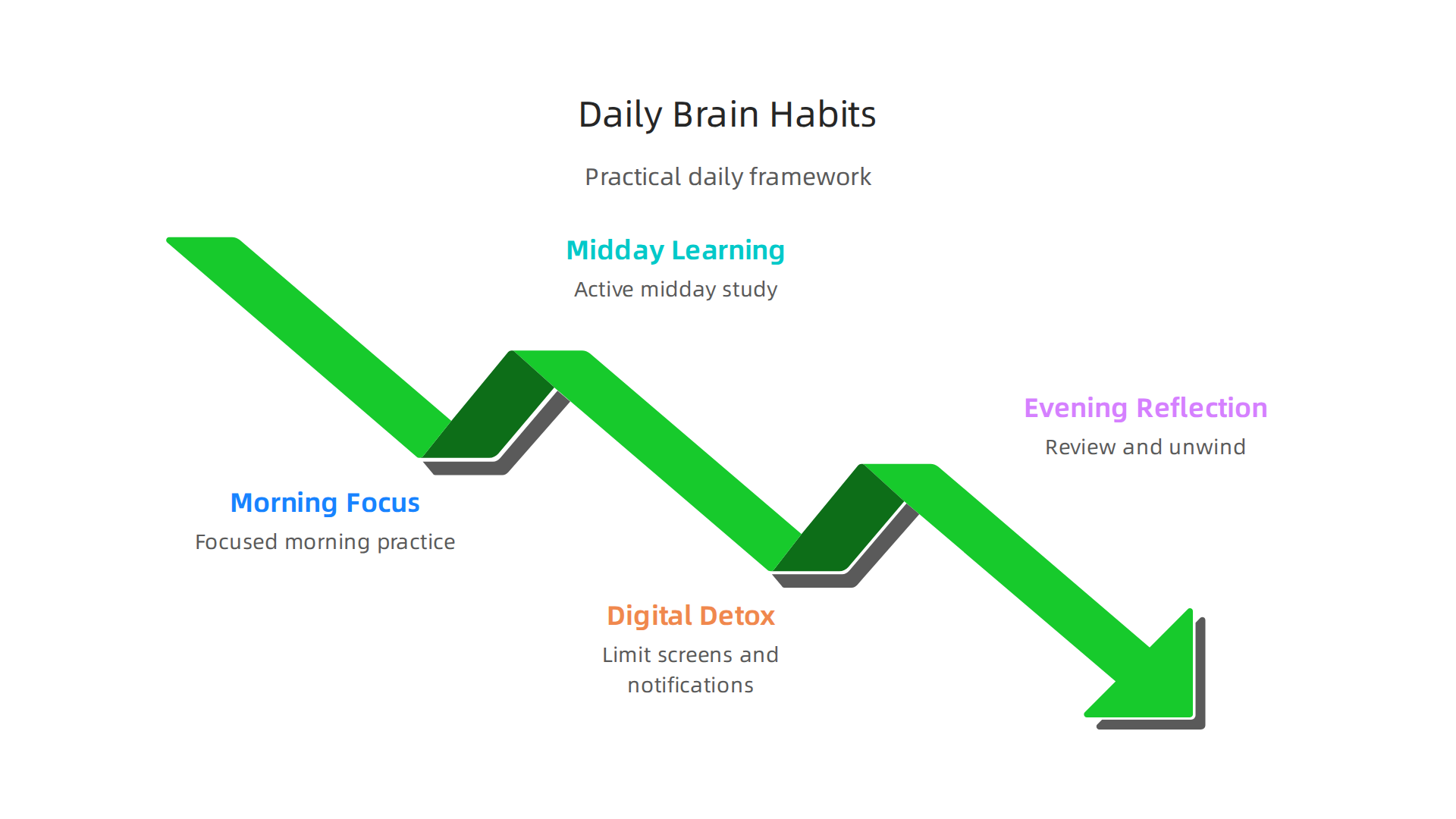
Morning focus block (15 minutes)
Start your day with intention. Spend 5 minutes on mindfulness meditation. Just sit quietly and watch your breath. This trains your working memory by reducing mental clutter. Then do 10 minutes of active recall practice. Close your book or notes and try to remember key facts from yesterday. This strengthens your eidetic memory pathways. The simple act of retrieving information without looking at it makes the memory stick.
Midday learning sessions (two 25-minute blocks spaced apart)
Cognitive speed training linked to lower dementia risk up to 20 years later, according to a 2026 Johns Hopkins study. That is a powerful reason to make brain training part of your lunch break. Use brain games that sharpen your mind and boost memory during your first block. Then take a break. Walk around. Let your brain process. Come back for a second block of focused learning or problem-solving. This spaced repetition method works because your brain consolidates memories during rest periods.
Digital detox windows (at least two per day)
Your brain was not designed for constant notifications. Pick two 30-minute windows where you put your phone in another room. No email. No social media. Use this time for deep work or quiet reflection. This protects your cerebrum iq by letting your prefrontal cortex recover from overstimulation.
Evening reflection (10 minutes before bed)
End your day by writing down three things you learned and one question you still have. This activates your brain’s consolidation cycle during sleep. The boltzmann brain concept reminds us that random neural activity can create order, but your intentional reflection gives that order direction.
Weekly checklist for busy minds
| Day | Morning block | Digital detox | Learning session | Evening reflection |
|---|---|---|---|---|
| Mon | 15 min focus | 2 windows | 2 x 25 min | 10 min journal |
| Tue | 15 min focus | 2 windows | 2 x 25 min | 10 min journal |
| Wed | 15 min focus | 2 windows | 2 x 25 min | 10 min journal |
| Thu | 15 min focus | 2 windows | 2 x 25 min | 10 min journal |
| Fri | 15 min focus | 2 windows | 2 x 25 min | 10 min journal |
| Sat | 15 min focus | 1 window | 1 x 25 min | 10 min journal |
| Sun | Rest or walk | No detox | No session | Reflect on week |
The left brain vs right brain balance matters too. Logical tasks like math or code use your left hemisphere. Creative tasks like drawing or brainstorming use your right. Alternate between them during your learning sessions to keep both sides engaged.
Habit stacking makes this easier. Link your new brain habit to something you already do. For example, after you brush your teeth in the morning, do your 5 minutes of mindfulness. After you pour your coffee, do your active recall practice. This technique from behavioral science is called cue-based learning, and it works.
Your brain is not a random mess of signals like a theoretical boltzmann brain floating in space. It is a structured organ that responds to routine. Give it structure and it will reward you with sharper focus, better memory, and lower dementia risk for decades to come.
Want a guided system that builds these habits step by step? Get Started with a personalized cognitive training plan today.
Summary
This article uses the curious Boltzmann brain thought experiment as a contrast to show how your real brain is anything but random: it is structured, plastic, and trainable. It explains the three stages of memory—encoding, consolidation and retrieval—and why attention is the gatekeeper for effective learning. You’ll learn practical techniques like spaced repetition, interleaving, elaborative interrogation and dual coding, plus simple environmental and prioritization tools to reduce cognitive overload. The piece also covers lifelong brain health—sleep, nutrition, exercise, social engagement—and offers a straightforward daily habit framework (short focus blocks, spaced learning, digital detoxes, evening reflection) you can start using immediately. Throughout, recommended brain games and habit strategies show how to translate neuroscience into everyday practices that sharpen focus, improve recall, and build cognitive reserve over time.