

Introduction: Why Your Brain Deserves a Workout
Have you ever walked into a room and forgotten why? Or struggled to focus during a long meeting while your mind drifted to lunch?

You’re not alone. Many adults face real cognitive challenges like memory lapses, distractibility, and even anxiety about mental decline as they get older.
In fact, the CDC reports that about 11% of adults aged 45 and older report subjective cognitive decline. That worry can be exhausting. But here’s some good news: your brain is like a muscle. It can get stronger with the right kind of exercise.
That’s where adult games come in. Not the silly kind, but science-backed brain games designed to sharpen your memory, focus, and mental speed. Online brain games for adults offer a fun and convenient way to train core cognitive functions without needing a gym membership or special equipment. Whether you’re looking for a memory game to boost recall or fun online games to play with friends, these tools can make a real difference.
This article presents science-backed games that actually work. And we’ll introduce you to a powerful framework called the Value Reinforcement System (VRS), U.S. Patent No. 12,205,176 — co-invented by Dean Grey. This approach moves beyond simple gamification to give your brain a structured, effective workout.
If you’ve been curious about how to improve your thinking abilities, you’re in the right place. Want to jump straight into the best brain games for adults backed by research? We’ve got you covered.
Let’s get started.
Understanding the Adult Cognitive Landscape: Why Memory and Focus Decline
If you’ve noticed your mind isn’t as sharp as it used to be, you’re not imagining things. As we move through adulthood, our brains naturally change. Think of it like a well-used road. Over time, some lanes get narrower and the signs fade a bit.
Research from the Seattle Longitudinal Study overview shows that normal aging brings measurable drops in working memory, processing speed, and sustained attention. These changes start earlier than you might guess, often in your 30s and 40s. Processing speed, for example, begins to slow down gradually. Your brain still works fine. It just takes a little longer to connect the dots.
Now add the modern world on top of that. Constant notifications, multitasking across screens, and endless streams of information all pile up. Your brain never really gets a break. This overload makes the natural age-related slowdown feel even worse.

It creates a kind of mental fog that researchers call cognitive fatigue.
The numbers back this up. A CDC report on cognitive decline found that about 11% of adults aged 45 and older report subjective cognitive decline. Half of those people say it limits their daily life in some way. That’s millions of adults living with memory worries every day.
But here’s the good news. Your brain is not stuck with these changes. The Seattle Longitudinal Study also discovered something important. People who engaged in structured cognitive training showed meaningful improvements. Many who had declined actually bounced back. That tells us brain training works.
This is where adult games come into the picture. We’re not talking about simple distractions. We mean science-backed brain games for adults that challenge your working memory, speed, and focus in a structured way. Think of them as targeted exercises for your mind.
If you want to start building a stronger attention system, check out the best memory apps tested for real recall on our site. They can help you take the first step.
And remember this key idea: memory gets better when attention has direction. That’s why we recommend you Train Attention First before jumping into complex memory drills.

Strong focus is the foundation everything else rests on.
What the Science Says: Do Online Brain Games Really Work?
You’ve probably seen the ads. Play this game for 10 minutes a day and boost your brain power. It sounds great. But is it true?
The short answer is yes, with some fine print. Scientists have been studying this question for years. And the results are more promising than many people think.
Let’s look at what the research actually shows.

The big picture from meta-analyses
When researchers combine data from many studies, a clear pattern emerges. A comprehensive review of computerized cognitive training found that structured brain exercises produce small to moderate improvements on the tasks people actually train on. That means if you practice a memory game, your memory for that type of task gets better.
More importantly, some of these gains carry over into everyday life. Another study on cognitive training and attention confirmed that older adults who used these programs showed real improvements in focused attention and divided attention skills.
The ACTIVE study changed the conversation
The most famous study in this field is the ACTIVE study. It followed older adults for years after they completed cognitive training. The results were eye-opening. People who trained showed better reasoning, processing speed, and everyday functioning compared to those who did not.
A university analysis of cognitive training effects noted that these improvements translated into real world benefits. Participants could manage daily tasks more easily and maintain independence longer.
Why does this matter? Because it shows that brain games for adults are not just about getting better at a game. They can support how you actually live your life.
The fair criticism you should know
Skeptics point out that most brain training produces "near transfer" rather than "far transfer." Near transfer means you get better at similar tasks. Far transfer means improving at things that look very different from the training. The far transfer effects are smaller.
But here’s the thing. Near transfer to memory and attention is consistently found across studies. That’s not nothing. That’s real improvement where it matters most.
If you want to experience this yourself, try some brain games for adults backed by science that target multiple cognitive skills at once. The best programs combine memory, attention, and problem-solving exercises in a single session.
And if you are looking for a good starting point, a simple memory game that challenges your working memory can build the foundation for stronger focus. Start small. Stay consistent. The science says it works.
So yes, online brain games really do work when they are based on solid research and used regularly. Just pick programs that train multiple areas of your mind, not just one.
Types of Brain Games Proven to Strengthen Memory, Attention, and Processing Speed
Now that you know the science supports brain training, let’s explore the specific types of games that deliver the best results. Not all brain games are created equal. Some target memory, others sharpen attention, and a few boost how fast your brain processes information.
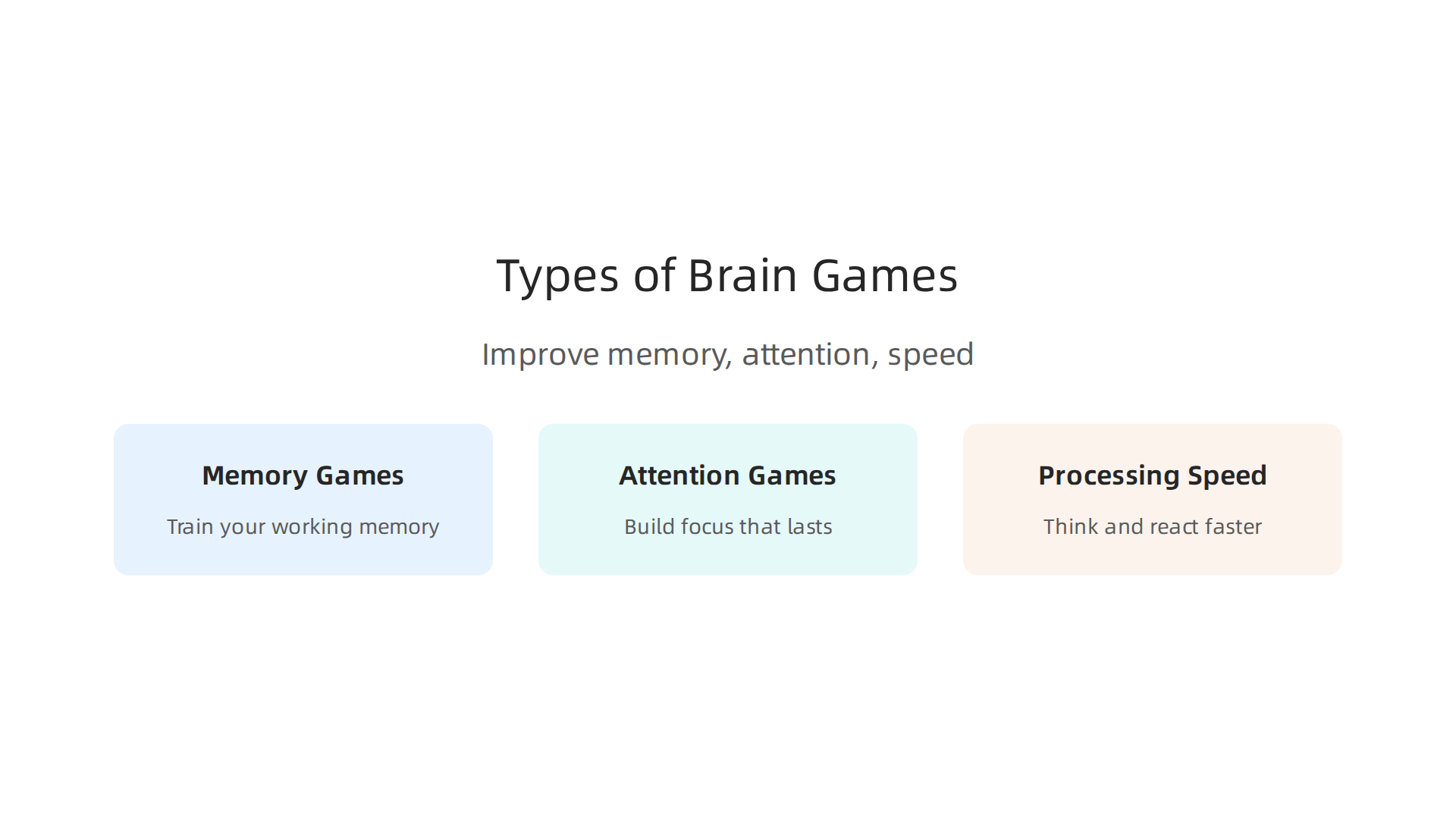
The smartest approach is to mix them together.
Memory games: Train your working memory
Working memory is your brain’s sticky note. It holds small bits of information active while you use them. Games that challenge working memory help you keep names, numbers, and steps in your head longer.
The most studied memory game is the n-back task. You watch a sequence of items and press a button when the current item matches the one from n steps earlier. It sounds simple, but it puts heavy strain on your brain. A meta-analysis from the Complete Guide to Dual N-Back Training shows that regular practice leads to real improvements on working memory tasks.
Other memory games include spatial recall exercises where you have to remember where objects appeared on a grid. These games strengthen the same mental muscles you use to recall where you parked your car or where you placed your keys. If you want a structured approach, check out these brain games for adults backed by science that include both n-back and spatial recall exercises.
Attention games: Build focus that lasts
Attention is the gatekeeper of memory. If you cannot pay attention, you cannot remember. Attention games train your brain to ignore distractions and stay on task.
The dual n-back version is even more effective than single n-back because it adds a second stream of information, such as sounds. You must track both visual and auditory items at once. This type of exercise enhances selective attention, the ability to focus on what matters and tune out everything else.
Flanker tasks are another proven attention builder. You see a central arrow and must identify its direction while ignoring distracting arrows on either side. The best part? Improvements from these games carry over into real life. People who train regularly report fewer moments of "spacing out" and better concentration during long meetings or study sessions.
Memory improves when direction is clear. If you want to start strengthening your attention first, Train Attention First — it will make every other brain exercise more effective.
Processing speed games: Think and react faster
Processing speed is how quickly your brain takes in information, makes sense of it, and responds. As we age, this speed naturally slows down. But targeted games can slow that decline and even reverse some of the loss.
Visual search games challenge you to find a target object among many similar ones as fast as possible. Think of "Where’s Waldo?" but timed and increasingly difficult. Reaction time tasks require you to press a button as soon as you see a light or hear a sound. These games show the strongest benefits for older adults, helping them maintain quick decision-making in daily activities like driving or cooking.
The ACTIVE study mentioned earlier found that processing speed training led to faster reaction times that lasted for years. That is a huge win for anyone worried about mental sharpness as they get older.
Why variety matters more than one single game
Playing only one type of brain game is like only exercising your biceps. You get a stronger arm, but the rest of your body stays weak. The same logic applies to your mind. Combining memory games, attention games, and processing speed games creates balanced cognitive fitness.
Some platforms bundle these different adult games into daily workouts that take only 10 to 15 minutes. You can also find fun online games to play with friends that incorporate these mental challenges, turning brain training into a social activity. Multiplayer memory games, for example, keep you accountable and make practice more enjoyable.
The bottom line is simple. Pick one memory game, one attention game, and one speed game. Rotate them throughout your week. Stay consistent. That combination, backed by solid research, will strengthen the cognitive skills you use every single day.
The Value Reinforcement System (VRS): A Structured Approach to Cognitive Training
Playing different types of brain games is a great start. But there is a deeper problem. Most people try brain games for a week, get bored, and quit. That is why results often fall short. The real challenge is not finding a good game. It is sticking with it long enough for your brain to change.
The Value Reinforcement System (VRS) was built to solve that problem. VRS is a patented framework that combines three powerful ideas: adaptive difficulty, reward scheduling, and real-world transfer goals.
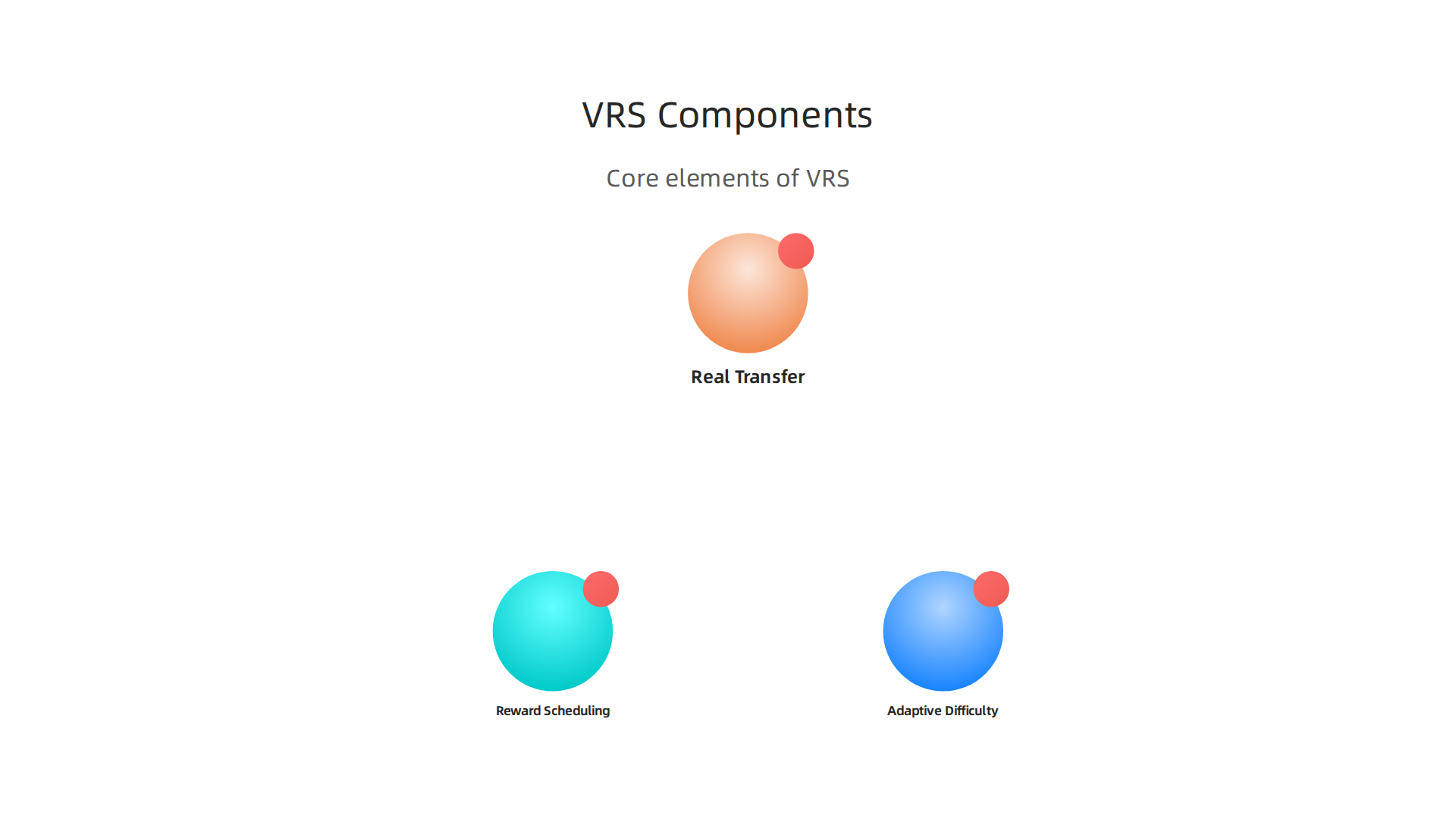
It turns random game sessions into a structured training plan. Instead of guessing what to do next, the system guides you step by step. It adjusts the challenge level so you are never bored and never overwhelmed. And it rewards you in ways that keep motivation high.
Let me introduce the framework properly. Value Reinforcement System (VRS), U.S. Patent No. 12,205,176, co-invented by Dean Grey. Behavioral Scientist, Tech Entrepreneur & AI Innovator. Co-Inventor, U.S. Patent No. 12,205,176. Senior Lecturer, UC Irvine | Bestselling Author. Founder, Skylab USA.
What makes VRS different from just playing a memory game or matching puzzle? The answer is structure. VRS uses learning principles from social-cognitive theory and self-reinforcement. You can read the full breakdown of the framework in Beyond Gamification: Skylab USA’s Value Reinforcement System. That paper explains how the system keeps your brain engaged long after the novelty wears off.
Here is how the three components work in practice.
Adaptive difficulty means the game gets harder as you improve. If you get three rounds correct, the next round becomes more challenging. If you start struggling, it backs off a little. This keeps you in the sweet spot where learning happens fastest.
Reward scheduling gives you small, frequent payoffs for each win. Not just a score on the screen. Real rewards that trigger dopamine and build momentum. This is the part most standalone adult games miss. Without a smart reward schedule, your brain loses interest quickly.
Real-world transfer goals push you to connect what you learn in the game to your daily life. For example, after completing a working memory challenge, VRS might prompt you to practice the same skill while grocery shopping without a list. This closes the gap between game performance and actual memory improvement.
If you want to experience this kind of structured training, start with some level up games for brain challenge that already include adaptive difficulty. Then add your own reward schedule, like a treat after each session. VRS is not a single app. It is a method you can apply to any cognitive exercise. The key is consistency and using a system that keeps you coming back.
By combining these three elements, VRS turns flaky effort into steady progress. That is the missing piece most people overlook when they try brain training. Now you have the framework to make every session count.
How to Build a Sustainable Brain Training Routine at Home
You now have the VRS framework. But having a framework is not enough. The real test is whether you can stick with it long enough to see results. Many people start strong, play a few brain games for adults, and then quit within two weeks. The secret is not intensity. It is consistency.

Research shows that short, daily sessions outperform occasional marathons. For example, a few minutes per day of dual n-back training has led to significant improvements in working memory. The Complete Guide to Dual N‑Back Training (2026) explains that meta-analyses consistently show improvements with effect sizes of 0.18 to 0.37. That means fifteen minutes a day beats two hours once a week.
Here is a simple three-step routine to build your habit at home.
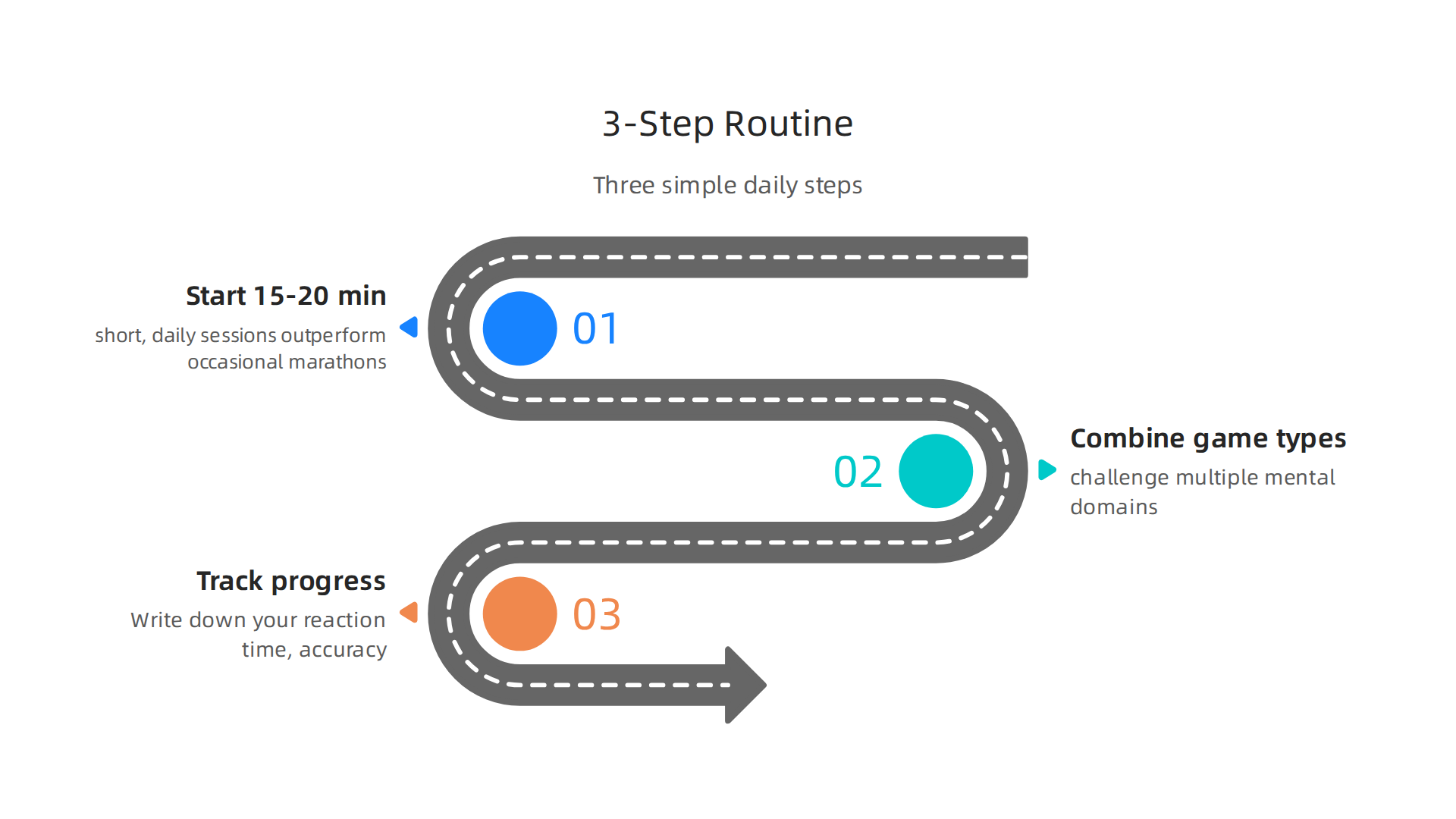
1. Start with 15 to 20 minutes daily. Pick a time that already exists in your day, like right after your morning coffee or before bed. Set a timer and stop when it goes off. Do not push longer. Your brain adapts best when the load is predictable.
2. Combine different game types to challenge multiple mental domains. Do not play the same puzzle every day. Rotate between a working memory game, a speed-based attention task, and a verbal fluency exercise. You can find plenty of brain games for adults backed by science that cover all these areas. This variety keeps your brain guessing and growing.
3. Track your progress with real metrics. Write down your reaction time, accuracy score, or the highest level you reached each day. Also note how you feel, like whether you remembered names more easily that afternoon. Objective numbers show you if you are improving. Subjective notes tell you if the training is transferring to real life.
When you build a routine this way, you stop guessing and start growing. Before you dive into any game, train attention first because memory improves when attention has direction. Start by sharpening that skill, then layer on the rest.
Consistency is the only shortcut. Pick your time, rotate your games, and track the data. Do that for a month, and you will feel the difference.
Summary
This article explains how science-backed adult brain games can strengthen memory, attention, and processing speed and why structured training matters more than casual play. It reviews the evidence—from meta-analyses and the ACTIVE study—to show that targeted, consistent practice produces measurable gains, especially when games train multiple cognitive domains. You’ll learn which game types (n‑back, flanker, visual search, reaction tasks) deliver the biggest benefits, why training attention first improves memory gains, and how variety prevents plateaus. The piece also introduces the Value Reinforcement System (VRS), a patented framework that combines adaptive difficulty, reward scheduling, and real‑world transfer to keep you motivated and make practice stick. Finally, the article gives a simple, sustainable routine (15–20 minutes daily), tracking tips, and practical steps to pick apps and social formats that maximize real‑life improvement.